
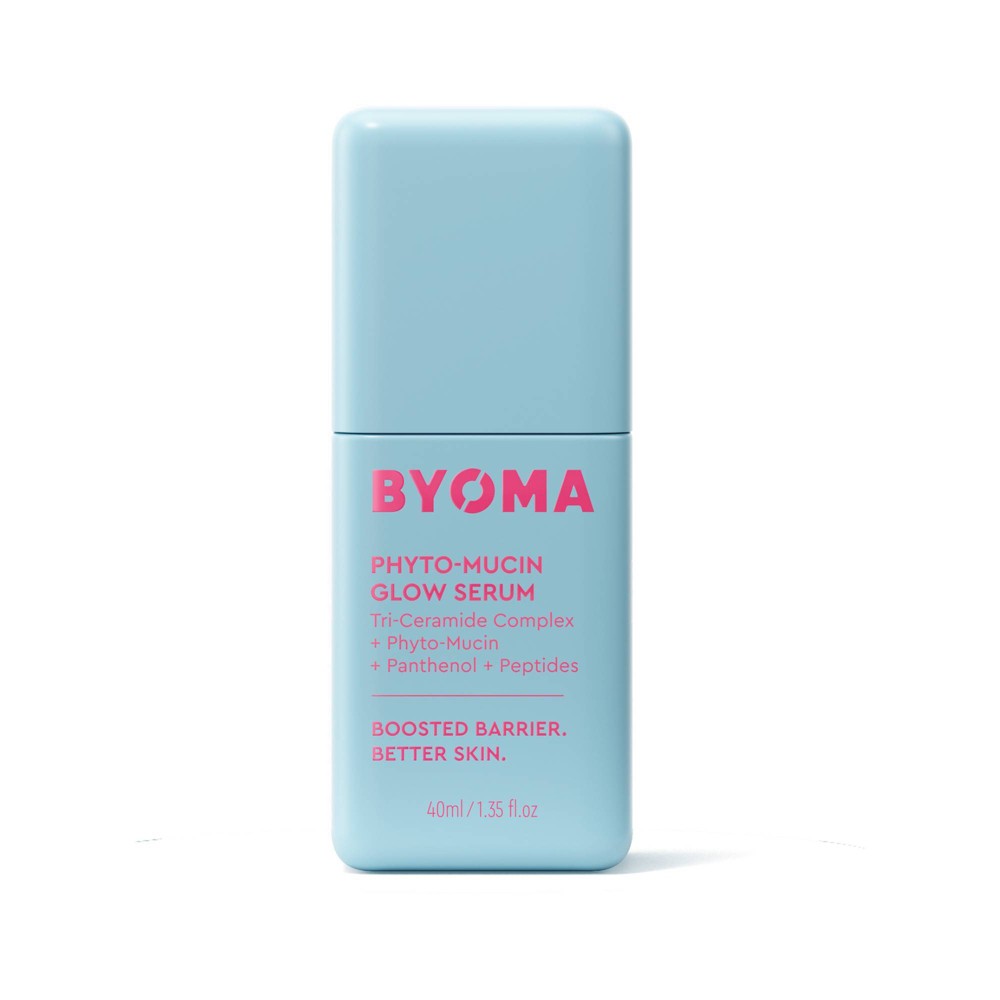

BYOMA Phyto Mucin Serum - 1.35 fl oz: Hydrating, Face Moisturizer, Vegan, For Combination & Dry Skin
Analysis updated July 2026 · How Scout scores
At a glance
Summary
This serum contains a variety of beneficial ingredients such as glycerin, hyaluronic acid, and botanical extracts, which are known for their hydrating and soothing properties. The inclusion of peptides and ceramides further enhances its skin-repairing and anti-aging benefits. However, the presence of synthetic polymers and preservatives indicates a moderate level of processing, which slightly impacts the overall score.
Key ingredients 34
Palmitoyl Tripeptide-1Very Good
Palmitoyl Tripeptide-1 is a peptide used for its anti-aging benefits. It helps to stimulate collagen production and improve skin elasticity. It is considered safe and highly beneficial for the skin.
Risks
There are no significant risks associated with this peptide.
Benefits
It helps to reduce the appearance of fine lines and wrinkles, promoting a youthful complexion.
PanthenolVery Good
Panthenol, also known as provitamin B5, is a humectant that attracts and retains moisture in the skin. It is used for its soothing and healing properties. It is considered safe and highly beneficial for the skin.
Risks
There are no significant risks associated with panthenol.
Benefits
It helps to hydrate and soothe the skin, promoting healing and comfort.
Hydrolyzed Hyaluronic AcidVery Good
Hydrolyzed Hyaluronic Acid is a smaller molecule form of hyaluronic acid that penetrates deeper into the skin. It is used for its enhanced hydrating properties. It is considered safe and highly beneficial.
Risks
There are no significant risks associated with hydrolyzed hyaluronic acid.
Benefits
It provides deep hydration and helps to improve skin elasticity and firmness.
GlycerinGood
Glycerin is a well-known humectant that attracts moisture to the skin. It is widely used in skincare for its hydrating properties. It is safe and beneficial for all skin types.
Risks
There are no significant risks associated with glycerin.
Benefits
Glycerin helps to maintain skin hydration and improve skin barrier function.
Dioscorea Japonica Root ExtractGood
Dioscorea Japonica Root Extract is a botanical ingredient known for its moisturizing properties. It is used in skincare for its ability to soothe and hydrate the skin. It is considered safe and beneficial.
Risks
There are no significant risks associated with this extract.
Benefits
It helps to soothe and hydrate the skin, improving overall skin health.
Laminaria Japonica ExtractGood
Laminaria Japonica Extract is derived from seaweed and is rich in minerals and antioxidants. It is used for its hydrating and anti-aging properties. It is considered safe and beneficial for the skin.
Risks
There are no significant risks associated with this extract.
Benefits
It provides hydration and helps to protect the skin from environmental damage.
Hibiscus Esculentus Fruit ExtractGood
Hibiscus Esculentus Fruit Extract is known for its antioxidant properties. It is used in skincare to help protect the skin from free radical damage. It is considered safe and beneficial.
Risks
There are no significant risks associated with this extract.
Benefits
It provides antioxidant protection and helps to maintain skin health.
Corchorus Olitorius Leaf ExtractGood
Corchorus Olitorius Leaf Extract is a botanical ingredient known for its moisturizing and soothing properties. It is used in skincare to enhance hydration and calm the skin. It is considered safe and beneficial.
Risks
There are no significant risks associated with this extract.
Benefits
It helps to moisturize and soothe the skin, improving overall skin comfort.
ArginineGood
Arginine is an amino acid that helps to maintain skin hydration and elasticity. It is used in skincare for its moisturizing and anti-aging properties. It is considered safe and beneficial.
Risks
There are no significant risks associated with arginine.
Benefits
It helps to improve skin hydration and elasticity, promoting a youthful appearance.
Nelumbo Nucifera Root ExtractGood
Nelumbo Nucifera Root Extract is a botanical ingredient known for its antioxidant and soothing properties. It is used in skincare to protect and calm the skin. It is considered safe and beneficial.
Risks
There are no significant risks associated with this extract.
Benefits
It provides antioxidant protection and helps to soothe the skin.
Hyaluronic AcidGood
Hyaluronic Acid is a powerful humectant that attracts and retains moisture in the skin. It is widely used in skincare for its hydrating and plumping effects. It is considered safe and highly beneficial.
Risks
There are no significant risks associated with hyaluronic acid.
Benefits
It helps to deeply hydrate the skin and improve skin texture and elasticity.
Sodium HyaluronateGood
Sodium Hyaluronate is a salt form of hyaluronic acid that is easily absorbed by the skin. It is used for its excellent hydrating properties. It is considered safe and highly beneficial.
Risks
There are no significant risks associated with sodium hyaluronate.
Benefits
It helps to hydrate the skin and improve skin texture and elasticity.
Ceramide NPGood
Ceramide NP is a lipid that helps to restore the skin barrier and retain moisture. It is used in skincare for its protective and hydrating properties. It is considered safe and highly beneficial.
Risks
There are no significant risks associated with ceramide NP.
Benefits
It helps to strengthen the skin barrier and improve skin hydration.
CholesterolGood
Cholesterol is a lipid that helps to maintain the skin barrier and retain moisture. It is used in skincare for its protective and moisturizing properties. It is considered safe and beneficial.
Risks
There are no significant risks associated with cholesterol in skincare.
Benefits
It helps to strengthen the skin barrier and improve skin hydration.
Caprylic/Capric TriglycerideGood
Caprylic/Capric Triglyceride is an emollient derived from coconut oil and glycerin. It is used in skincare for its moisturizing and skin-softening properties. It is considered safe and beneficial.
Risks
There are no significant risks associated with this ingredient.
Benefits
It helps to moisturize and soften the skin, improving overall skin texture.
PhytosphingosineGood
Phytosphingosine is a lipid that helps to restore the skin barrier and has anti-inflammatory properties. It is used in skincare for its protective and soothing effects. It is considered safe and beneficial.
Risks
There are no significant risks associated with phytosphingosine.
Benefits
It helps to strengthen the skin barrier and reduce inflammation, promoting skin health.
WaterNeutral
Water is a common solvent used in cosmetic formulations. It helps dissolve other ingredients and provides a base for the serum. It is generally considered safe and non-irritating.
Risks
There are no significant risks associated with water in cosmetics.
Benefits
Water helps in hydrating the skin and acts as a carrier for other beneficial ingredients.
MethylpropanediolNeutral
Methylpropanediol is a solvent and skin-conditioning agent. It enhances the absorption of other ingredients into the skin. It is generally considered safe for use in cosmetics.
Risks
There are minimal risks, though some individuals may experience mild irritation.
Benefits
It improves the texture of the product and enhances the delivery of active ingredients.
1,2-HexanediolNeutral
1,2-Hexanediol is used as a preservative and humectant in cosmetics. It helps to retain moisture in the skin. It is considered safe for use in skincare products.
Risks
Potential for mild irritation in sensitive individuals.
Benefits
It helps to keep the skin hydrated and extends the shelf life of the product.
PropanediolNeutral
Propanediol is a glycol used as a solvent and skin-conditioning agent. It enhances the absorption of ingredients and provides a smooth texture. It is generally safe for use in cosmetics.
Risks
May cause mild irritation in sensitive skin.
Benefits
It improves the texture and feel of the product on the skin.
Glyceryl PolymethacrylateNeutral
Glyceryl Polymethacrylate is a film-forming agent that helps to create a smooth surface on the skin. It is used to improve the texture and feel of cosmetic products. It is considered safe for use in skincare.
Risks
There are minimal risks associated with this ingredient.
Benefits
It provides a smooth, even application and enhances the product's texture.
Stearic AcidNeutral
Stearic Acid is a fatty acid used as an emulsifier and thickening agent in cosmetics. It helps to stabilize formulations and improve texture. It is considered safe for use in skincare.
Risks
There are minimal risks, though it may cause mild irritation in sensitive individuals.
Benefits
It helps to stabilize and thicken formulations, improving product texture.
Oleic AcidNeutral
Oleic Acid is a fatty acid used as an emollient and thickening agent in cosmetics. It helps to improve the texture and feel of products. It is considered safe for use in skincare.
Risks
There are minimal risks, though it may cause mild irritation in sensitive individuals.
Benefits
It helps to improve the texture and feel of skincare products.
Glycereth-25 PCA IsostearateNeutral
Glycereth-25 PCA Isostearate is an emulsifier and surfactant used in cosmetics. It helps to stabilize formulations and improve texture. It is considered safe for use in skincare.
Risks
There are minimal risks associated with this ingredient.
Benefits
It helps to stabilize and improve the texture of cosmetic formulations.
Hydrogenated LecithinNeutral
Hydrogenated Lecithin is an emulsifier and skin-conditioning agent used in cosmetics. It helps to stabilize formulations and improve skin texture. It is considered safe for use in skincare.
Risks
There are minimal risks associated with this ingredient.
Benefits
It helps to stabilize formulations and improve skin texture.
CarbomerNeutral
Carbomer is a thickening agent used in cosmetics to create gel-like textures. It helps to stabilize formulations and improve texture. It is considered safe for use in skincare.
Risks
There are minimal risks associated with carbomer.
Benefits
It helps to create gel-like textures and stabilize formulations.
Xanthan GumNeutral
Xanthan Gum is a natural thickening agent used in cosmetics. It helps to stabilize formulations and improve texture. It is considered safe for use in skincare.
Risks
There are minimal risks associated with xanthan gum.
Benefits
It helps to stabilize formulations and improve texture.
Sodium PolyacrylateNeutral
Sodium Polyacrylate is a thickening agent used in cosmetics to improve texture and stability. It helps to create a smooth, gel-like consistency. It is considered safe for use in skincare.
Risks
There are minimal risks associated with sodium polyacrylate.
Benefits
It helps to improve texture and stability in cosmetic formulations.
Sodium LactateNeutral
Sodium Lactate is a humectant and pH regulator used in cosmetics. It helps to retain moisture in the skin and stabilize formulations. It is considered safe for use in skincare.
Risks
There are minimal risks associated with sodium lactate.
Benefits
It helps to retain moisture and stabilize formulations.
Lactic AcidNeutral
Standard formulation ingredient — neither beneficial nor harmful at typical use.
Risks
May cause mild irritation in sensitive skin.
Benefits
It helps to exfoliate and hydrate the skin, improving texture and appearance.
HydroxyacetophenoneNeutral
Hydroxyacetophenone is an antioxidant and preservative used in cosmetics. It helps to protect formulations from oxidation and extend shelf life. It is considered safe for use in skincare.
Risks
There are minimal risks associated with hydroxyacetophenone.
Benefits
It helps to protect formulations from oxidation and extend shelf life.
Caprylhydroxamic AcidNeutral
Caprylhydroxamic Acid is a preservative used in cosmetics to prevent microbial growth. It helps to extend the shelf life of products. It is considered safe for use in skincare.
Risks
There are minimal risks associated with caprylhydroxamic acid.
Benefits
It helps to prevent microbial growth and extend product shelf life.
Caprylyl GlycolNeutral
Caprylyl Glycol is a humectant and preservative used in cosmetics. It helps to retain moisture and prevent microbial growth. It is considered safe for use in skincare.
Risks
There are minimal risks associated with caprylyl glycol.
Benefits
It helps to retain moisture and prevent microbial growth.
EthylhexylglycerinNeutral
Ethylhexylglycerin is a preservative and skin-conditioning agent used in cosmetics. It helps to enhance the efficacy of other preservatives and improve skin feel. It is considered safe for use in skincare.
Risks
There are minimal risks associated with ethylhexylglycerin.
Benefits
It helps to enhance preservative efficacy and improve skin feel.
Get the full breakdown in the Scout appTake Scout shopping
Scan any product to see lab results, healthy alternatives, and your personalized analysis.
Download on theApp Store GET IT ONGoogle PlayAmazon pricing & content
Amazon price as of . Product prices and availability are accurate as of the date/time indicated and are subject to change. Any price and availability information displayed on Amazon.com at the time of purchase will apply to the purchase of this product.
CERTAIN CONTENT THAT APPEARS ON THIS SITE COMES FROM AMAZON. THIS CONTENT IS PROVIDED “AS IS” AND IS SUBJECT TO CHANGE OR REMOVAL AT ANY TIME.