
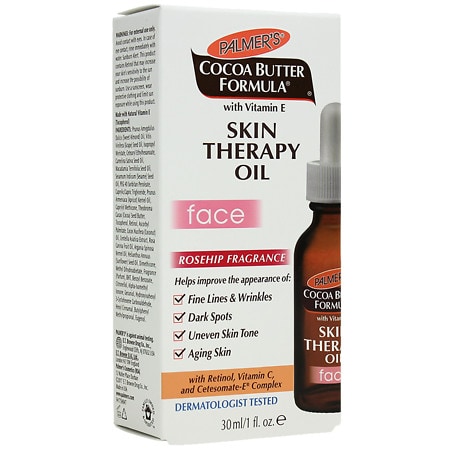

Palmer s Cocoa Butter Formula Rosehip Fragrance Skin Therapy Oil for Face Vitamin C Retinol 1 fl oz
At a glance
Summary
This product features a blend of natural oils such as sweet almond, grape seed, and macadamia nut oil, which are known for their moisturizing and antioxidant properties. The inclusion of beneficial ingredients like cocoa butter, retinol, and vitamin C further enhances its skin-nourishing and anti-aging benefits. The formulation is minimally processed and free from synthetic chemicals, making it a top-tier choice for skincare.
Key ingredients 11
Prunus Amygdalus Dulcis (Sweet Almond) OilVery Good
Sweet Almond Oil is a natural oil known for its moisturizing properties. It is rich in vitamins A and E, which help to nourish and soften the skin. It is often used to improve skin tone and texture.
Risks
There is a low risk of allergic reactions, especially for those with nut allergies.
Benefits
It provides deep hydration and can help to soothe dry, irritated skin.
Vitis Vinifera (Grape) Seed OilVery Good
Grape Seed Oil is a lightweight oil that is easily absorbed by the skin. It is high in antioxidants, including vitamin E, which help to protect the skin from free radical damage. It is also known for its anti-inflammatory properties.
Risks
Generally considered safe, but may cause irritation in sensitive individuals.
Benefits
It helps to moisturize and improve skin elasticity, making it beneficial for anti-aging.
Camelina Sativa Seed OilVery Good
Camelina Sativa Seed Oil is a natural oil rich in omega-3 fatty acids. It is known for its anti-inflammatory and antioxidant properties. It helps to nourish and protect the skin.
Risks
There is a low risk of skin irritation or allergic reactions.
Benefits
It provides hydration and can help to improve skin barrier function.
Sesame OilVery Good
Sesame Oil is a natural oil with moisturizing and antioxidant properties. It is rich in vitamins and minerals that help to nourish the skin. It is often used to improve skin texture and protect against environmental damage.
Risks
There is a low risk of allergic reactions, especially for those with sesame allergies.
Benefits
It helps to moisturize and protect the skin, making it beneficial for dry and damaged skin.
Macadamia Nut OilVery Good
Macadamia Nut Oil is a natural oil rich in monounsaturated fats and antioxidants. It is known for its moisturizing and anti-inflammatory properties. It helps to nourish and protect the skin.
Risks
There is a low risk of allergic reactions, especially for those with nut allergies.
Benefits
It provides hydration and helps to improve skin elasticity and texture.
RetinolVery Good
Retinol is a form of vitamin A known for its anti-aging properties. It helps to increase cell turnover and stimulate collagen production. It is often used to reduce the appearance of fine lines and wrinkles.
Risks
May cause skin irritation or sensitivity, especially when first introduced.
Benefits
It helps to improve skin texture and tone, making it beneficial for anti-aging.
Vitamin CVery Good
Vitamin C is a powerful antioxidant known for its brightening and anti-aging properties. It helps to protect the skin from free radical damage and improve skin tone. It is often used to reduce the appearance of dark spots and improve skin radiance.
Risks
May cause mild irritation or sensitivity in some individuals.
Benefits
It helps to brighten and even out skin tone, making it beneficial for overall skin health.
Cocoa ButterGood
Cocoa Butter is a natural fat extracted from cocoa beans, known for its moisturizing properties. It is rich in fatty acids, which help to hydrate and nourish the skin. It is often used to improve skin elasticity and reduce the appearance of scars.
Risks
May cause acne or skin irritation in some individuals with sensitive skin.
Benefits
It provides deep hydration and helps to improve skin texture and tone.
Coconut OilGood
Coconut Oil is a natural oil known for its moisturizing and antibacterial properties. It is rich in fatty acids that help to nourish and protect the skin. It is often used to improve skin hydration and reduce inflammation.
Risks
May cause acne or skin irritation in some individuals with sensitive skin.
Benefits
It provides deep hydration and helps to soothe and protect the skin.
Isopropyl MyristateNeutral
Isopropyl Myristate is a synthetic oil used to enhance the absorption of other ingredients. It provides a smooth, silky feel to the skin. It is commonly used in cosmetics for its emollient properties.
Risks
May cause skin irritation or acne in some individuals, especially those with sensitive skin.
Benefits
It helps to improve the texture and spreadability of skincare products.
Cetearyl EthylhexanoateNeutral
Cetearyl Ethylhexanoate is an ester used as an emollient and texture enhancer in cosmetics. It provides a lightweight, non-greasy feel. It is often used to improve the spreadability of products.
Risks
Generally considered safe, but may cause mild irritation in sensitive skin.
Benefits
It helps to soften and smooth the skin, enhancing the overall feel of the product.
Processing
Unprocessed or Minimally Processed Foods
Get the full breakdown in the Scout appTake Scout shopping
Scan any product to see lab results, healthy alternatives, and your personalized analysis.
Download on theApp Store GET IT ONGoogle PlayAmazon pricing & content
Amazon price as of . Product prices and availability are accurate as of the date/time indicated and are subject to change. Any price and availability information displayed on Amazon.com at the time of purchase will apply to the purchase of this product.
CERTAIN CONTENT THAT APPEARS ON THIS SITE COMES FROM AMAZON. THIS CONTENT IS PROVIDED “AS IS” AND IS SUBJECT TO CHANGE OR REMOVAL AT ANY TIME.