
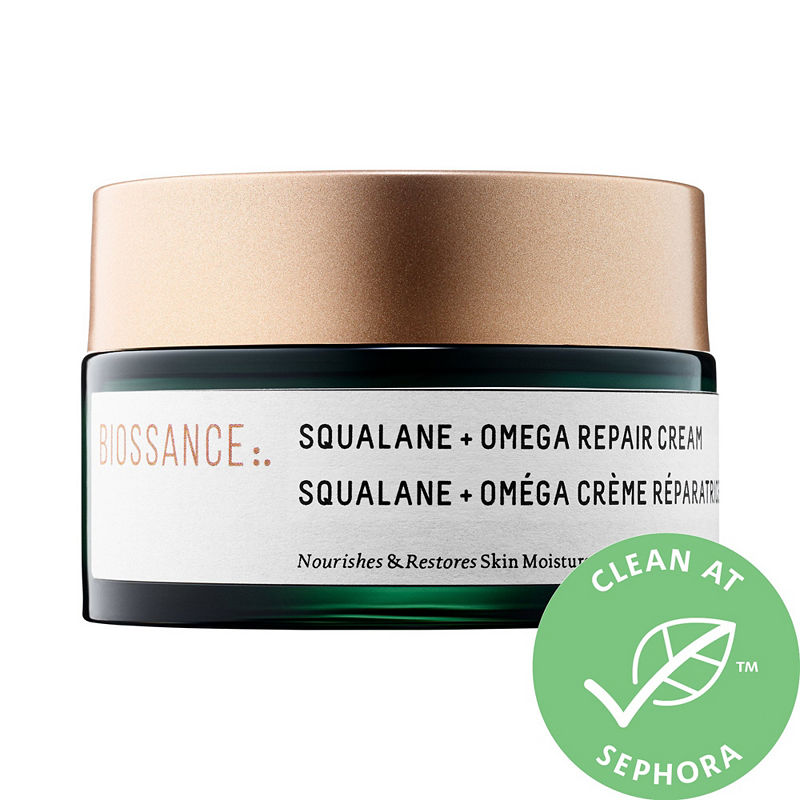
BIOSSANCE Squalane + Omega Repair Cream, 50ml

95 Excellent
View on Amazon

Summary

This moisturizer features a clean and minimal ingredient list with beneficial components like squalane, hyaluronic acid, and ceramides, which are known for their skin-repairing and hydrating properties. The absence of synthetic fragrances, parabens, and other harmful chemicals contributes to its high safety profile. Its formulation is minimally processed, focusing on natural and effective ingredients, making it an excellent choice for skincare.

At a glance

Beneficial ingredients 0
Harmful ingredients 0
Category Moisturizer

Key ingredients 12

Water

Water is a universal solvent used as a base in many cosmetic formulations. It helps dissolve other ingredients and provides hydration to the skin. It is essential for the consistency and application of the product.

Risks

There are no significant risks associated with water in cosmetics.

Benefits

Water hydrates the skin and helps in the absorption of other beneficial ingredients.

See more about Water →
Squalane

Squalane is a highly effective emollient and natural antioxidant. It mimics the skin's natural oils, making it an excellent moisturizer. It is known for its ability to penetrate the skin quickly and deeply.

Risks

There are minimal risks associated with squalane, as it is generally well-tolerated.

Benefits

Squalane helps to lock in moisture and improve skin elasticity.

See more about Squalane →
Glycerin

Glycerin is a humectant that attracts moisture to the skin. It is commonly used in skincare products to improve hydration. It helps to maintain the skin's water balance on an intercellular level.

Risks

Glycerin is generally safe, but in rare cases, it can cause irritation if used in high concentrations.

Benefits

Glycerin helps to keep the skin soft and supple by drawing moisture from the air into the skin.

See more about Glycerin →
Caprylic/Capric Triglyceride

Caprylic/Capric Triglyceride is derived from coconut oil and glycerin. It is used as an emollient and helps to create a barrier on the skin's surface. It is known for its ability to improve the spreadability of creams and lotions.

Risks

There are minimal risks, though it can cause mild irritation in sensitive individuals.

Benefits

It helps to smooth and soften the skin while providing a lightweight, non-greasy feel.

See more about Caprylic/Capric Triglyceride →
Vitamin E

Vitamin E is a powerful antioxidant that helps to protect the skin from free radical damage. It is often used in skincare for its moisturizing and healing properties. It can also help to improve the appearance of scars and skin texture.

Risks

Vitamin E is generally safe, but excessive use can lead to skin irritation.

Benefits

It supports skin health by preventing oxidative stress and maintaining skin barrier function.

See more about Vitamin E →
Hyaluronic Acid

Hyaluronic Acid is a naturally occurring substance in the skin known for its ability to retain moisture. It can hold up to 1000 times its weight in water, making it an excellent hydrating agent. It helps to plump the skin and reduce the appearance of fine lines.

Risks

Hyaluronic Acid is generally safe, but overuse can lead to dryness in some cases.

Benefits

It provides intense hydration and helps to maintain skin elasticity and firmness.

See more about Hyaluronic Acid →
Ceramide NP

Ceramide NP is a type of lipid that helps to restore the skin's natural barrier. It is crucial for retaining moisture and protecting the skin from environmental damage. It is often used in skincare to improve skin hydration and resilience.

Risks

Ceramide NP is generally considered safe with no significant risks.

Benefits

It strengthens the skin barrier and helps to prevent moisture loss.

See more about Ceramide NP →
Sorbitan Olivate

Sorbitan Olivate is an emulsifier derived from olive oil. It helps to blend oil and water-based ingredients in formulations. It is known for its mildness and ability to enhance the skin's moisture retention.

Risks

There are minimal risks associated with Sorbitan Olivate.

Benefits

It provides a smooth texture and helps to maintain skin hydration.

See more about Sorbitan Olivate →
Oleic Acid

Oleic Acid is a fatty acid that acts as an emollient and helps to soften the skin. It is commonly found in natural oils and is known for its moisturizing properties. It can also enhance the penetration of other active ingredients.

Risks

In high concentrations, it can cause skin irritation or clog pores.

Benefits

It helps to nourish and hydrate the skin, improving its overall texture.

Linolenic Acid

Linolenic Acid is an essential fatty acid that plays a crucial role in maintaining skin health. It is known for its anti-inflammatory properties and ability to improve skin barrier function. It is often used in skincare to soothe and calm irritated skin.

Risks

There are minimal risks associated with Linolenic Acid.

Benefits

It helps to reduce inflammation and improve skin hydration and elasticity.

Euterpe Oleracea Sterols

Euterpe Oleracea Sterols are derived from the acai berry and are rich in antioxidants. They help to protect the skin from oxidative stress and environmental damage. They are used in skincare for their anti-aging and skin-repairing properties.

Risks

There are minimal risks associated with Euterpe Oleracea Sterols.

Benefits

They provide antioxidant protection and help to maintain skin health and vitality.

Linoleic Acid

Linoleic Acid is an essential fatty acid that is vital for maintaining the skin's barrier function. It helps to keep the skin hydrated and supple. It is often used in skincare to improve skin texture and reduce inflammation.

Risks

There are minimal risks associated with Linoleic Acid.

Benefits

It helps to strengthen the skin barrier and improve moisture retention.

Processing

Group 1 · Minimally processed

Unprocessed or Minimally Processed Foods

Get the full breakdown in the Scout app

Scan any product to see lab results, healthy alternatives, and your personalized analysis.

Download on theApp Store