
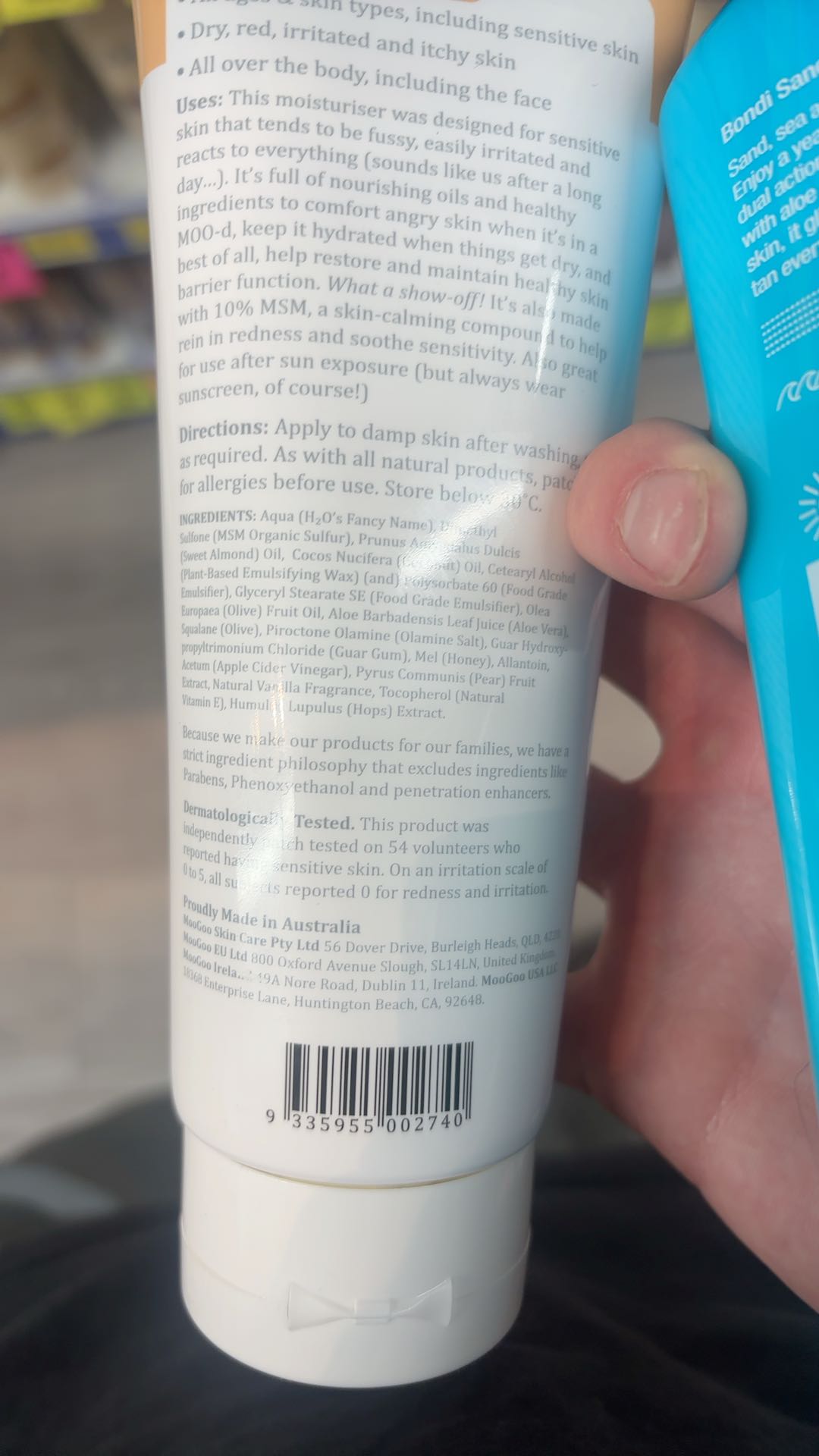

Moogoo Full Cream Moisturiser 200g
Analysis updated August 2026 · How Scout scores
At a glance
Summary
This moisturizer features a clean and natural ingredient list, including beneficial oils like sweet almond and olive oil, which are rich in vitamins and fatty acids. The inclusion of aloe vera, honey, and squalane further enhances its moisturizing and soothing properties, making it an excellent choice for skin nourishment. The product is minimally processed, with no synthetic chemicals or harmful additives, contributing to its high rating.
Key ingredients 10
Prunus Amygdalus Dulcis OilVery Good
Prunus Amygdalus Dulcis Oil, also known as sweet almond oil, is a natural oil rich in vitamins and fatty acids. It is known for its moisturizing and emollient properties. It is beneficial for soothing and nourishing the skin.
Risks
There is a minor risk of allergic reactions in individuals sensitive to nuts.
Benefits
It helps to improve skin tone and complexion, and provides deep hydration.
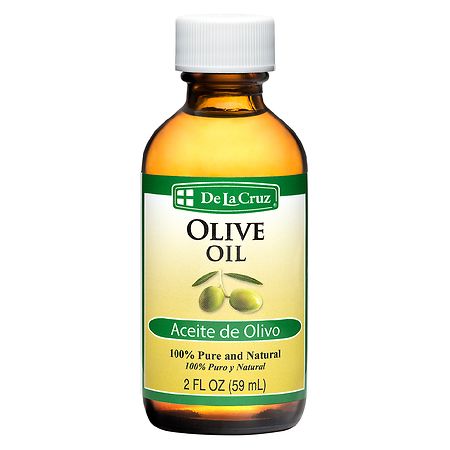
Olea Europaea Fruit OilVery Good
Olea Europaea Fruit Oil, or olive oil, is a natural oil with strong moisturizing properties. It contains antioxidants and vitamins that are beneficial for skin health. It is widely used for its ability to nourish and protect the skin.
Risks
There is a slight risk of clogging pores in very oily skin types.
Benefits
It provides deep hydration and helps to maintain skin elasticity.
Aloe VeraVery Good
Aloe Vera is a botanical ingredient known for its soothing and healing properties. It is effective in calming irritated skin and providing hydration. It is widely used for its ability to promote skin healing and reduce inflammation.
Risks
There is a minor risk of allergic reactions in sensitive individuals.
Benefits
It helps to soothe sunburns and provides a cooling effect on the skin.
AllantoinVery Good
Allantoin is a skin active known for its soothing and moisturizing properties. It helps to promote skin healing and improve skin texture. It is beneficial for sensitive and irritated skin.
Risks
There are no significant risks associated with allantoin in cosmetics.
Benefits
It helps to smooth the skin and reduce irritation.
TocopherolVery Good
Tocopherol, or Vitamin E, is a powerful antioxidant that helps to protect the skin from free radical damage. It is known for its moisturizing and anti-aging properties. It is beneficial for maintaining skin health and reducing signs of aging.
Risks
There are no significant risks associated with tocopherol in cosmetics.
Benefits
It helps to protect the skin from environmental damage and improve skin texture.
SqualaneVery Good
Squalane is a skin active known for its excellent moisturizing properties. It is similar to the skin's natural oils and helps to maintain skin hydration. It is beneficial for its ability to soften and smooth the skin.
Risks
There are no significant risks associated with squalane in cosmetics.
Benefits
It helps to improve skin elasticity and reduce the appearance of fine lines.
Coconut OilGood
Coconut oil is a natural oil known for its moisturizing and antibacterial properties. It is rich in fatty acids that help to nourish and protect the skin. It is effective in reducing skin dryness and flakiness.
Risks
It may cause breakouts in acne-prone skin due to its comedogenic nature.
Benefits
It provides deep hydration and helps to soothe irritated skin.
HoneyGood
Honey is a natural ingredient with moisturizing and antibacterial properties. It is effective in retaining moisture and promoting skin healing. It is beneficial for its ability to soothe and hydrate the skin.
Risks
There is a minor risk of allergic reactions in individuals sensitive to bee products.
Benefits
It helps to maintain skin moisture and provides a natural glow.
Milk ProteinGood
Milk protein is known for its nourishing and moisturizing properties. It helps to improve skin texture and elasticity. It is beneficial for its ability to hydrate and soften the skin.
Risks
There is a minor risk of allergic reactions in individuals with dairy allergies.
Benefits
It helps to nourish the skin and improve its overall appearance.
WaterNeutral
Water is a common solvent used in cosmetics to dissolve other ingredients. It helps in the application and absorption of the product. It does not provide direct benefits or risks.
Risks
There are no significant risks associated with water in cosmetics.
Benefits
Water helps in hydrating the skin by acting as a vehicle for other moisturizing ingredients.
Processing
Unprocessed or Minimally Processed Foods
Get the full breakdown in the Scout appTake Scout shopping
Scan any product to see lab results, healthy alternatives, and your personalized analysis.
Download on theApp Store GET IT ONGoogle PlayAmazon pricing & content
Amazon price as of . Product prices and availability are accurate as of the date/time indicated and are subject to change. Any price and availability information displayed on Amazon.com at the time of purchase will apply to the purchase of this product.
CERTAIN CONTENT THAT APPEARS ON THIS SITE COMES FROM AMAZON. THIS CONTENT IS PROVIDED “AS IS” AND IS SUBJECT TO CHANGE OR REMOVAL AT ANY TIME.