
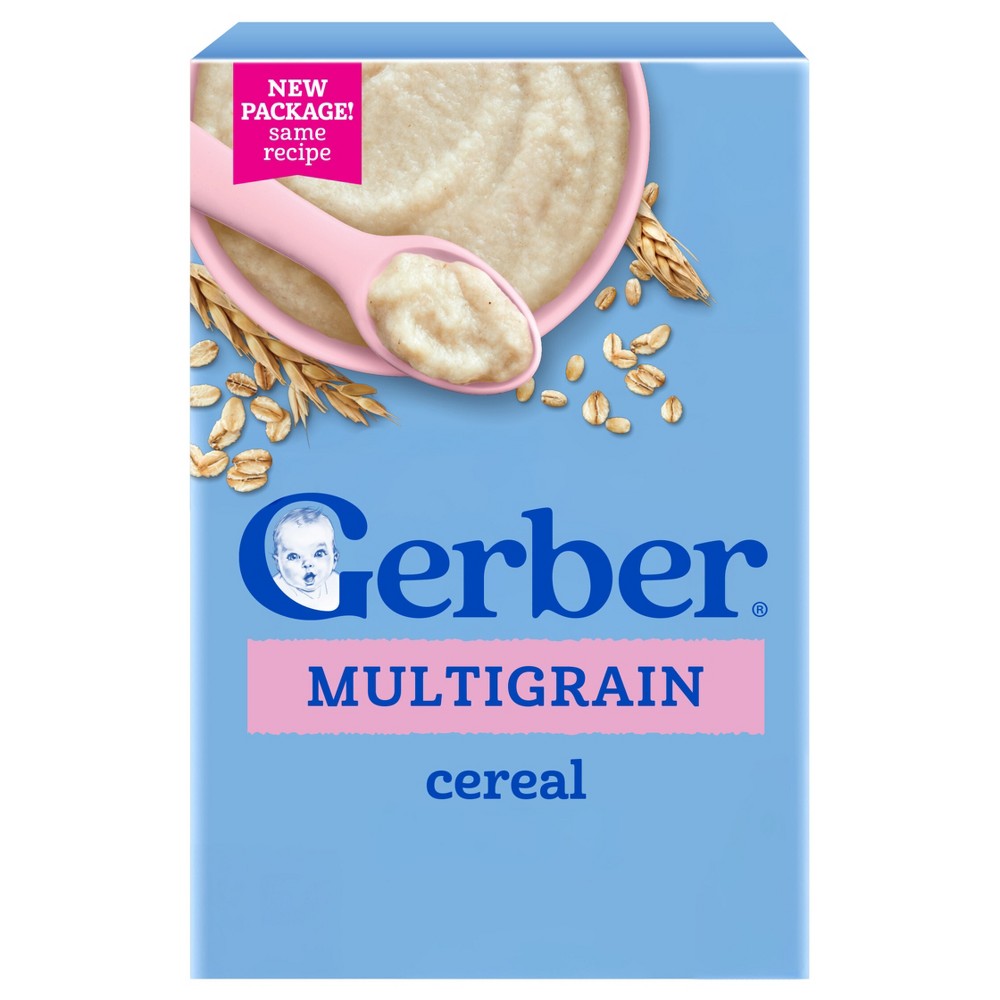


Gerber Non-GMO Baby Food Stage 2 Multigrain Baby Cereal - 16oz: Kosher, Cholesterol Free, No Artificial Flavors
Summary
This baby cereal is made with whole grain ingredients like wheat and oat flour, which provide beneficial fiber and nutrients. However, it is a processed food with added minerals and vitamins, which, while beneficial, indicate a higher level of processing. The absence of artificial flavors and the use of non-GMO ingredients are positive aspects, but the processing level limits the score.
At a glance
Key ingredients 9
Whole Grain Wheat FlourVery Good
Whole grain wheat flour is a minimally processed ingredient rich in dietary fiber and essential nutrients. It provides complex carbohydrates that are beneficial for sustained energy release. The use of whole grains ensures a higher nutrient density compared to refined flours.
Risks
Contains gluten, which may be a concern for individuals with celiac disease or gluten sensitivity.
Benefits
Rich in dietary fiber, vitamins, and minerals, supporting digestive health and providing essential nutrients for growth.
Whole Grain Oat FlourVery Good
Whole grain oat flour is a nutritious ingredient that provides soluble fiber, particularly beta-glucan, which supports heart health. It is minimally processed, retaining most of its natural nutrients. Oats are known for their ability to help regulate blood sugar levels.
Benefits
Provides soluble fiber that can help lower cholesterol levels and support heart health.
Oat FlourGood
Oat flour is a good source of carbohydrates and fiber, contributing to a balanced diet. It is less processed than refined flours, retaining more nutrients. Oats are known for their beneficial effects on cholesterol and blood sugar levels.
Benefits
Contributes to heart health and provides a source of energy and fiber.
Pearled Barley FlourGood
Pearled barley flour is a processed form of barley that retains some fiber and nutrients. It is a source of complex carbohydrates and provides a chewy texture. Although some fiber is lost during processing, it still offers nutritional benefits.
Risks
Contains gluten, which may be a concern for individuals with celiac disease or gluten sensitivity.
Benefits
Provides complex carbohydrates and some fiber, supporting energy levels and digestive health.
Potassium PhosphateNeutral
Potassium phosphate is used as a mineral supplement and acidity regulator in foods. It helps maintain pH balance and provides potassium, an essential nutrient. It is generally recognized as safe when used in appropriate amounts.
Risks
Excessive intake may lead to imbalances in mineral levels, but this is unlikely in typical food consumption.
Benefits
Provides potassium, which is important for maintaining electrolyte balance and proper muscle function.
Calcium CarbonateNeutral
Calcium carbonate is a common dietary supplement used to increase calcium intake. It is used to fortify foods and support bone health. It is generally safe when consumed in recommended amounts.
Risks
Excessive consumption can lead to hypercalcemia, but this is rare in typical dietary use.
Benefits
Provides calcium, essential for bone health and various metabolic functions.
IronGood
Iron is an essential mineral that plays a critical role in oxygen transport and energy production. It is often added to foods to prevent iron deficiency anemia. Fortification helps ensure adequate intake, especially in infants and young children.
Risks
Excessive iron intake can lead to toxicity, but this is unlikely with normal dietary consumption.
Benefits
Supports oxygen transport in the blood and is crucial for growth and development.
ZincGood
Zinc is an essential trace element important for immune function and cellular metabolism. It is often added to foods to support overall health and development. Adequate zinc intake is crucial for growth and immune system support.
Risks
Excessive zinc intake can interfere with copper absorption, but this is rare with normal dietary consumption.
Benefits
Supports immune function and is essential for growth and development.
B VitaminsGood
B vitamins are essential nutrients that play a key role in energy metabolism and brain function. They are often added to foods to ensure adequate intake. Fortification helps prevent deficiencies, especially in growing children.
Benefits
Supports energy metabolism and is crucial for brain health and development.
Processing
Processed Foods
Get the full breakdown in the Scout app
Scan any product to see lab results, healthy alternatives, and your personalized analysis.
Download on theApp Store