
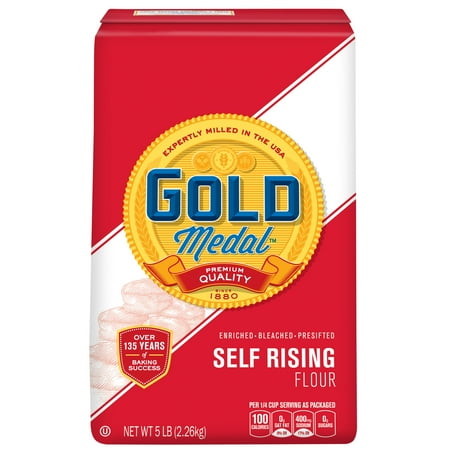

Gold Medal Self-Rising Flour
Analysis updated August 2026 · How Scout scores
At a glance
Summary
Gold Medal Self-Rising Flour is a processed product with a moderate level of additives, including leavening agents and calcium sulfate. While it contains beneficial nutrients like niacin, iron, and folic acid, which are added to enrich the flour, the presence of multiple additives and the processing level limit its score. The absence of harmful ingredients like artificial dyes or seed oils is a positive aspect, but the overall processing and additive content prevent a higher rating.
Key ingredients 10
Niacin (a b vitamin)Good
Niacin is an essential B vitamin that supports energy metabolism and overall health.
IronGood
Iron is vital for oxygen transport in the body and helps prevent anemia.
See more about Iron →Thiamine mononitrate (vitamin b1)Good
Thiamine (B1) supports energy production and proper nerve function.
See more about Thiamine mononitrate (vitamin b1) →Riboflavin (vitamin b2)Good
Riboflavin is important for energy production and cellular health.
See more about Riboflavin (vitamin b2) →Baking SodaNeutral
Part of Leavening. Leavening agents are standard in baking to help dough rise and are generally considered safe when used appropriately.
See more about Baking Soda →Sodium Aluminum PhosphateNeutral
Part of Leavening. Leavening agents are standard in baking to help dough rise and are generally considered safe when used appropriately.
See more about Sodium Aluminum Phosphate →Monocalcium PhosphateNeutral
Part of Leavening. Leavening agents are standard in baking to help dough rise and are generally considered safe when used appropriately.
See more about Monocalcium Phosphate →SaltNeutral
Salt is a common seasoning that enhances flavor but should be consumed in moderation.
See more about Salt →Calcium sulfateNeutral
Calcium sulfate is used as a food additive and is generally recognized as safe for fortification and processing.
See more about Calcium sulfate →Bleached wheat flourBad
Bleached wheat flour is highly processed and stripped of some nutrients, which can reduce its natural health benefits.
See more about Bleached wheat flour →Processing
Processed Foods
Get the full breakdown in the Scout appTake Scout shopping
Scan any product to see lab results, healthy alternatives, and your personalized analysis.
Download on theApp Store GET IT ONGoogle PlayAmazon pricing & content
Amazon price as of . Product prices and availability are accurate as of the date/time indicated and are subject to change. Any price and availability information displayed on Amazon.com at the time of purchase will apply to the purchase of this product.
CERTAIN CONTENT THAT APPEARS ON THIS SITE COMES FROM AMAZON. THIS CONTENT IS PROVIDED “AS IS” AND IS SUBJECT TO CHANGE OR REMOVAL AT ANY TIME.