
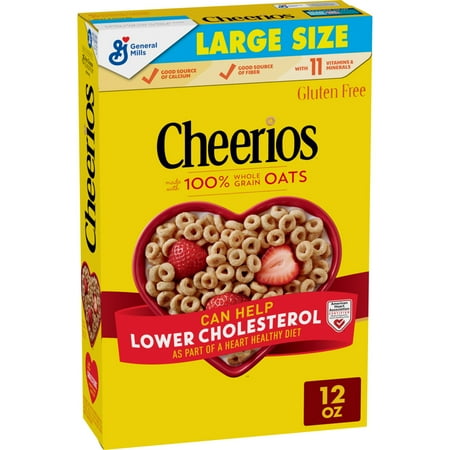


Cheerios Cereal
Summary
Cheerios Cereal is made primarily from whole grain oats, which are beneficial for heart health and digestion. However, it contains added sugar and is moderately processed, which limits its health benefits. The presence of essential vitamins and minerals is positive, but the processing level and added sugar prevent it from achieving a higher score.
At a glance
Key ingredients 10
Whole grain oatsVery Good
Whole grain oats are a rich source of dietary fiber and essential nutrients. They are minimally processed, retaining most of their natural nutrients. Oats are known to support heart health and improve digestion.
Benefits
Rich in beta-glucan, which can help lower cholesterol levels and improve heart health. Provides a good source of energy and supports digestive health.
Corn starchNeutral
Corn starch is used as a thickening agent and is highly processed. It provides no significant nutritional value. It is primarily used to improve texture and consistency in food products.
Risks
Excessive consumption may lead to blood sugar spikes due to its high glycemic index.
SugarBad
Refined sugar is associated with various health issues when consumed in excess. It is highly processed and contributes to empty calories. Excessive sugar intake can lead to obesity and metabolic disorders.
Risks
High consumption can increase the risk of obesity, type 2 diabetes, and heart disease.
Benefits
Provides quick energy but lacks essential nutrients.
SaltNeutral
Salt is used to enhance flavor and preserve food. It is essential for maintaining fluid balance and nerve function. However, excessive intake can lead to health issues.
Risks
High sodium intake can increase the risk of hypertension and cardiovascular diseases.
Benefits
Essential for maintaining electrolyte balance and proper muscle function.
Tripotassium phosphateNeutral
Tripotassium phosphate is used as a food additive to regulate acidity and improve texture. It is generally recognized as safe in small amounts. It helps maintain the stability of the product.
Risks
Excessive consumption may lead to imbalances in mineral levels.
Benefits
Helps maintain product stability and improve texture.
Vitamin E (mixed tocopherols)Good
Vitamin E is an antioxidant that helps protect cells from oxidative damage. It is added to preserve freshness and extend shelf life. It supports immune function and skin health.
Benefits
Acts as an antioxidant and supports immune function and skin health.
Calcium carbonateGood
Calcium carbonate is a source of calcium, essential for bone health. It is commonly used to fortify foods and prevent calcium deficiency. It supports bone density and dental health.
Risks
Excessive intake may lead to kidney stones or impaired absorption of other minerals.
Benefits
Supports bone health and helps prevent calcium deficiency.
Iron and zinc (mineral nutrients)Good
Iron and zinc are essential minerals that support various bodily functions. Iron is crucial for oxygen transport, while zinc supports immune function. They are added to fortify the cereal and prevent deficiencies.
Risks
Excessive intake can lead to toxicity and interfere with the absorption of other minerals.
Benefits
Supports immune function and oxygen transport in the body.
Vitamin C (sodium ascorbate)Good
Vitamin C is an antioxidant that supports immune health and collagen synthesis. Sodium ascorbate is a form of vitamin C used to fortify foods. It helps improve iron absorption and supports skin health.
Benefits
Supports immune function and enhances iron absorption.
Vitamin B6 (pyridoxine hydrochloride)Good
Vitamin B6 is essential for protein metabolism and cognitive development. Pyridoxine hydrochloride is a form of vitamin B6 used in food fortification. It supports brain health and energy metabolism.
Benefits
Supports brain health and energy metabolism.
Processing
Processed Foods
Get the full breakdown in the Scout app
Scan any product to see lab results, healthy alternatives, and your personalized analysis.
Download on theApp Store