
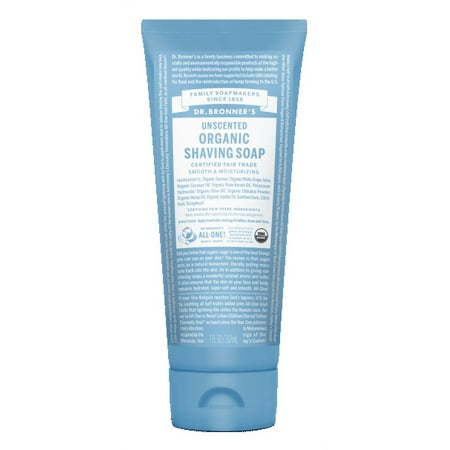
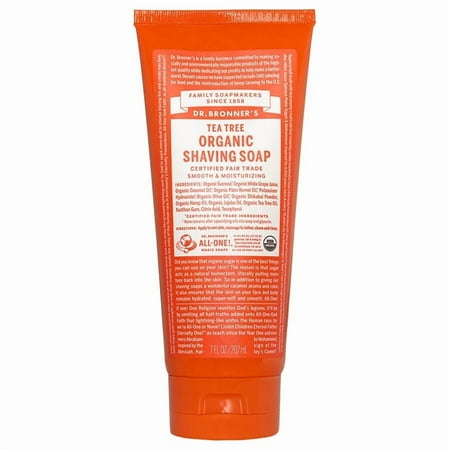



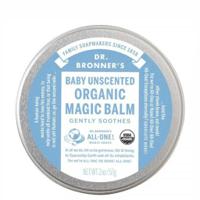
Dr. Bronner s Organic Unscented Shaving Soap 7oz
Dr. Bronner'sAnalysis updated August 2026 · How Scout scores
At a glance
Summary
This shaving soap is composed primarily of organic and natural ingredients, such as coconut oil, olive oil, and jojoba oil, which are known for their moisturizing and skin-nourishing properties. The product avoids synthetic chemicals and harmful additives, resulting in a clean label with minimal processing. The inclusion of beneficial oils and the absence of fragrances or harsh chemicals contribute to its high rating.
Key ingredients 12
Organic Coconut OilVery Good
Organic coconut oil is a highly beneficial natural oil known for its moisturizing and antimicrobial properties. It helps to nourish and protect the skin, making it a popular choice in skincare products. Its fatty acids can help to reinforce the skin's natural barrier.
Risks
It may clog pores in some individuals with acne-prone skin.
Benefits
It deeply moisturizes and can help to soothe and protect the skin.
Organic Olive OilVery Good
Organic olive oil is a nourishing oil rich in antioxidants and healthy fats, beneficial for skin hydration and protection. It helps to improve skin elasticity and provides a soothing effect. Its high content of oleic acid makes it an excellent moisturizer.
Risks
It may not be suitable for very oily skin types as it can be heavy.
Benefits
It deeply moisturizes and provides antioxidant protection.
Organic Hemp Seed OilVery Good
Organic hemp seed oil is rich in essential fatty acids and has anti-inflammatory properties, making it excellent for soothing and moisturizing the skin. It helps to balance oil production and is non-comedogenic. Its omega-3 and omega-6 fatty acids support skin health.
Risks
There are minimal risks, though it may cause irritation in rare cases.
Benefits
It provides deep hydration and helps to soothe inflammation.
Organic Jojoba OilVery Good
Organic jojoba oil closely resembles the skin's natural sebum, making it an excellent moisturizer and skin conditioner. It helps to balance oil production and is non-comedogenic. Its anti-inflammatory properties can help to soothe irritated skin.
Risks
There are minimal risks, as it is generally well-tolerated by all skin types.
Benefits
It moisturizes and balances the skin's natural oils.
Organic Palm Kernel OilGood
Organic palm kernel oil is used for its emollient properties, helping to soften and condition the skin. It is rich in lauric acid, which has antimicrobial benefits. However, its environmental impact due to palm oil production is a concern.
Risks
Sustainability and environmental concerns are associated with palm oil production.
Benefits
It provides moisturizing benefits and can help to improve skin texture.
Organic Shikakai PowderGood
Organic shikakai powder is a natural cleanser known for its gentle cleansing properties without stripping natural oils. It is traditionally used in hair care but also benefits skin by maintaining its natural pH. It is rich in vitamins and antioxidants.
Risks
There are minimal risks, though it may cause dryness if used excessively.
Benefits
It gently cleanses while maintaining the skin's natural oils.
TocopherolGood
Tocopherol, or Vitamin E, is a powerful antioxidant that helps to protect the skin from free radical damage. It also has moisturizing properties and can improve skin texture. It is widely used in skincare for its protective benefits.
Risks
There are minimal risks, though it may cause irritation in very sensitive skin.
Benefits
It provides antioxidant protection and moisturizes the skin.
Organic SucroseNeutral
Organic sucrose is a natural sugar used for its humectant properties, helping to retain moisture. It is generally considered safe and non-irritating for skin applications. However, it does not provide significant active benefits beyond moisture retention.
Risks
There are minimal risks associated with sucrose in topical applications.
Benefits
It helps in maintaining skin hydration by attracting moisture.
Organic White Grape JuiceNeutral
Organic white grape juice is used for its antioxidant properties and mild astringency. It can help in soothing the skin and providing a gentle cleansing effect. However, its benefits are limited in topical applications compared to direct consumption.
Risks
There are minimal risks when used topically, though it may cause irritation in very sensitive skin.
Benefits
It provides antioxidants that can help protect the skin from environmental damage.
Potassium HydroxideNeutral
Potassium hydroxide is used in small amounts to saponify oils, turning them into soap. It is essential for the soap-making process but is neutralized in the final product. In high concentrations, it can be irritating, but it is safe in properly formulated products.
Risks
In high concentrations, it can cause irritation, but it is neutralized in soap.
Benefits
It is necessary for the saponification process, converting oils into soap.
Xanthan GumNeutral
Xanthan gum is used as a thickening agent and stabilizer in cosmetic formulations. It helps to improve the texture and consistency of products. It is generally considered safe and non-irritating.
Risks
There are minimal risks associated with its use in cosmetics.
Benefits
It improves product texture and stability.
Citric AcidNeutral
Citric acid is used to adjust the pH of cosmetic products and can act as a mild exfoliant. It helps to maintain the stability and effectiveness of the formulation. In high concentrations, it can be irritating, but it is safe in small amounts.
Risks
In high concentrations, it can cause irritation, but it is safe in small amounts.
Benefits
It helps to maintain product stability and can gently exfoliate.
Get the full breakdown in the Scout appTake Scout shopping
Scan any product to see lab results, healthy alternatives, and your personalized analysis.
Download on theApp Store GET IT ONGoogle PlayAmazon pricing & content
Amazon price as of . Product prices and availability are accurate as of the date/time indicated and are subject to change. Any price and availability information displayed on Amazon.com at the time of purchase will apply to the purchase of this product.
CERTAIN CONTENT THAT APPEARS ON THIS SITE COMES FROM AMAZON. THIS CONTENT IS PROVIDED “AS IS” AND IS SUBJECT TO CHANGE OR REMOVAL AT ANY TIME.