
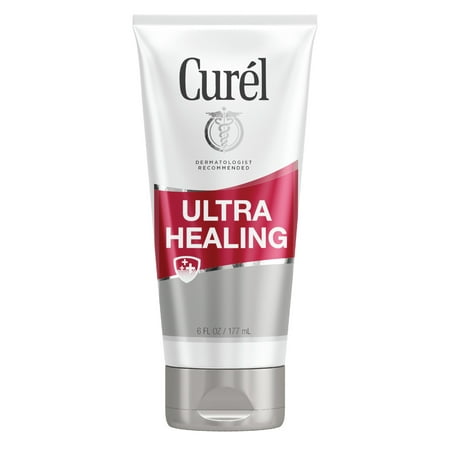
Curel Ultra Healing Intensive Fragrance-Free Lotion For Extra-Dry Skin Dermatologist Recommended Ideal for Sensitive Skin Cruelty Free Paraben Free 6 Oz
Summary
This lotion is free from parabens and synthetic fragrances, which are often linked to skin irritation and endocrine disruption. However, it contains some synthetic emulsifiers and preservatives that slightly lower its safety profile. The product is processed, but it maintains a relatively clean label with no major harmful ingredients.
At a glance
Key ingredients 25
Water
Water is a universal solvent and is used as a base in many cosmetic formulations. It helps dissolve other ingredients and provides hydration to the skin. It is generally considered safe and non-irritating.
Risks
There are no significant risks associated with water in cosmetic formulations.
Benefits
Water hydrates the skin and helps in the absorption of other beneficial ingredients.
Glycerin
Glycerin is a humectant that attracts moisture to the skin, helping to keep it hydrated. It is widely used in skincare products due to its moisturizing properties. It is generally considered safe and beneficial for all skin types.
Risks
There are minimal risks associated with glycerin, though it may cause irritation in very sensitive skin.
Benefits
Glycerin helps maintain skin hydration and improves skin barrier function.
Petrolatum
Petrolatum is an occlusive agent that forms a barrier on the skin to prevent moisture loss. It is effective in treating dry skin conditions. However, it is a petroleum-derived product and can be considered controversial.
Risks
Petrolatum can potentially clog pores and may contain impurities if not properly refined.
Benefits
It provides a protective barrier that locks in moisture, aiding in skin repair.
Cetearyl Alcohol
Cetearyl Alcohol is a fatty alcohol used as an emollient and thickening agent in cosmetics. It helps to soften and smooth the skin. It is generally considered safe and non-irritating.
Risks
There are minimal risks associated with cetearyl alcohol, though it may cause irritation in very sensitive skin.
Benefits
It improves the texture of products and provides moisturizing benefits.
Dimethicone
Dimethicone is a silicone-based polymer used to provide a smooth application and form a protective barrier on the skin. It helps to fill in fine lines and improve skin texture. It is generally considered safe for use in cosmetics.
Risks
Dimethicone can potentially clog pores and may not be suitable for acne-prone skin.
Benefits
It provides a silky feel and helps to protect the skin from moisture loss.
Behentrimonium Chloride
Behentrimonium Chloride is a conditioning agent that helps to detangle and soften the skin. It is commonly used in hair and skincare products for its conditioning properties. It is generally considered safe in low concentrations.
Risks
In higher concentrations, it can cause skin irritation and allergic reactions.
Benefits
It improves the texture and feel of the skin, making it smoother and softer.
Isopropyl Palmitate
Isopropyl Palmitate is an emollient that helps to improve the texture and spreadability of products. It is derived from palm oil and is used to enhance skin softness. It is generally considered safe for use in cosmetics.
Risks
It can potentially clog pores and may not be suitable for acne-prone skin.
Benefits
It provides a smooth application and helps to soften the skin.
Cetyl-Pg Hydroxyethyl Palmitamide
Cetyl-Pg Hydroxyethyl Palmitamide is a synthetic lipid used as a skin conditioning agent. It helps to improve skin hydration and barrier function. It is generally considered safe for use in cosmetics.
Risks
There are minimal risks associated with this ingredient, though it may cause irritation in very sensitive skin.
Benefits
It enhances skin hydration and improves barrier function.
Isopropyl Alcohol
Isopropyl Alcohol is used as a solvent and astringent in cosmetics. It helps to dissolve other ingredients and provides a cooling effect on the skin. However, it can be drying and irritating to the skin.
Risks
It can cause skin dryness and irritation, especially in sensitive skin.
Benefits
It provides a cooling sensation and helps to dissolve other ingredients.
Butylene Glycol
Butylene Glycol is a humectant that helps to retain moisture in the skin. It is used to improve the texture and spreadability of products. It is generally considered safe for use in cosmetics.
Risks
There are minimal risks associated with butylene glycol, though it may cause irritation in very sensitive skin.
Benefits
It helps to maintain skin hydration and improves product texture.
Hydroxyacetophenone
Hydroxyacetophenone is an antioxidant and preservative used to protect the product from degradation. It helps to stabilize formulations and extend shelf life. It is generally considered safe for use in cosmetics.
Risks
There are minimal risks associated with hydroxyacetophenone.
Benefits
It provides antioxidant benefits and helps to preserve the product.
Benzalkonium Chloride
Benzalkonium Chloride is a preservative and antimicrobial agent used to prevent bacterial growth in products. It is effective in low concentrations but can be irritating to the skin.
Risks
It can cause skin irritation and allergic reactions, especially in sensitive skin.
Benefits
It helps to preserve the product by preventing microbial growth.
Citrus Aurantium Dulcis Peel Oil
Citrus Aurantium Dulcis Peel Oil is an essential oil used for its fragrance and potential antioxidant properties. It is derived from orange peel and can provide a refreshing scent. However, it can be irritating to sensitive skin.
Risks
It can cause skin irritation and photosensitivity, especially in sensitive skin.
Benefits
It provides a natural fragrance and may offer antioxidant benefits.
Avena Sativa Meal Extract
Avena Sativa Meal Extract is derived from oats and is used for its soothing and anti-inflammatory properties. It is beneficial for sensitive and irritated skin. It is generally considered safe and beneficial for all skin types.
Risks
There are minimal risks associated with Avena Sativa Meal Extract.
Benefits
It soothes and calms irritated skin and provides anti-inflammatory benefits.
Eucalyptus Globulus Leaf Extract
Eucalyptus Globulus Leaf Extract is used for its antimicrobial and anti-inflammatory properties. It provides a refreshing scent and can help to soothe the skin. However, it can be irritating to sensitive skin.
Risks
It can cause skin irritation and allergic reactions, especially in sensitive skin.
Benefits
It provides antimicrobial benefits and a refreshing scent.
Sodium Lauroyl Lactylate
Sodium Lauroyl Lactylate is a mild surfactant and emulsifier used to improve the texture and stability of products. It is derived from lauric acid and is generally considered safe for use in cosmetics.
Risks
There are minimal risks associated with sodium lauroyl lactylate.
Benefits
It helps to stabilize formulations and improve product texture.
Ceramide NP
Ceramide NP is a lipid molecule that helps to restore the skin barrier and retain moisture. It is beneficial for dry and sensitive skin. It is generally considered safe and beneficial for all skin types.
Risks
There are minimal risks associated with ceramide NP.
Benefits
It helps to restore the skin barrier and improve hydration.
Ceramide AP
Ceramide AP is a type of ceramide used to strengthen the skin barrier and improve moisture retention. It is beneficial for dry and sensitive skin. It is generally considered safe and beneficial for all skin types.
Risks
There are minimal risks associated with ceramide AP.
Benefits
It strengthens the skin barrier and enhances moisture retention.
Phytosphingosine
Phytosphingosine is a lipid that helps to restore the skin barrier and has antimicrobial properties. It is beneficial for acne-prone and sensitive skin. It is generally considered safe and beneficial for all skin types.
Risks
There are minimal risks associated with phytosphingosine.
Benefits
It helps to restore the skin barrier and provides antimicrobial benefits.
Cholesterol
Cholesterol is a lipid that helps to maintain the skin barrier and improve moisture retention. It is beneficial for dry and sensitive skin. It is generally considered safe and beneficial for all skin types.
Risks
There are minimal risks associated with cholesterol.
Benefits
It helps to maintain the skin barrier and improve hydration.
Xanthan Gum
Xanthan Gum is a thickening agent used to stabilize and improve the texture of products. It is derived from natural sources and is generally considered safe for use in cosmetics.
Risks
There are minimal risks associated with xanthan gum.
Benefits
It helps to stabilize formulations and improve product texture.
Ethylhexylglycerin
Ethylhexylglycerin is a preservative and skin conditioning agent used to enhance the efficacy of other preservatives. It is generally considered safe for use in cosmetics.
Risks
There are minimal risks associated with ethylhexylglycerin.
Benefits
It enhances the efficacy of preservatives and provides skin conditioning benefits.
Polyacrylic Acid
Polyacrylic Acid is a thickening agent used to stabilize and improve the texture of products. It is a synthetic polymer and is generally considered safe for use in cosmetics.
Risks
There are minimal risks associated with polyacrylic acid.
Benefits
It helps to stabilize formulations and improve product texture.
Ceramide EOP
Ceramide EOP is a type of ceramide used to restore the skin barrier and improve moisture retention. It is beneficial for dry and sensitive skin. It is generally considered safe and beneficial for all skin types.
Risks
There are minimal risks associated with ceramide EOP.
Benefits
It helps to restore the skin barrier and enhance moisture retention.
Limonene
Limonene is a fragrance component derived from citrus oils. It provides a pleasant scent but can be irritating to sensitive skin. It is generally considered safe in low concentrations.
Risks
It can cause skin irritation and allergic reactions, especially in sensitive skin.
Benefits
It provides a natural citrus fragrance.
Processing
Processed Foods
Get the full breakdown in the Scout app
Scan any product to see lab results, healthy alternatives, and your personalized analysis.
Download on theApp Store