
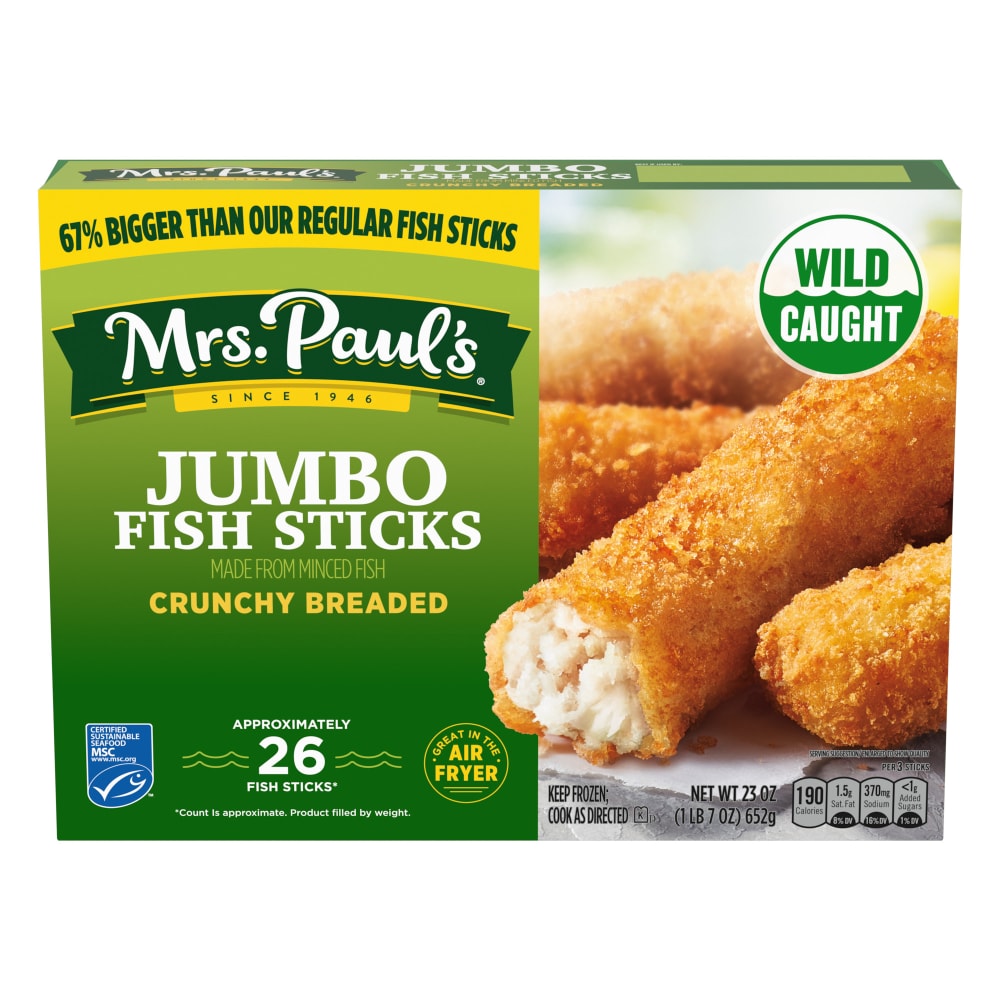

Jumbo Fish Sticks
Summary
The product contains minced Alaska Pollock, which is a beneficial source of lean protein and omega-3 fatty acids. However, the inclusion of soybean oil, a seed oil high in omega-6 fatty acids, is a concern due to its potential inflammatory effects. Additionally, the product is moderately processed, which limits its overall healthiness despite having some nutritious components.
At a glance
Key ingredients 10
Minced Alaska PollockGood
Minced Alaska Pollock is a good source of lean protein and omega-3 fatty acids. It is minimally processed and provides essential nutrients like vitamin B12 and selenium. Compared to other fish, it is low in mercury, making it a safer choice for regular consumption.
Benefits
Provides high-quality protein and essential omega-3 fatty acids that support heart and brain health.
Wheat FlourNeutral
Wheat flour is a common ingredient used as a binding agent in processed foods. It provides carbohydrates and some protein but lacks significant micronutrients. It is not inherently harmful but may contribute to gluten sensitivity in some individuals.
Risks
May cause allergic reactions or digestive issues in individuals with gluten intolerance or celiac disease.
Benefits
Provides carbohydrates for energy and some protein content.
WaterNeutral
Water is used as a solvent and processing aid in food production. It is essential for hydration and does not contribute calories or nutrients. In this context, it serves to maintain moisture and texture in the product.
Benefits
Essential for hydration and maintaining the texture of the product.
Soybean OilVery Bad
Soybean oil is a seed oil high in omega-6 fatty acids, which can promote inflammation if consumed in excess. It is often extracted using chemical solvents, which may leave residues. Compared to healthier oils, it lacks beneficial monounsaturated fats.
Risks
High omega-6 content may promote inflammation when consumed in excess.
Enriched Wheat FlourNeutral
Enriched wheat flour is refined flour with added nutrients like iron and B vitamins. It provides carbohydrates and some micronutrients but lacks the fiber found in whole grains. It is commonly used in processed foods for texture and structure.
Risks
May cause allergic reactions or digestive issues in individuals with gluten intolerance or celiac disease.
Benefits
Provides carbohydrates for energy and added nutrients like iron and B vitamins.
NiacinNeutral
Niacin, also known as vitamin B3, is added to enriched flour to prevent deficiencies. It plays a role in energy metabolism and maintaining healthy skin and nerves. In fortified foods, it helps meet daily nutritional requirements.
Benefits
Supports energy metabolism and helps maintain healthy skin and nerves.
Ferrous SulfateNeutral
Ferrous sulfate is an iron supplement added to enriched flour to prevent iron deficiency anemia. It is a common fortification in processed foods to ensure adequate iron intake. While beneficial in preventing deficiency, excessive intake can cause gastrointestinal issues.
Risks
Excessive intake may cause gastrointestinal issues such as constipation or nausea.
Benefits
Helps prevent iron deficiency anemia by providing a source of dietary iron.
Thiamine MononitrateNeutral
Thiamine mononitrate is a form of vitamin B1 added to enriched flour to prevent deficiencies. It is essential for carbohydrate metabolism and nerve function. Fortification helps ensure adequate intake in diets lacking whole grains.
Benefits
Supports carbohydrate metabolism and nerve function.
RiboflavinNeutral
Riboflavin, or vitamin B2, is added to enriched flour to support energy production and cellular function. It is water-soluble and helps convert food into energy. Fortification ensures adequate intake in processed foods.
Benefits
Supports energy production and cellular function.
Folic AcidNeutral
Folic acid is a synthetic form of vitamin B9 added to enriched flour to prevent neural tube defects. It is crucial for DNA synthesis and cell division. Fortification helps meet dietary needs, especially in pregnant women.
Benefits
Prevents neural tube defects and supports DNA synthesis and cell division.
Processing
Processed Foods
Get the full breakdown in the Scout app
Scan any product to see lab results, healthy alternatives, and your personalized analysis.
Download on theApp Store