
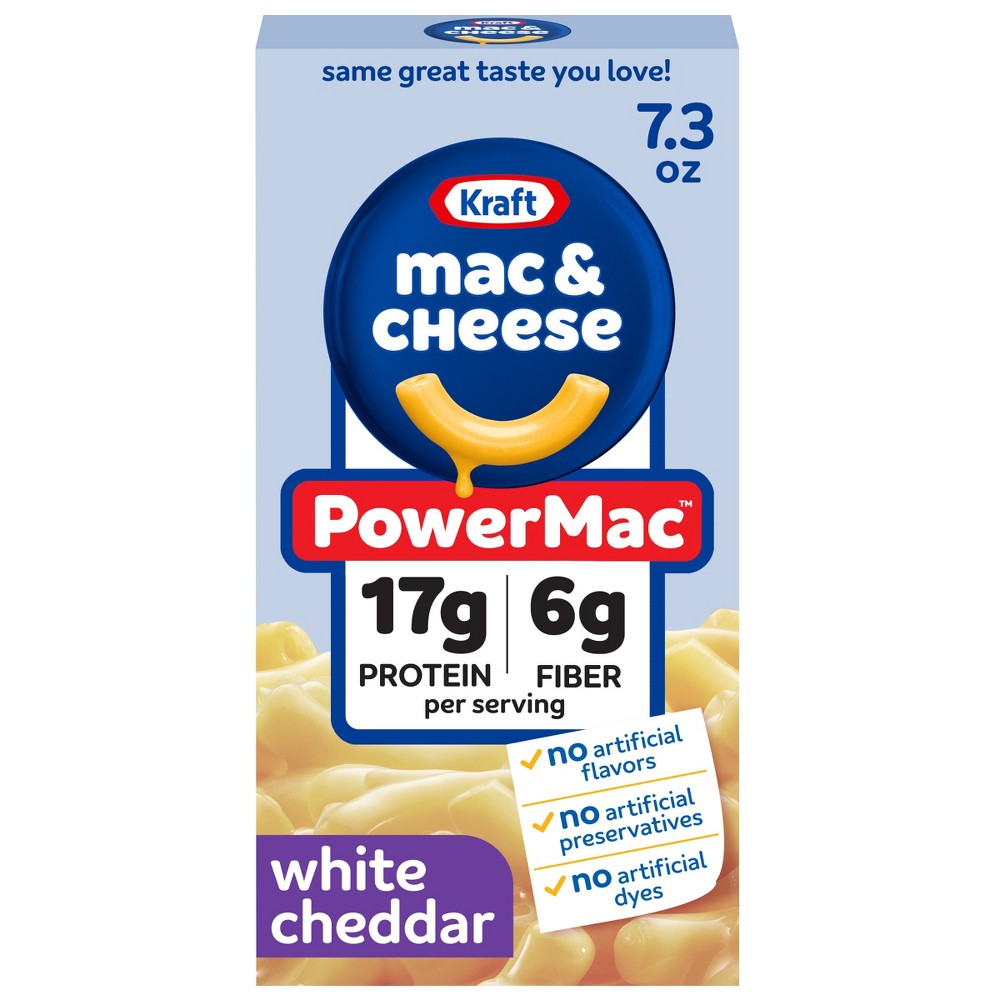




Kraft Power Mac White Cheddar Mac and Cheese - 7.3oz
Summary
This product contains a mix of beneficial ingredients like whey, milk, and added vitamins, which contribute to its nutritional profile. However, it is a processed food with ingredients such as pea protein isolate, which is a highly processed plant protein. The presence of processed ingredients and the overall level of processing limit its healthiness score.
At a glance
Key ingredients 11
Pasta with pea proteinNeutral
Pasta with pea protein is a source of carbohydrates and plant-based protein. It is a processed food but provides a balance of macronutrients. The inclusion of pea protein enhances the protein content compared to traditional pasta.
Risks
May contain gluten and could be a concern for those with celiac disease or gluten sensitivity.
Benefits
Provides a source of carbohydrates and plant-based protein, which can be beneficial for muscle maintenance and energy.
Wheat flourNeutral
Wheat flour is a staple ingredient providing carbohydrates and some protein. It is a refined grain, which may lack some nutrients found in whole grains. Commonly used in pasta and baked goods.
Risks
Contains gluten, which can be problematic for individuals with gluten intolerance or celiac disease.
Benefits
Provides energy through carbohydrates and some protein content.
Pea protein isolateBad
Pea protein isolate is a highly processed form of plant protein. It lacks the complete amino acid profile found in animal proteins. Often used in plant-based products to boost protein content.
Risks
May cause digestive discomfort in some individuals due to its concentrated form.
Benefits
Offers a plant-based protein source for those avoiding animal products.
Vital wheat glutenNeutral
Vital wheat gluten is a concentrated form of gluten protein. It is used to improve the texture and protein content of foods. Commonly used in baking and meat substitutes.
Risks
Not suitable for individuals with gluten intolerance or celiac disease.
Benefits
Enhances protein content and texture in baked goods and meat alternatives.
NiacinGood
Niacin, also known as vitamin B3, is essential for energy metabolism and DNA repair. It is often added to foods to prevent deficiencies. Plays a role in maintaining healthy skin and nerves.
Benefits
Supports energy production and overall metabolic health.
Iron (ferrous sulfate)Good
Iron is a crucial mineral for oxygen transport in the blood. Ferrous sulfate is a common form used to fortify foods. Helps prevent iron-deficiency anemia.
Risks
Excessive intake can lead to iron overload and associated health issues.
Benefits
Essential for red blood cell production and preventing anemia.
Thiamin mononitrate (vitamin B1)Good
Thiamin, or vitamin B1, is vital for carbohydrate metabolism and nerve function. It is often added to foods to ensure adequate intake. Supports energy production and neurological health.
Benefits
Essential for energy metabolism and maintaining healthy nerve function.
Cheese sauce mixNeutral
Cheese sauce mix is a processed ingredient providing flavor and creaminess. It typically contains cheese powder, milk solids, and emulsifiers. Used to enhance taste and texture in pasta dishes.
Risks
May contain additives and preservatives that some individuals prefer to avoid.
Benefits
Adds flavor and creaminess to dishes, enhancing the eating experience.
WheyGood
Whey is a high-quality protein derived from milk. It contains all essential amino acids and is easily digestible. Commonly used in protein supplements and food products.
Risks
May cause issues for those with lactose intolerance or milk allergies.
Benefits
Supports muscle growth and repair due to its complete amino acid profile.
MilkGood
Milk is a natural source of calcium, protein, and vitamins. It is a staple in many diets and provides essential nutrients. Used in various food products for its nutritional benefits.
Risks
Can cause allergic reactions or digestive issues in lactose-intolerant individuals.
Benefits
Rich in calcium and protein, supporting bone health and muscle maintenance.
Whey proteinGood
Whey protein is a concentrated form of protein from milk. It is highly bioavailable and supports muscle synthesis. Often used in supplements and fortified foods.
Risks
May not be suitable for those with milk allergies or lactose intolerance.
Benefits
Promotes muscle growth and recovery due to its high-quality protein content.
Processing
Processed Foods
Get the full breakdown in the Scout app
Scan any product to see lab results, healthy alternatives, and your personalized analysis.
Download on theApp Store