
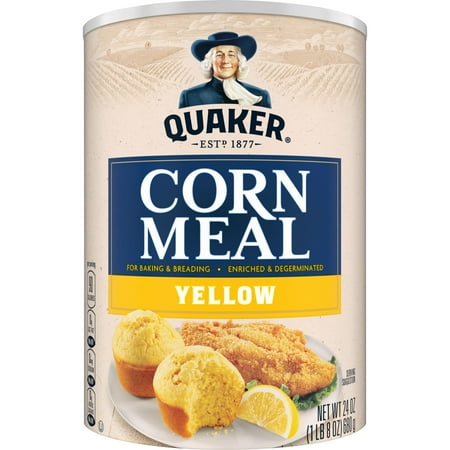




Quaker Yellow Cornmeal 24 Ounce Paper Canister
Analysis updated September 2026 · How Scout scores
At a glance
Summary
This product is made from degerminated yellow cornmeal, which is a minimally processed ingredient. The addition of vitamins such as niacin, thiamin, riboflavin, and folic acid enhances its nutritional profile. However, the processing involved in degermination slightly reduces the natural fiber content, which impacts its overall nutritional value.
Key ingredients 6
NiacinGood
Beneficial ingredient — whole-food or functional value in this product class.
Risks
Excessive intake of niacin supplements can lead to side effects such as flushing and liver damage.
Benefits
Supports energy metabolism and contributes to the maintenance of healthy skin and nerves.
RiboflavinGood
Essential B vitamin — beneficial micronutrient.
Benefits
Plays a key role in energy production and helps maintain healthy skin and eyes.
Degerminated yellow corn mealNeutral
Degerminated yellow corn meal is a staple ingredient in many diets, providing carbohydrates and some fiber. The degermination process removes the germ and bran, reducing its nutritional content compared to whole cornmeal. It is minimally processed, aligning with NOVA Group 1 classification.
Risks
The removal of the germ and bran reduces the fiber and nutrient content, potentially impacting its nutritional value.
Benefits
Provides a source of carbohydrates and can be used in a variety of recipes, offering versatility in cooking.
Reduced ironNeutral
Reduced iron is added to fortify foods with iron, an essential mineral for oxygen transport and energy production. It is a common fortification practice to prevent iron deficiency anemia. The bioavailability of iron from fortified sources can vary depending on dietary factors.
Risks
Excessive iron intake can lead to toxicity, particularly in individuals with hereditary hemochromatosis.
Benefits
Helps prevent iron deficiency anemia and supports overall energy levels and immune function.
Thiamin mononitrateNeutral
Thiamin mononitrate is a synthetic form of vitamin B1, essential for carbohydrate metabolism and nerve function. It is commonly used in food fortification to ensure adequate intake. While beneficial, it is generally consumed in sufficient amounts through a varied diet.
Benefits
Supports energy metabolism and is crucial for proper nerve and muscle function.
Folic acidNeutral
Folic acid is a synthetic form of folate, a B vitamin essential for DNA synthesis and cell division. It is commonly used in food fortification to prevent neural tube defects during pregnancy. While beneficial, it is important to balance intake with natural dietary sources.
Risks
Excessive intake of folic acid supplements can mask vitamin B12 deficiency symptoms.
Benefits
Crucial for DNA synthesis and cell division, particularly important during periods of rapid growth such as pregnancy.
Processing
Unprocessed or Minimally Processed Foods
Get the full breakdown in the Scout appTake Scout shopping
Scan any product to see lab results, healthy alternatives, and your personalized analysis.
Download on theApp Store GET IT ONGoogle PlayAmazon pricing & content
CERTAIN CONTENT THAT APPEARS ON THIS SITE COMES FROM AMAZON. THIS CONTENT IS PROVIDED “AS IS” AND IS SUBJECT TO CHANGE OR REMOVAL AT ANY TIME.