
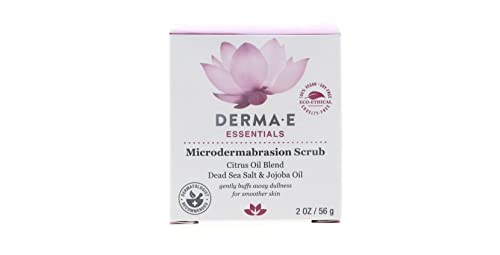



Derma E MicroDermabrasion Scrub 2 Oz
Analysis updated August 2026 · How Scout scores
At a glance
Summary
This product contains a variety of beneficial natural ingredients such as jojoba oil, grape seed oil, and kaolin clay, which are known for their moisturizing and cleansing properties. However, the presence of phenoxyethanol, a preservative that can cause irritation in some individuals, slightly lowers its safety profile. Overall, the formulation is mostly natural and minimally processed, contributing to a favorable rating.
Key ingredients 23
Vitis Vinifera (Grape) Seed OilVery Good
Grape seed oil is rich in antioxidants and fatty acids, providing moisturizing and nourishing benefits. It helps to improve skin elasticity and reduce inflammation. It is considered safe and beneficial for most skin types.
Risks
There are minimal risks associated with its use.
Benefits
It moisturizes and nourishes the skin, improving elasticity.
Prunus Amygdalus Dulcis (Sweet Almond) OilVery Good
Sweet almond oil is known for its emollient and nourishing properties. It helps to soften and hydrate the skin, making it smooth and supple. It is generally safe and beneficial for most skin types.
Risks
There are minimal risks associated with its use.
Benefits
It provides deep hydration and nourishment to the skin.
Organic Simmondsia Chinensis (Jojoba) Seed OilVery Good
Jojoba oil is a natural emollient that closely resembles the skin's natural sebum. It helps to balance oil production and provide long-lasting moisture. It is highly regarded for its skin compatibility and benefits.
Risks
There are minimal risks associated with its use.
Benefits
It balances oil production and provides lasting hydration.
Citrus Aurantifolia (Lime) OilGood
Lime oil is used for its refreshing scent and potential antibacterial properties. It can help to invigorate the skin and provide a pleasant aroma. It is generally safe when used in appropriate concentrations.
Risks
It may cause photosensitivity, increasing the risk of sunburn.
Benefits
It provides a refreshing scent and may have antibacterial benefits.
Citrus Limon (Lemon) Peel OilGood
Lemon peel oil is known for its brightening and astringent properties. It can help to tone the skin and reduce oiliness. It is generally safe when used in appropriate concentrations.
Risks
It may cause photosensitivity, leading to increased sun sensitivity.
Benefits
It helps to brighten the skin and reduce excess oil.
Citrus Aurantium Dulcis (Orange) OilGood
Orange oil is used for its uplifting scent and potential antioxidant properties. It can help to refresh the skin and provide a pleasant aroma. It is generally safe when used in appropriate concentrations.
Risks
It may cause photosensitivity, increasing the risk of sunburn.
Benefits
It provides a refreshing scent and may have antioxidant benefits.
Kaolin (Clay)Good
Kaolin is a natural clay used for its absorbent and cleansing properties. It helps to draw out impurities and excess oil from the skin. It is generally safe and beneficial for oily and acne-prone skin.
Risks
Overuse may lead to dryness in some skin types.
Benefits
It helps to cleanse and purify the skin, reducing oiliness.
Tocopheryl Acetate (Vitamin E)Good
Tocopheryl acetate is a form of Vitamin E used for its antioxidant properties. It helps to protect the skin from free radical damage and improve skin health. It is widely regarded as safe and beneficial in skincare.
Risks
Rarely, it may cause skin irritation in sensitive individuals.
Benefits
It provides antioxidant protection and supports skin health.
Maris Sal (Dead Sea Salt)Good
Dead Sea salt is rich in minerals and used for its exfoliating and detoxifying properties. It helps to cleanse and rejuvenate the skin. It is generally safe and beneficial for most skin types.
Risks
Overuse may lead to dryness in some skin types.
Benefits
It provides mineral-rich exfoliation and detoxification.
Glycerin (Vegetable Derived)Good
Glycerin is a humectant that attracts moisture to the skin. It helps to keep the skin hydrated and improve its barrier function. It is widely used and considered safe in cosmetics.
Risks
There are minimal risks associated with its use.
Benefits
It hydrates the skin and enhances its barrier function.
Purified WaterNeutral
Purified water is used as a solvent to dissolve other ingredients. It is a common base in cosmetic formulations. It does not provide direct benefits or risks.
Risks
There are no known risks associated with purified water in cosmetics.
Benefits
It helps in the even distribution of other ingredients.
AluminaNeutral
Alumina is used as an abrasive and thickening agent in cosmetics. It helps in exfoliating the skin by removing dead skin cells. It is generally considered safe in cosmetics.
Risks
Inhalation of alumina dust can be harmful, but this is not a concern in topical applications.
Benefits
It aids in skin exfoliation, improving skin texture.
Stearyl Alcohol (Plant Derived)Neutral
Stearyl alcohol is a fatty alcohol used as an emollient and thickener. It helps to soften and smooth the skin. It is generally considered safe and non-irritating.
Risks
Rarely, it may cause skin irritation in sensitive individuals.
Benefits
It provides moisturizing properties and improves product texture.
Stearic Acid (Vegetable Derived)Neutral
Stearic acid is a fatty acid used as an emulsifier and thickener. It helps to stabilize formulations and improve texture. It is generally safe for use in cosmetics.
Risks
It may cause mild irritation in sensitive skin types.
Benefits
It helps to maintain product consistency and provides a smooth application.
Glyceryl Stearate Citrate (Vegetable Derived)Neutral
Glyceryl stearate citrate is an emulsifier that helps blend oil and water components. It enhances the texture and stability of cosmetic products. It is considered safe for use in cosmetics.
Risks
There are minimal risks associated with its use.
Benefits
It improves the spreadability and feel of the product on the skin.
Pumice (Volcanic Sand)Neutral
Pumice is used as an abrasive agent to exfoliate the skin. It helps to remove dead skin cells and improve skin texture. It is generally safe for use in exfoliating products.
Risks
Overuse may lead to skin irritation or micro-tears.
Benefits
It aids in exfoliating the skin, enhancing smoothness.
Glyceryl Stearate SENeutral
Glyceryl stearate SE is an emulsifier that helps blend oil and water components. It enhances the texture and stability of cosmetic products. It is considered safe for use in cosmetics.
Risks
There are minimal risks associated with its use.
Benefits
It improves the spreadability and feel of the product on the skin.
Potassium Cetyl PhosphateNeutral
Potassium cetyl phosphate is an emulsifier and surfactant used to stabilize formulations. It helps to improve the texture and consistency of products. It is generally considered safe for use in cosmetics.
Risks
There are minimal risks associated with its use.
Benefits
It enhances product stability and texture.
Xanthan GumNeutral
Xanthan gum is used as a thickening and stabilizing agent in cosmetics. It helps to improve the texture and consistency of products. It is generally considered safe for topical use.
Risks
There are minimal risks associated with its use.
Benefits
It enhances the texture and stability of the product.
EthylhexylglycerinNeutral
Ethylhexylglycerin is used as a skin conditioning agent and preservative enhancer. It helps to improve the efficacy of preservatives and provide skin benefits. It is generally considered safe for use in cosmetics.
Risks
There are minimal risks associated with its use.
Benefits
It enhances preservative efficacy and conditions the skin.
Carrageenan (Seaweed Derived)Bad
Processed additive flagged under Scout's ingredient doctrine.
Risks
There are minimal risks associated with its use in cosmetics.
Benefits
It enhances the texture and stability of the product.
Potassium SorbateBad
Synthetic preservative — flagged in daily-use products.
Risks
Rarely, it may cause skin irritation in sensitive individuals.
Benefits
It helps to preserve the product and prevent spoilage.
PhenoxyethanolBad
Phenoxyethanol is a preservative used to prevent microbial growth in cosmetics. It is effective but can cause irritation in some individuals. It is considered safe in low concentrations but has potential risks.
Risks
It may cause skin irritation and allergic reactions in sensitive individuals.
Benefits
It helps to preserve the product and prevent spoilage.
Get the full breakdown in the Scout appTake Scout shopping
Scan any product to see lab results, healthy alternatives, and your personalized analysis.
Download on theApp Store GET IT ONGoogle PlayAmazon pricing & content
Amazon price as of . Product prices and availability are accurate as of the date/time indicated and are subject to change. Any price and availability information displayed on Amazon.com at the time of purchase will apply to the purchase of this product.
CERTAIN CONTENT THAT APPEARS ON THIS SITE COMES FROM AMAZON. THIS CONTENT IS PROVIDED “AS IS” AND IS SUBJECT TO CHANGE OR REMOVAL AT ANY TIME.