
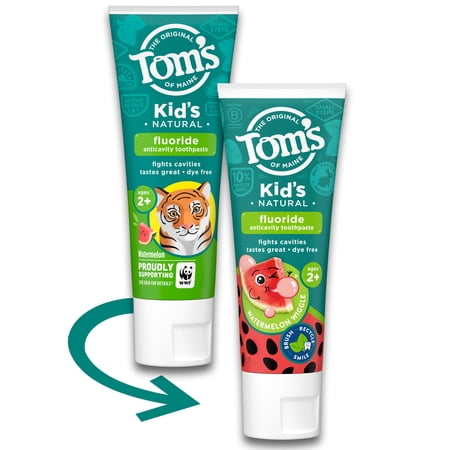

Tom’s of Maine Watermelon Wiggle Kids Toothpaste with Fluoride 5.1 Oz 3 Pack
Summary
This toothpaste contains beneficial ingredients like sodium monofluorophosphate, calcium carbonate, and xylitol, which support oral health by preventing tooth decay and reducing plaque. However, the presence of sodium lauryl sulfate, a surfactant that can cause irritation in sensitive individuals, slightly detracts from its overall safety profile. The product is processed, which limits its maximum potential score, but the inclusion of natural oils like cinnamon and clove enhances its appeal.
At a glance
Key ingredients 12
Sodium MonofluorophosphateGood
Sodium monofluorophosphate is a fluoride compound used to prevent tooth decay. It is processed to ensure stability and effectiveness in toothpaste formulations. Its interaction with tooth enamel helps in remineralization, making it a beneficial ingredient for oral health.
Risks
Excessive ingestion can lead to dental fluorosis, especially in children.
Benefits
It strengthens tooth enamel and helps prevent cavities.
GlycerinNeutral
Glycerin is a humectant that helps maintain moisture in toothpaste. It is typically derived from plant oils and undergoes purification processes. It does not contribute to oral health directly but aids in maintaining the product's texture.
Benefits
Helps keep the toothpaste from drying out and maintains a smooth texture.
WaterNeutral
Water is used as a solvent and to provide the desired consistency in toothpaste. It is typically purified to remove impurities and ensure safety. It does not have direct health benefits but is essential for the formulation.
Benefits
Essential for dissolving other ingredients and achieving the correct texture.
Calcium CarbonateGood
Calcium carbonate acts as a mild abrasive to help remove plaque and surface stains from teeth. It is naturally sourced and finely ground for use in toothpaste. Its gentle abrasive action is beneficial for maintaining oral hygiene.
Benefits
Helps in cleaning teeth by removing plaque and surface stains.
Hydrated SilicaNeutral
Hydrated silica is used as an abrasive and thickening agent in toothpaste. It is synthetically produced to ensure uniformity and safety. While it aids in cleaning, it does not provide direct health benefits.
Benefits
Contributes to the cleaning action of toothpaste by acting as a gentle abrasive.
XylitolGood
Xylitol is a sugar alcohol used as a sweetener that also has dental benefits. It is derived from plant sources and processed to ensure purity. Xylitol can help reduce the risk of cavities by inhibiting the growth of cavity-causing bacteria.
Risks
Excessive consumption can lead to digestive discomfort.
Benefits
Helps reduce the risk of cavities and adds a pleasant taste.
CarrageenanNeutral
Carrageenan is used as a thickening agent in toothpaste. It is extracted from red seaweed and processed to ensure safety and consistency. While it helps maintain the product's texture, it does not provide direct health benefits.
Risks
Some studies suggest potential gastrointestinal inflammation, but evidence is not conclusive.
Benefits
Helps maintain the desired consistency of the toothpaste.
Zinc CitrateGood
Zinc citrate is included for its antibacterial properties, which help reduce plaque and tartar. It is synthesized to ensure bioavailability and effectiveness in oral care products. Its role in inhibiting bacterial growth makes it beneficial for oral health.
Benefits
Helps reduce plaque and tartar buildup, contributing to oral hygiene.
Sodium Lauryl SulfateBad
Sodium lauryl sulfate is a surfactant used to create foam in toothpaste. It is chemically synthesized and can cause irritation in some individuals. Its potential to cause mouth irritation and canker sores makes it a concern for sensitive users.
Risks
May cause mouth irritation and canker sores in sensitive individuals.
Benefits
Helps in dispersing toothpaste throughout the mouth for effective cleaning.
Cinnamon Leaf OilGood
Cinnamon leaf oil is used for its natural flavor and potential antimicrobial properties. It is extracted from cinnamon leaves through steam distillation. Its pleasant aroma and potential to inhibit bacterial growth make it a beneficial addition.
Benefits
Provides a natural flavor and may offer antimicrobial benefits.
Clove OilGood
Clove oil is included for its natural flavor and potential analgesic properties. It is extracted from clove buds through steam distillation. Its use in oral care is supported by its ability to soothe minor oral discomfort.
Benefits
Offers natural flavor and may help soothe minor oral discomfort.
Clove Stem OilGood
Clove stem oil is used for its flavor and potential antimicrobial effects. It is derived from the stems of clove plants through steam distillation. Its inclusion enhances flavor and may contribute to oral health by reducing bacteria.
Benefits
Enhances flavor and may provide antimicrobial benefits.
Processing
Processed Foods
Get the full breakdown in the Scout app
Scan any product to see lab results, healthy alternatives, and your personalized analysis.
Download on theApp Store