
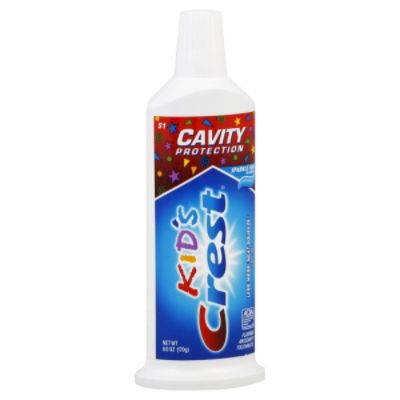
Kid's Crest Cavity Protection Toothpaste Dispenser Sparkle Fun, 6.0 OZ
Summary
This toothpaste contains sodium fluoride, which is beneficial for preventing cavities and strengthening tooth enamel. However, the presence of sodium lauryl sulfate and trisodium phosphate raises concerns due to their potential to cause irritation and allergic reactions in sensitive individuals. The product's processing level and inclusion of synthetic ingredients limit its overall health rating.
At a glance
Key ingredients 9
Sodium FluorideGood
Sodium fluoride is beneficial for dental health as it helps to prevent cavities by strengthening tooth enamel. It is a common additive in dental care products due to its proven efficacy in reducing tooth decay. However, excessive ingestion can lead to dental fluorosis, so it is important to use it in recommended amounts.
Risks
Excessive ingestion can lead to dental fluorosis, especially in children.
Benefits
It strengthens tooth enamel and helps prevent cavities.
SorbitolNeutral
Sorbitol is used as a sweetener and humectant in toothpaste, providing a pleasant taste and maintaining moisture. It is a sugar alcohol that is less likely to cause tooth decay compared to regular sugars. However, in large amounts, it can cause digestive discomfort.
Risks
In large amounts, it may cause digestive discomfort such as bloating or diarrhea.
Benefits
It provides sweetness without contributing to tooth decay.
WaterNeutral
Water is used as a solvent and base in toothpaste formulations, helping to dissolve other ingredients and create the desired consistency. It is typically purified to ensure safety and quality. There are no significant health risks associated with water in this context.
Benefits
It acts as a solvent and helps maintain the product's consistency.
Hydrated SilicaNeutral
Hydrated silica is used as an abrasive agent in toothpaste to help remove plaque and surface stains from teeth. It is a naturally occurring mineral that is processed for use in dental products. While effective for cleaning, excessive abrasiveness can potentially damage enamel if used improperly.
Risks
Excessive abrasiveness can potentially damage tooth enamel if used improperly.
Benefits
It helps remove plaque and surface stains from teeth.
Sodium Lauryl SulfateBad
Sodium lauryl sulfate (SLS) is a surfactant used to create foam and improve the spreadability of toothpaste. It is a synthetic detergent that can cause irritation in some individuals, particularly those with sensitive oral tissues. Its use is controversial due to potential irritation and allergic reactions.
Risks
It can cause irritation and allergic reactions in sensitive individuals.
Benefits
It helps create foam and improves the spreadability of toothpaste.
Trisodium PhosphateBad
Trisodium phosphate is used as a cleaning agent and pH buffer in toothpaste formulations. It is a synthetic compound that can be harsh on sensitive oral tissues if used in high concentrations. Its inclusion in consumer products is often debated due to potential health concerns.
Risks
It can be harsh on sensitive oral tissues and may cause irritation.
Benefits
It acts as a cleaning agent and helps maintain pH balance.
Sodium PhosphateNeutral
Sodium phosphate is used as a buffering agent to maintain the stability and pH of toothpaste. It is generally recognized as safe in small amounts but can contribute to phosphate overload if consumed excessively. Its role is primarily functional, with no significant health benefits.
Risks
Excessive consumption can contribute to phosphate overload.
Benefits
It helps maintain the stability and pH of the toothpaste.
Cellulose GumNeutral
Cellulose gum is used as a thickening agent to improve the texture and consistency of toothpaste. It is derived from natural cellulose and is considered safe for use in food and personal care products. It does not provide any direct health benefits but enhances product usability.
Benefits
It improves the texture and consistency of the toothpaste.
FlavorNeutral
Flavor is added to toothpaste to enhance taste and encourage regular use, especially in children. The specific composition of flavors is proprietary and can vary, but they are generally considered safe in regulated amounts. There are no direct health benefits, but pleasant flavor can improve user compliance.
Benefits
It enhances taste and encourages regular use.
Processing
Processed Foods
Get the full breakdown in the Scout app
Scan any product to see lab results, healthy alternatives, and your personalized analysis.
Download on theApp Store