
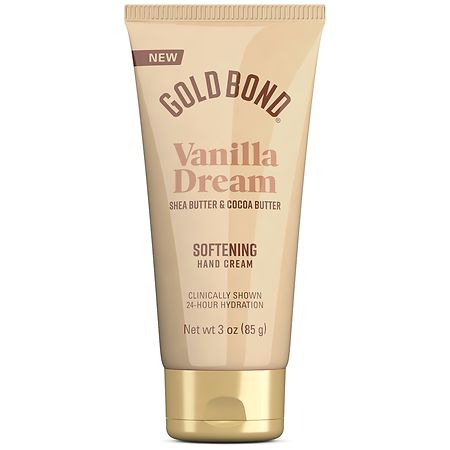
Gold Bond Vanilla Dream Softening Hand Cream Luxurious Everyday Hand Cream with Shea Butter to Help Boost Skin Moisture and Cocoa Butter to Help Soften Skin Warm Vanilla Dream Scent 3 oz
Summary
This hand cream contains beneficial ingredients such as shea butter, cocoa butter, and aloe vera, which are known for their moisturizing and skin-softening properties. However, the presence of synthetic fragrance and phenoxyethanol, a preservative, slightly lowers its score due to potential irritation and sensitivity concerns. The product is moderately processed, which also impacts its overall rating.
At a glance
Key ingredients 13
Water
Water is a universal solvent used in cosmetics to dissolve other ingredients. It helps in the distribution of the product on the skin. It is generally considered safe and non-irritating.
Risks
There are no significant risks associated with water in cosmetics.
Benefits
Water helps to hydrate the skin and improve the texture of the product.
Glycerin
Glycerin is a humectant that attracts moisture to the skin. It is widely used in skincare products for its hydrating properties. It is considered safe and beneficial for most skin types.
Risks
There are minimal risks, though in rare cases, it may cause irritation if used in high concentrations.
Benefits
Glycerin helps to maintain skin hydration and improve skin barrier function.
Hydroxyethyl Urea
Hydroxyethyl Urea is a moisturizing agent that helps to improve skin hydration. It is often used in skincare products for its ability to enhance the skin's moisture content. It is generally considered safe for use.
Risks
There are minimal risks associated with this ingredient, though it may cause irritation in sensitive individuals.
Benefits
It provides effective hydration and helps to smooth the skin.
Dimethicone
Dimethicone is a silicone-based polymer used to create a smooth application and protect the skin barrier. It is commonly used in skincare for its emollient properties. It is considered safe for most skin types.
Risks
It may cause breakouts in acne-prone skin due to its occlusive nature.
Benefits
Dimethicone helps to lock in moisture and improve the texture of the skin.
Cocos Nucifera (Coconut) Oil
Coconut oil is a natural emollient that helps to moisturize and soften the skin. It is rich in fatty acids and has antibacterial properties. It is widely used in skincare for its nourishing benefits.
Risks
It may clog pores and cause breakouts in some individuals with acne-prone skin.
Benefits
Coconut oil provides deep hydration and helps to improve skin elasticity.
Shea Butter
Shea butter is a natural fat extracted from the nuts of the shea tree. It is known for its moisturizing and anti-inflammatory properties. It is widely used in skincare for its ability to nourish and protect the skin.
Risks
There are minimal risks, though it may cause allergic reactions in individuals with nut allergies.
Benefits
Shea butter helps to soften and smooth the skin, providing long-lasting moisture.
Cocoa Butter
Cocoa butter is a natural fat derived from cocoa beans. It is known for its rich emollient properties and ability to improve skin elasticity. It is commonly used in skincare for its moisturizing benefits.
Risks
It may cause allergic reactions in individuals sensitive to cocoa.
Benefits
Cocoa butter helps to deeply moisturize and improve the texture of the skin.
Fragrance
Fragrance is used to impart a pleasant scent to the product. It is a common ingredient in cosmetics but can be a mixture of many chemicals. It is often criticized for potential skin irritation.
Risks
Fragrance can cause allergic reactions and irritation, especially in sensitive skin.
Benefits
It provides a pleasant scent to enhance the user experience.
Aloe Barbadensis Leaf Juice
Aloe vera juice is known for its soothing and hydrating properties. It is often used in skincare for its ability to calm irritated skin. It is considered safe and beneficial for most skin types.
Risks
There are minimal risks, though it may cause irritation in rare cases.
Benefits
Aloe vera helps to soothe and hydrate the skin, reducing redness and irritation.
Tocopheryl Acetate
Tocopheryl acetate is a form of vitamin E used for its antioxidant properties. It helps to protect the skin from environmental damage. It is widely used in skincare for its nourishing benefits.
Risks
There are minimal risks, though it may cause irritation in sensitive individuals.
Benefits
Vitamin E helps to nourish and protect the skin, improving its overall health.
Phenoxyethanol
Phenoxyethanol is a preservative used to prevent microbial growth in cosmetics. It is considered a safer alternative to parabens. It is generally regarded as safe when used in low concentrations.
Risks
It can cause irritation and allergic reactions in some individuals.
Benefits
It helps to preserve the product and extend its shelf life.
Caprylyl Glycol
Caprylyl glycol is a skin-conditioning agent that also acts as a preservative. It is used to enhance the moisturizing properties of a product. It is generally considered safe for use in cosmetics.
Risks
There are minimal risks, though it may cause irritation in sensitive skin.
Benefits
It helps to improve skin hydration and preserve the product.
Ethylhexylglycerin
Ethylhexylglycerin is a conditioning agent and preservative enhancer. It is often used to improve the efficacy of other preservatives. It is considered safe for use in cosmetics.
Risks
There are minimal risks, though it may cause irritation in sensitive individuals.
Benefits
It helps to condition the skin and enhance the preservation of the product.
Processing
Processed Foods
Get the full breakdown in the Scout app
Scan any product to see lab results, healthy alternatives, and your personalized analysis.
Download on theApp Store