
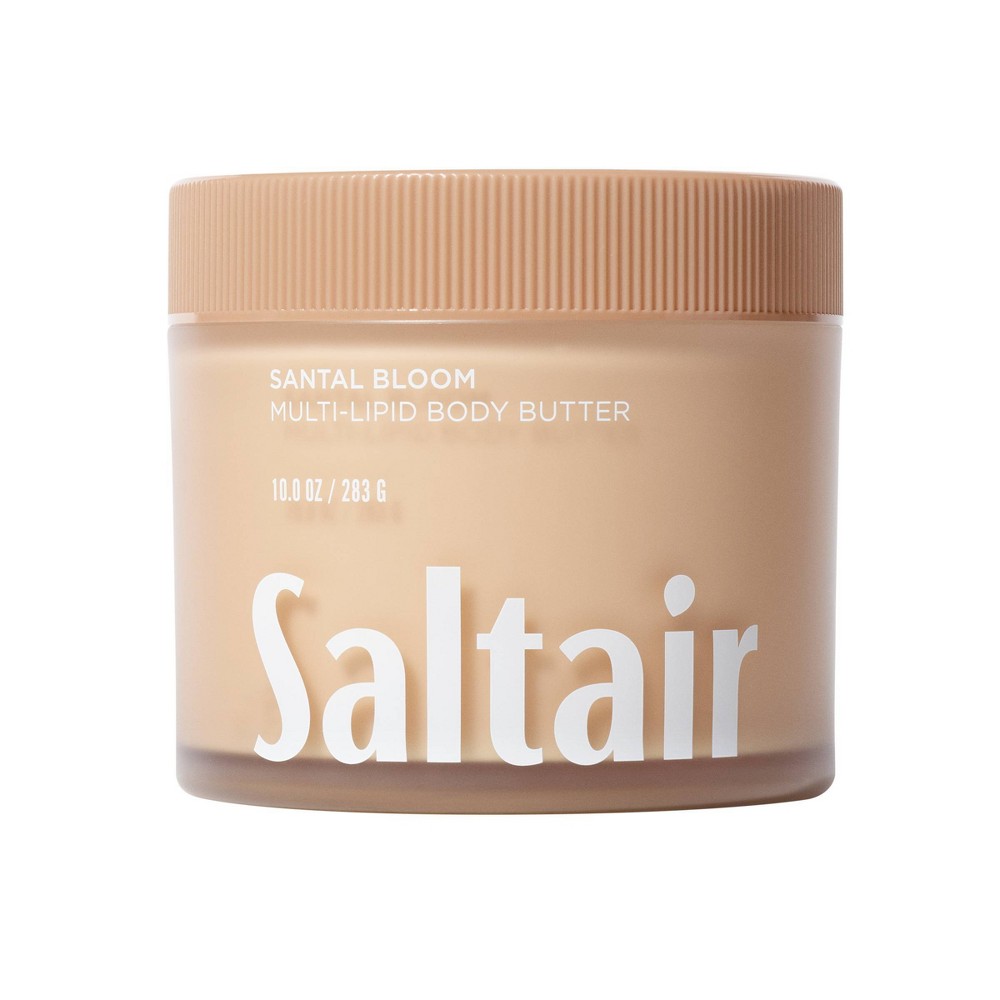
Saltair Multi-Lipid Replenishing Body Butter - Santal Bloom - 10oz: Moisturizing, Whole Body, Normal to Dry Skin
Analysis updated August 2026 · How Scout scores
At a glance
Summary
This body butter contains beneficial ingredients like coconut oil, glycerin, and various ceramides that support skin hydration and barrier function. However, it also includes several fragrance components and preservatives such as phenoxyethanol, which can cause skin irritation and allergic reactions. The presence of these potentially irritating ingredients, along with synthetic fragrance, impacts the overall safety profile of the product.
Key ingredients 38
Cocos Nucifera OilVery Good
Coconut oil is a natural emollient that helps to moisturize and soften the skin. It is rich in fatty acids that support skin barrier function.
Risks
Some individuals may experience allergic reactions or clogged pores.
Benefits
Coconut oil provides deep hydration and has antimicrobial properties that can benefit the skin.
Linoleic AcidVery Good
Linoleic acid is an essential fatty acid that helps to maintain the skin barrier and reduce inflammation. It is beneficial for dry and sensitive skin.
Risks
Generally safe, but may cause irritation in very sensitive individuals.
Benefits
It supports skin health by improving barrier function and hydration.
Vitis Vinifera Seed OilVery Good
Grape seed oil is rich in antioxidants and fatty acids that nourish and protect the skin. It is lightweight and easily absorbed.
Risks
May cause allergic reactions in individuals sensitive to grapes.
Benefits
It provides antioxidant protection and helps to moisturize the skin.
Simmondsia Chinensis Seed OilVery Good
Jojoba oil is a natural emollient that closely resembles the skin's natural sebum. It helps to balance oil production and moisturize the skin.
Risks
Generally safe, but may cause irritation in very sensitive individuals.
Benefits
It provides long-lasting moisture and helps to regulate oil production.
Hippophae Rhamnoides Seed OilVery Good
Sea buckthorn oil is rich in vitamins and antioxidants that support skin regeneration and repair. It is beneficial for dry and damaged skin.
Risks
May cause allergic reactions in sensitive individuals.
Benefits
It promotes skin healing and provides antioxidant protection.
Ceramide ASVery Good
Ceramide AS is a type of ceramide that helps to reinforce the skin's natural barrier. It aids in moisture retention and skin protection.
Risks
Generally safe with no significant risks.
Benefits
It supports skin barrier function and enhances hydration.
Ceramide NSVery Good
Ceramide NS is a lipid that helps to maintain the integrity of the skin barrier. It is crucial for preventing moisture loss.
Risks
Generally safe with no significant risks.
Benefits
It improves skin barrier function and hydration.
Ceramide EOPVery Good
Ceramide EOP is a skin-identical lipid that helps to restore and maintain the skin barrier. It is essential for healthy, hydrated skin.
Risks
Generally safe with no significant risks.
Benefits
It enhances skin barrier strength and moisture retention.
Ceramide APVery Good
Ceramide AP is a type of ceramide that helps to reinforce the skin's natural barrier. It aids in moisture retention and skin protection.
Risks
Generally safe with no significant risks.
Benefits
It supports skin barrier function and enhances hydration.
TocopherolVery Good
Tocopherol, or vitamin E, is a powerful antioxidant that helps to protect the skin from oxidative stress. It supports skin barrier function.
Risks
Generally considered safe with minimal risk.
Benefits
It provides antioxidant protection and enhances skin hydration.
Caprylic/Capric TriglycerideGood
This ingredient is derived from coconut oil and glycerin, providing a lightweight and non-greasy emollient effect. It helps to improve the spreadability of the product.
Risks
Generally considered safe, but may cause irritation in sensitive individuals.
Benefits
It enhances skin hydration and leaves a smooth, silky feel.
GlycerinGood
Glycerin is a powerful humectant that attracts moisture to the skin. It helps to maintain skin hydration and improve barrier function.
Risks
Rarely, it can cause irritation in very sensitive skin.
Benefits
Glycerin helps to keep the skin soft and supple by retaining moisture.
PhospholipidsGood
Phospholipids are natural components of cell membranes that help to hydrate and protect the skin. They enhance the delivery of active ingredients.
Risks
Generally considered safe with minimal risk.
Benefits
They improve skin hydration and support the delivery of other beneficial ingredients.
PhytosterolsGood
Phytosterols are plant-derived compounds that help to soothe and moisturize the skin. They have anti-inflammatory properties.
Risks
Generally safe, but may cause irritation in very sensitive skin.
Benefits
They help to reduce redness and improve skin hydration.
Hydrogenated LecithinGood
Hydrogenated lecithin is used as an emulsifier and skin-conditioning agent. It helps to improve the texture and stability of the product.
Risks
Generally considered safe with minimal risk.
Benefits
It enhances skin hydration and supports the delivery of active ingredients.
Ceramide NPGood
Ceramide NP is a skin-identical lipid that helps to restore the skin barrier and retain moisture. It is essential for maintaining healthy skin.
Risks
Generally safe with no significant risks.
Benefits
It strengthens the skin barrier and improves hydration.
Ascorbic AcidGood
Ascorbic acid, or vitamin C, is a potent antioxidant that helps to brighten the skin and reduce signs of aging. It supports collagen production.
Risks
May cause irritation in sensitive skin types.
Benefits
It provides antioxidant protection and improves skin radiance.
Tocopheryl AcetateGood
Tocopheryl acetate is a form of vitamin E that acts as an antioxidant. It helps to protect the skin from free radical damage.
Risks
Generally considered safe, but may cause irritation in sensitive individuals.
Benefits
It provides antioxidant protection and supports skin health.
Water (Aqua)Neutral
Water is a common solvent used in cosmetics to dissolve other ingredients. It helps in the application and absorption of the product.
Risks
There are no significant risks associated with water in cosmetics.
Benefits
Water helps in hydrating the skin and acts as a carrier for other beneficial ingredients.
Octyldodecyl MyristateNeutral
This is an ester used as an emollient and texture enhancer in cosmetics. It provides a smooth application and helps to condition the skin.
Risks
May cause mild irritation in sensitive skin types.
Benefits
It improves the texture of the product and provides a silky feel to the skin.
Cetyl AlcoholNeutral
Standard formulation ingredient — neither beneficial nor harmful at typical use.
Risks
Generally safe, but can cause irritation in very sensitive skin.
Benefits
It provides a moisturizing effect and enhances the product's consistency.
Glyceryl StearateNeutral
Standard formulation ingredient — neither beneficial nor harmful at typical use.
Risks
Generally safe, but may cause mild irritation in sensitive individuals.
Benefits
It helps to maintain the stability of the product and provides a smooth feel.
Behenyl BehenateNeutral
Behenyl behenate is used as a thickening agent and emollient in cosmetics. It helps to improve the texture and consistency of the product.
Benefits
It provides a smooth application and enhances the product's stability.
Behenyl AlcoholNeutral
Behenyl alcohol is a fatty alcohol used as an emollient and thickener. It helps to stabilize emulsions and improve the texture of the product.
Risks
Generally considered safe, but may cause irritation in sensitive skin.
Benefits
It provides a moisturizing effect and enhances the product's consistency.
Polyacrylate Crosspolymer-6Neutral
This ingredient is used as a thickening agent and stabilizer in cosmetics. It helps to improve the texture and consistency of the product.
Risks
Generally considered safe with minimal risk.
Benefits
It provides a smooth application and enhances the product's stability.
EthylhexylglycerinNeutral
Ethylhexylglycerin is used as a preservative and skin-conditioning agent. It enhances the efficacy of other preservatives.
Risks
Generally considered safe with minimal risk.
Benefits
It helps to preserve the product and improve skin feel.
Polyhydroxystearic AcidNeutral
This ingredient is used as a thickening agent and emulsifier in cosmetics. It helps to stabilize emulsions and improve texture.
Risks
Generally considered safe with minimal risk.
Benefits
It provides a smooth application and enhances the product's stability.
Polyglyceryl-10 StearateNeutral
Polyglyceryl-10 stearate is an emulsifier that helps to blend oil and water components. It improves the texture and stability of the product.
Risks
Generally considered safe with minimal risk.
Benefits
It helps to maintain the stability of the product and provides a smooth feel.
Euphorbia Cerifera WaxNeutral
Candelilla wax is used as a thickening agent and emollient in cosmetics. It helps to improve the texture and consistency of the product.
Risks
Generally considered safe with minimal risk.
Benefits
It provides a smooth application and enhances the product's stability.
DimethiconeBad
Occlusive silicone film-former — flagged under clean-beauty doctrine.
Risks
May cause build-up on the skin with prolonged use.
Benefits
It forms a protective barrier on the skin, preventing moisture loss.
PhenoxyethanolBad
Phenoxyethanol is a preservative used to prevent microbial growth in cosmetics. It can cause skin irritation and allergic reactions in some individuals.
Risks
Potential for skin irritation and allergic reactions.
Benefits
It helps to preserve the product and extend its shelf life.
Sodium Stearoyl LactylateBad
Processed additive flagged under Scout's ingredient doctrine.
Risks
Generally considered safe with minimal risk.
Benefits
It provides a smooth application and enhances the product's stability.
LinaloolBad
Linalool is a fragrance component that can cause allergic reactions and skin irritation. It is a common allergen in cosmetics.
Risks
Potential for allergic reactions and skin irritation.
Benefits
Provides a pleasant scent to the product.
Benzyl SalicylateBad
Benzyl salicylate is a fragrance ingredient that can cause skin irritation and allergic reactions. It is a common allergen in cosmetics.
Risks
Potential for allergic reactions and skin irritation.
Benefits
Provides a pleasant scent to the product.
Hexyl CinnamalBad
Hexyl cinnamal is a fragrance component that can cause allergic reactions and skin irritation. It is a common allergen in cosmetics.
Risks
Potential for allergic reactions and skin irritation.
Benefits
Provides a pleasant scent to the product.
Alpha-Isomethyl IononeBad
Alpha-isomethyl ionone is a fragrance ingredient that can cause skin irritation and allergic reactions. It is a common allergen in cosmetics.
Risks
Potential for allergic reactions and skin irritation.
Benefits
Provides a pleasant scent to the product.
LimoneneBad
Limonene is a fragrance component that can cause allergic reactions and skin irritation. It is a common allergen in cosmetics.
Risks
Potential for allergic reactions and skin irritation.
Benefits
Provides a pleasant scent to the product.
Fragrance (Parfum)Very Bad
Fragrance is used to impart scent to the product but can be a common irritant. It may contain allergens that can cause skin sensitivity.
Risks
Potential for allergic reactions and skin irritation.
Benefits
Provides a pleasant scent to the product.
Get the full breakdown in the Scout appTake Scout shopping
Scan any product to see lab results, healthy alternatives, and your personalized analysis.
Download on theApp Store GET IT ONGoogle Play