
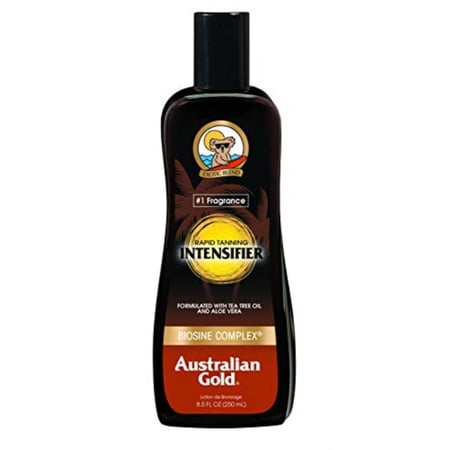


Australian Gold Rapid Tanning Intensifier Lotion 250ml
Analysis updated September 2026 · How Scout scores
At a glance
Summary
This body lotion contains several beneficial natural oils and extracts, such as safflower seed oil, sweet almond oil, and coconut oil, which provide moisturizing and skin-soothing properties. However, the presence of synthetic fragrance components like limonene, linalool, and coumarin, which can cause skin irritation and sensitization, detracts from its overall safety profile. The inclusion of PEG compounds and other synthetic ingredients also indicates a moderate level of processing, impacting the overall score.
Key ingredients 33
Carthamus Tinctorius (Safflower) Seed OilVery Good
Safflower seed oil is rich in linoleic acid, which helps to maintain the integrity of the outer layer of the skin. It is known for its moisturizing properties and ability to soothe dry skin.
Risks
There are minimal risks, though it may cause allergic reactions in some individuals.
Benefits
It provides deep hydration and helps to improve skin texture and appearance.
Prunus Amygdalus Dulcis (Sweet Almond) OilVery Good
Sweet almond oil is a natural emollient that helps to soften and smooth the skin. It is rich in vitamins A and E, which are beneficial for skin health.
Risks
There is a risk of allergic reactions in individuals with nut allergies.
Benefits
It nourishes and moisturizes the skin, improving its overall appearance.
Cocos Nucifera (Coconut) OilVery Good
Coconut oil is known for its moisturizing and antibacterial properties. It helps to hydrate the skin and protect it from environmental damage.
Risks
It may clog pores in some individuals, leading to acne.
Benefits
Coconut oil provides deep hydration and has antimicrobial benefits.
Terminalia Ferdinandiana (Kakadu Plum) Fruit ExtractVery Good
Kakadu plum extract is rich in vitamin C, which is a powerful antioxidant. It helps to protect the skin from oxidative stress and improve skin radiance.
Risks
There are minimal risks, though it may cause irritation in sensitive skin.
Benefits
It provides antioxidant protection and enhances skin brightness.
PanthenolVery Good
Panthenol is a form of vitamin B5 that acts as a moisturizer and skin conditioner. It helps to improve skin hydration and reduce inflammation.
Risks
There are minimal risks, though it may cause irritation in sensitive skin.
Benefits
It enhances skin hydration and soothes irritated skin.
Olea Europaea (Olive) Fruit OilVery Good
Olive fruit oil is a natural emollient rich in antioxidants and fatty acids. It helps to nourish and moisturize the skin, improving its texture and appearance.
Risks
There are minimal risks, though it may cause irritation in sensitive skin.
Benefits
It provides deep hydration and antioxidant protection.
Aloe Barbadensis Leaf JuiceVery Good
Aloe vera juice is known for its soothing and hydrating properties. It helps to calm irritated skin and provide moisture.
Risks
There are minimal risks, though it may cause irritation in sensitive skin.
Benefits
It soothes and hydrates the skin, reducing inflammation.
TocopherolVery Good
Tocopherol, or vitamin E, is a powerful antioxidant that helps to protect the skin from oxidative stress. It improves skin health and appearance.
Risks
There are minimal risks, though it may cause irritation in sensitive skin.
Benefits
It provides antioxidant protection and enhances skin texture.
GlycerinGood
Glycerin is a humectant that attracts moisture to the skin, making it an excellent hydrating agent. It helps to maintain the skin's moisture balance and improve skin barrier function.
Risks
There are minimal risks associated with glycerin, though it can cause irritation in very sensitive skin.
Benefits
Glycerin helps to keep the skin hydrated and soft, improving overall skin health.
Melaleuca Alternifolia (Tea Tree) Leaf OilGood
Tea tree oil is known for its antimicrobial and anti-inflammatory properties. It helps to reduce acne and soothe irritated skin.
Risks
It can cause irritation or allergic reactions in some individuals.
Benefits
It helps to treat acne and reduce skin inflammation.
Tocopheryl AcetateGood
Tocopheryl acetate is a form of vitamin E that acts as an antioxidant. It helps to protect the skin from oxidative damage and improve skin health.
Risks
There are minimal risks, though it may cause irritation in sensitive skin.
Benefits
It provides antioxidant protection and improves skin texture.
Water\Aqua\EauNeutral
Water is a common solvent used in cosmetic formulations. It helps to dissolve other ingredients and provides a base for the lotion. It does not have any direct benefits or risks.
Risks
There are no significant risks associated with water in cosmetic products.
Benefits
Water helps in hydrating the skin by providing moisture.
Aluminum Starch OctenylsuccinateNeutral
This ingredient is used as an absorbent and anti-caking agent in cosmetics. It helps to improve the texture and feel of the product.
Risks
There are minimal risks, though it may cause irritation in sensitive skin.
Benefits
It helps to absorb excess oil and improve the product's application.
Cetyl AlcoholNeutral
Standard formulation ingredient — neither beneficial nor harmful at typical use.
Risks
There are minimal risks, though it may cause irritation in very sensitive skin.
Benefits
It provides a smooth application and helps to lock in moisture.
PEG-100 StearateNeutral
PEG-100 Stearate is an emulsifier that helps to blend oil and water-based ingredients. It improves the stability and consistency of the product.
Risks
There is a potential risk of contamination with ethylene oxide and 1,4-dioxane.
Benefits
It helps to create a stable and uniform product texture.
Glyceryl StearateNeutral
Standard formulation ingredient — neither beneficial nor harmful at typical use.
Risks
There are minimal risks, though it may cause irritation in very sensitive skin.
Benefits
It helps to maintain skin hydration and improve product consistency.
C12-15 Alkyl BenzoateNeutral
This ingredient is used as an emollient and texture enhancer in cosmetics. It helps to improve the spreadability of the product.
Risks
There are minimal risks, though it may cause irritation in sensitive skin.
Benefits
It provides a smooth application and enhances product feel.
Glyceryl DilaurateNeutral
Glyceryl dilaurate is an emulsifier that helps to blend ingredients in cosmetic formulations. It improves the stability and consistency of the product.
Risks
There are minimal risks, though it may cause irritation in sensitive skin.
Benefits
It helps to create a stable and uniform product texture.
CarbomerNeutral
Carbomer is a thickening agent used to stabilize and thicken cosmetic formulations. It helps to improve the texture and consistency of the product.
Risks
There are minimal risks, though it may cause irritation in sensitive skin.
Benefits
It helps to create a stable and uniform product texture.
Xanthan GumNeutral
Xanthan gum is a natural thickening agent used in cosmetics. It helps to stabilize and thicken formulations, improving texture.
Risks
There are minimal risks, though it may cause irritation in sensitive skin.
Benefits
It helps to create a stable and uniform product texture.
Sodium HydroxideNeutral
Sodium hydroxide is used to adjust the pH of cosmetic formulations. It helps to maintain the stability and effectiveness of the product.
Risks
In high concentrations, it can be irritating to the skin.
Benefits
It helps to maintain the desired pH level of the product.
EthylhexylglycerinNeutral
Ethylhexylglycerin is used as a preservative and skin conditioning agent in cosmetics. It helps to enhance the effectiveness of other preservatives.
Risks
There are minimal risks, though it may cause irritation in sensitive skin.
Benefits
It helps to preserve the product and improve skin feel.
DimethiconeBad
Occlusive silicone film-former — flagged under clean-beauty doctrine.
Risks
There are minimal risks, though it may cause irritation in sensitive skin.
Benefits
It provides a silky feel and helps to lock in moisture.
Disodium EDTABad
Processed additive flagged under Scout's ingredient doctrine.
Risks
There are minimal risks, though it may cause irritation in sensitive skin.
Benefits
It enhances product stability and shelf life.
LimoneneBad
Limonene is a fragrance component that can cause skin irritation and sensitization. It is often used for its citrus scent in cosmetics.
Risks
It can cause allergic reactions and skin irritation, especially in sensitive individuals.
Benefits
It provides a pleasant citrus scent to the product.
CoumarinBad
Coumarin is a fragrance ingredient that can cause skin irritation and sensitization. It is used for its sweet scent in cosmetics.
Risks
It can cause allergic reactions and skin irritation, especially in sensitive individuals.
Benefits
It provides a sweet scent to the product.
LinaloolBad
Linalool is a fragrance component that can cause skin irritation and sensitization. It is commonly used for its floral scent in cosmetics.
Risks
It can cause allergic reactions and skin irritation, especially in sensitive individuals.
Benefits
It provides a floral scent to the product.
Benzyl AlcoholBad
Processed additive flagged under Scout's ingredient doctrine.
Risks
In high concentrations, it can cause skin irritation and sensitization.
Benefits
It helps to preserve the product and prevent spoilage.
CitralBad
Citral is a fragrance component that can cause skin irritation and sensitization. It is used for its lemon scent in cosmetics.
Risks
It can cause allergic reactions and skin irritation, especially in sensitive individuals.
Benefits
It provides a lemon scent to the product.
PhenoxyethanolBad
Processed additive flagged under Scout's ingredient doctrine.
Risks
In high concentrations, it can cause skin irritation and sensitization.
Benefits
It helps to preserve the product and prevent spoilage.
Sodium BenzoateBad
Synthetic preservative that can form benzene in the presence of vitamin C.
Risks
There are minimal risks, though it may cause irritation in sensitive skin.
Benefits
It helps to preserve the product and prevent spoilage.
Potassium SorbateBad
Synthetic preservative — flagged in daily-use products.
Risks
There are minimal risks, though it may cause irritation in sensitive skin.
Benefits
It helps to preserve the product and prevent spoilage.
Fragrance (Parfum)Very Bad
Fragrance is a common cause of allergic reactions and skin irritation. It is used to impart scent to cosmetic products.
Risks
It can cause skin irritation, allergic reactions, and sensitization.
Benefits
It provides a pleasant scent to the product.
Get the full breakdown in the Scout appTake Scout shopping
Scan any product to see lab results, healthy alternatives, and your personalized analysis.
Download on theApp Store GET IT ONGoogle PlayAmazon pricing & content
Amazon price as of . Product prices and availability are accurate as of the date/time indicated and are subject to change. Any price and availability information displayed on Amazon.com at the time of purchase will apply to the purchase of this product.
CERTAIN CONTENT THAT APPEARS ON THIS SITE COMES FROM AMAZON. THIS CONTENT IS PROVIDED “AS IS” AND IS SUBJECT TO CHANGE OR REMOVAL AT ANY TIME.