



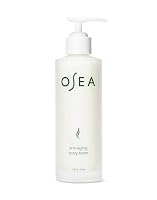

Osea Malibu Undaria Algae Body Lotion 5 oz.
At a glance
Summary
This body lotion features a clean and natural ingredient list, including beneficial oils like jojoba and avocado, which provide excellent moisturizing properties. The inclusion of shea butter and aloe vera further enhances its nourishing and soothing qualities. The product avoids harsh chemicals and synthetic additives, making it a safe and effective choice for skin hydration.
Key ingredients 35
Simmondsia Chinensis (Jojoba) Seed OilVery Good
Jojoba oil is a natural oil that mimics the skin's natural sebum, providing excellent moisturizing properties. It is non-comedogenic and suitable for all skin types.
Risks
Jojoba oil is generally safe, but in rare cases, it may cause allergic reactions.
Benefits
Jojoba oil moisturizes the skin and helps balance oil production.
Persea Gratissima (Avocado) OilVery Good
Avocado oil is rich in fatty acids and vitamins, providing deep nourishment and hydration to the skin. It is beneficial for dry and sensitive skin types.
Risks
Avocado oil is generally safe, but it may cause allergic reactions in sensitive individuals.
Benefits
Avocado oil nourishes and hydrates the skin, improving its texture and elasticity.
Butyrospermum Parkii (Shea) ButterVery Good
Shea butter is a natural fat extracted from the nuts of the shea tree, known for its moisturizing and anti-inflammatory properties. It is suitable for dry and sensitive skin.
Risks
Shea butter is generally safe, but it may cause allergic reactions in individuals with nut allergies.
Benefits
Shea butter deeply moisturizes the skin and reduces inflammation.
Aloe Barbadensis Leaf JuiceVery Good
Aloe vera is known for its soothing and hydrating properties, making it ideal for calming irritated skin. It is rich in vitamins and antioxidants.
Risks
Aloe vera is generally safe, but it may cause allergic reactions in some individuals.
Benefits
Aloe vera soothes and hydrates the skin, reducing inflammation and irritation.
GlycerinGood
Glycerin is a humectant that attracts moisture to the skin, improving hydration. It is well-tolerated and suitable for all skin types.
Risks
There are minimal risks associated with glycerin, though it may cause irritation in very rare cases.
Benefits
Glycerin helps maintain skin hydration and improves skin barrier function.
Cetearyl OlivateGood
Cetearyl olivate is an emulsifier derived from olive oil, helping to blend oil and water components. It provides a smooth texture and enhances skin feel.
Risks
There are minimal risks associated with cetearyl olivate, though it may cause irritation in very sensitive skin.
Benefits
Cetearyl olivate improves product texture and enhances skin hydration.
Undaria Pinnatifida ExtractGood
Undaria pinnatifida extract, derived from seaweed, is rich in antioxidants and minerals, promoting skin health and protection. It helps improve skin elasticity and hydration.
Risks
There are minimal risks associated with this extract, though it may cause irritation in very sensitive skin.
Benefits
Undaria pinnatifida extract provides antioxidant protection and improves skin hydration.
Coconut AlkanesGood
Coconut alkanes are derived from coconut oil and provide a lightweight, non-greasy feel to formulations. They are used as emollients and help improve skin texture.
Risks
There are minimal risks associated with coconut alkanes, though they may cause irritation in very sensitive skin.
Benefits
Coconut alkanes provide a smooth, non-greasy feel and improve skin texture.
Sorbitan OlivateGood
Sorbitan olivate is an emulsifier derived from olive oil, helping to blend oil and water components in formulations. It enhances skin hydration and product stability.
Risks
There are minimal risks associated with sorbitan olivate, though it may cause irritation in very sensitive skin.
Benefits
Sorbitan olivate improves product stability and enhances skin hydration.
Palmitoyl Tetrapeptide-72 AmideGood
Palmitoyl tetrapeptide-72 amide is a peptide used in cosmetics for its anti-aging properties, helping to reduce the appearance of wrinkles. It supports skin firmness and elasticity.
Risks
There are minimal risks associated with this peptide, though it may cause irritation in very sensitive skin.
Benefits
This peptide helps reduce wrinkles and supports skin firmness.
Sodium HyaluronateGood
Sodium hyaluronate is a form of hyaluronic acid that provides intense hydration by attracting and retaining moisture in the skin. It is suitable for all skin types.
Risks
There are minimal risks associated with sodium hyaluronate, though it may cause irritation in very sensitive skin.
Benefits
Sodium hyaluronate deeply hydrates the skin and improves its texture.
Oryza Sativa (Rice) Bran ExtractGood
Rice bran extract is rich in antioxidants and vitamins, providing skin protection and nourishment. It helps improve skin texture and tone.
Risks
There are minimal risks associated with rice bran extract, though it may cause irritation in very sensitive skin.
Benefits
Rice bran extract provides antioxidant protection and improves skin texture.
Rosmarinus Officinalis (Rosemary) Leaf ExtractGood
Rosemary leaf extract is known for its antioxidant and anti-inflammatory properties, helping to protect and soothe the skin. It is used in cosmetics for its potential skin benefits.
Risks
Rosemary extract may cause irritation in sensitive skin types.
Benefits
Rosemary extract provides antioxidant protection and soothes the skin.
Helianthus Annuus (Sunflower) ExtractGood
Sunflower extract is rich in vitamins and fatty acids, providing nourishment and hydration to the skin. It helps improve skin barrier function.
Risks
There are minimal risks associated with sunflower extract, though it may cause irritation in very sensitive skin.
Benefits
Sunflower extract nourishes and hydrates the skin, improving its barrier function.
BisabololGood
Bisabolol is a natural compound known for its soothing and anti-inflammatory properties, making it ideal for sensitive skin. It helps reduce redness and irritation.
Risks
Bisabolol is generally safe, but it may cause allergic reactions in some individuals.
Benefits
Bisabolol soothes the skin and reduces redness and irritation.
Coco-Caprylate/CaprateGood
Coco-caprylate/caprate is an emollient derived from coconut oil, providing a lightweight, non-greasy feel to formulations. It enhances skin hydration and texture.
Risks
There are minimal risks associated with coco-caprylate/caprate, though it may cause irritation in very sensitive skin.
Benefits
Coco-caprylate/caprate provides a smooth, non-greasy feel and enhances skin hydration.
Caprylic/Capric TriglycerideGood
Caprylic/capric triglyceride is an emollient derived from coconut oil and glycerin, providing a lightweight, non-greasy feel to formulations. It enhances skin hydration and texture.
Risks
There are minimal risks associated with caprylic/capric triglyceride, though it may cause irritation in very sensitive skin.
Benefits
Caprylic/capric triglyceride provides a smooth, non-greasy feel and enhances skin hydration.
Saccharide IsomerateGood
Saccharide isomerate is a plant-derived moisturizer that binds to the skin, providing long-lasting hydration. It is suitable for all skin types.
Risks
There are minimal risks associated with saccharide isomerate, though it may cause irritation in very sensitive skin.
Benefits
Saccharide isomerate provides long-lasting hydration and improves skin texture.
Water / Aqua / EauNeutral
Water is a common solvent used in cosmetics to dissolve other ingredients. It helps in the application and absorption of the product. It does not provide direct benefits or risks.
Risks
There are no significant risks associated with water in cosmetics.
Benefits
Water helps in the application and absorption of the product.
PropanediolNeutral
Propanediol is a glycol used as a solvent and humectant in cosmetics, enhancing product texture and moisture retention. It is generally considered safe for use.
Risks
Propanediol may cause irritation in sensitive skin types.
Benefits
Propanediol improves product texture and helps retain moisture in the skin.
Citrus Paradisi (Grapefruit) Peel OilNeutral
Grapefruit peel oil is used for its fragrance and potential antioxidant properties. It can provide a refreshing scent to cosmetic products.
Risks
Grapefruit peel oil may cause photosensitivity, leading to skin irritation when exposed to sunlight.
Benefits
Grapefruit peel oil provides a refreshing scent and potential antioxidant benefits.
Citrus Latifolia Peel OilNeutral
Citrus latifolia peel oil is used for its fragrance and potential antioxidant properties. It can provide a refreshing scent to cosmetic products.
Risks
Citrus peel oil may cause photosensitivity, leading to skin irritation when exposed to sunlight.
Benefits
Citrus peel oil provides a refreshing scent and potential antioxidant benefits.
Cupressus Sempervirens Branch/Leaf OilNeutral
Cupressus sempervirens oil is used for its fragrance and potential astringent properties. It can provide a refreshing scent to cosmetic products.
Risks
Cupressus oil may cause irritation in sensitive skin types.
Benefits
Cupressus oil provides a refreshing scent and potential astringent benefits.
Trisodium Ethylenediamine DisuccinateNeutral
Trisodium ethylenediamine disuccinate is a chelating agent used to improve the stability and efficacy of cosmetic formulations. It helps prevent metal ion contamination.
Risks
There are minimal risks associated with this ingredient, though it may cause irritation in very sensitive skin.
Benefits
This ingredient improves product stability and prevents metal ion contamination.
Caprylhydroxamic AcidNeutral
Caprylhydroxamic acid is a preservative used to prevent microbial growth in cosmetic formulations. It is considered a safer alternative to traditional preservatives.
Risks
There are minimal risks associated with caprylhydroxamic acid, though it may cause irritation in very sensitive skin.
Benefits
Caprylhydroxamic acid helps preserve the product and prevent microbial growth.
1,2-HexanediolNeutral
1,2-Hexanediol is a humectant and preservative used to enhance moisture retention and product stability. It is generally considered safe for use in cosmetics.
Risks
There are minimal risks associated with 1,2-hexanediol, though it may cause irritation in very sensitive skin.
Benefits
1,2-Hexanediol helps retain moisture and improve product stability.
TetrahydrodiferuloylmethaneNeutral
Tetrahydrodiferuloylmethane is a derivative of curcumin, used for its potential antioxidant and anti-inflammatory properties. It is used in cosmetics for its skin benefits.
Risks
There are minimal risks associated with this ingredient, though it may cause irritation in very sensitive skin.
Benefits
This ingredient provides antioxidant protection and may reduce inflammation.
Xanthan GumNeutral
Xanthan gum is a thickening agent used to stabilize and improve the texture of cosmetic formulations. It is generally considered safe for use.
Risks
There are minimal risks associated with xanthan gum, though it may cause irritation in very sensitive skin.
Benefits
Xanthan gum improves product texture and stability.
Cetyl StearateNeutral
Cetyl stearate is an emollient and thickening agent used to improve the texture and feel of cosmetic formulations. It is generally considered safe for use.
Risks
There are minimal risks associated with cetyl stearate, though it may cause irritation in very sensitive skin.
Benefits
Cetyl stearate improves product texture and provides a smooth feel.
Caprylyl GlycolNeutral
Caprylyl glycol is a humectant and preservative used to enhance moisture retention and product stability. It is generally considered safe for use in cosmetics.
Risks
There are minimal risks associated with caprylyl glycol, though it may cause irritation in very sensitive skin.
Benefits
Caprylyl glycol helps retain moisture and improve product stability.
EthylhexylglycerinNeutral
Ethylhexylglycerin is a preservative and skin conditioning agent used to enhance product stability and skin feel. It is generally considered safe for use.
Risks
There are minimal risks associated with ethylhexylglycerin, though it may cause irritation in very sensitive skin.
Benefits
Ethylhexylglycerin improves product stability and enhances skin feel.
Sodium CitrateNeutral
Sodium citrate is a buffering agent used to maintain the pH balance of cosmetic formulations. It is generally considered safe for use.
Risks
There are minimal risks associated with sodium citrate, though it may cause irritation in very sensitive skin.
Benefits
Sodium citrate helps maintain the pH balance of the product.
Citric AcidNeutral
Citric acid is used to adjust the pH of cosmetic formulations and provide mild exfoliation. It is generally considered safe for use.
Risks
Citric acid may cause irritation in sensitive skin types.
Benefits
Citric acid helps adjust pH and provides mild exfoliation.
Sodium BenzoateBad
Synthetic preservative that can form benzene in the presence of vitamin C.
Risks
Sodium benzoate may cause irritation in sensitive skin types.
Benefits
Sodium benzoate helps preserve the product and prevent microbial growth.
Potassium SorbateBad
Synthetic preservative — flagged in daily-use products.
Risks
Potassium sorbate may cause irritation in sensitive skin types.
Benefits
Potassium sorbate helps preserve the product and prevent microbial growth.
Get the full breakdown in the Scout appTake Scout shopping
Scan any product to see lab results, healthy alternatives, and your personalized analysis.
Download on theApp Store GET IT ONGoogle PlayAmazon pricing & content
Amazon price as of . Product prices and availability are accurate as of the date/time indicated and are subject to change. Any price and availability information displayed on Amazon.com at the time of purchase will apply to the purchase of this product.
CERTAIN CONTENT THAT APPEARS ON THIS SITE COMES FROM AMAZON. THIS CONTENT IS PROVIDED “AS IS” AND IS SUBJECT TO CHANGE OR REMOVAL AT ANY TIME.