
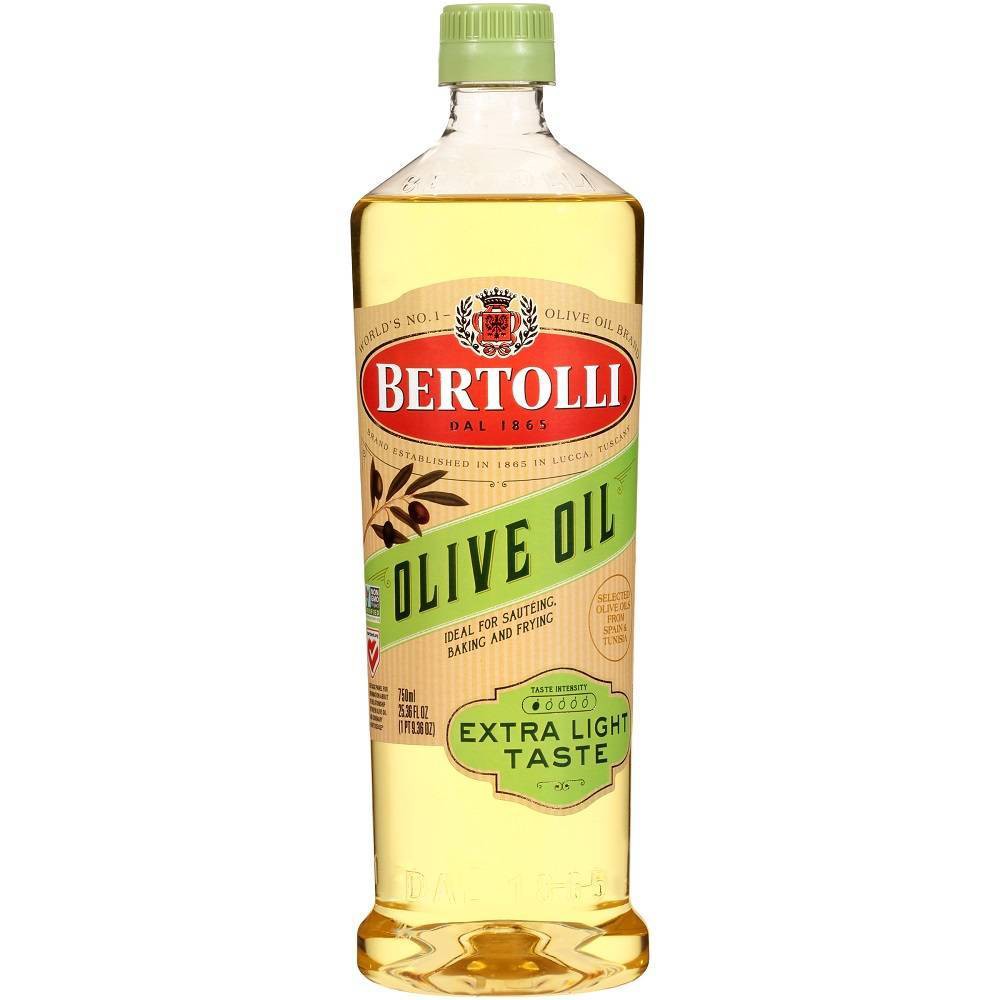


Bertolli Olive Oil Extra Light Taste – 25.36 fl oz
Analysis updated August 2026 · How Scout scores
At a glance
Summary
This product consists of refined and virgin olive oils, which are healthy fat sources rich in monounsaturated fats and antioxidants. The refining process slightly reduces beneficial compounds, but the inclusion of virgin olive oil helps retain natural flavors and nutrients. The product is minimally processed, making it a versatile and healthful choice for cooking and dressings.
Key ingredients 3
Virgin olive oilVery Good
Virgin olive oil is less processed than refined oils, retaining more natural flavors and nutrients. It is rich in monounsaturated fats and antioxidants, which are beneficial for heart health. Its lower smoke point makes it suitable for dressings and low-heat cooking.
Risks
It has a lower smoke point compared to refined oils, which may limit its use in high-heat cooking.
Benefits
Rich in antioxidants and healthy fats, it supports heart health and adds flavor to dishes.
Huile d'olive viergeVery Good
Huile d'olive vierge, or virgin olive oil, is minimally processed, preserving its natural antioxidants and flavors. It is a source of healthy monounsaturated fats, beneficial for cardiovascular health. Its rich taste enhances culinary dishes.
Risks
Similar to other virgin oils, it has a lower smoke point, which may not be ideal for high-temperature cooking.
Benefits
Provides antioxidants and healthy fats, contributing to heart health and flavorful meals.
Refined olive oilGood
Refined olive oil is processed to remove impurities and improve stability. It has a neutral flavor and high smoke point, making it versatile for cooking. The refining process may reduce some beneficial compounds, but it remains a healthy fat source.
Risks
The refining process can reduce the levels of antioxidants and other beneficial compounds.
Benefits
It provides a stable cooking oil with a high smoke point and neutral flavor.
Processing
Unprocessed or Minimally Processed Foods
Get the full breakdown in the Scout appTake Scout shopping
Scan any product to see lab results, healthy alternatives, and your personalized analysis.
Download on theApp Store GET IT ONGoogle PlayAmazon pricing & content
Amazon price as of . Product prices and availability are accurate as of the date/time indicated and are subject to change. Any price and availability information displayed on Amazon.com at the time of purchase will apply to the purchase of this product.
CERTAIN CONTENT THAT APPEARS ON THIS SITE COMES FROM AMAZON. THIS CONTENT IS PROVIDED “AS IS” AND IS SUBJECT TO CHANGE OR REMOVAL AT ANY TIME.