
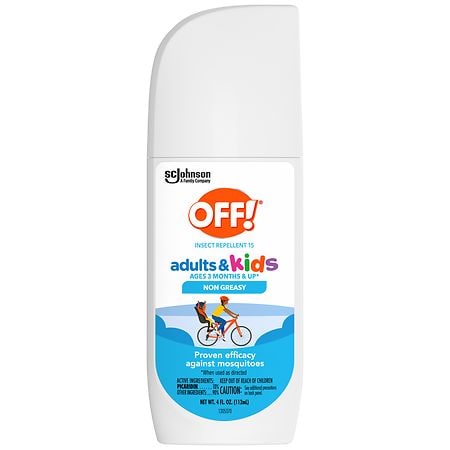
OFF! Insect Repellent Spritz for Adults & Kids Fragrance-Free Bug Spray for Everyday Protection from Mosquitoes 4 oz
Summary
This insect repellent is fragrance-free, which is a positive aspect as it avoids synthetic fragrances that can be irritating. However, the product may contain other synthetic chemicals typical of insect repellents, which can be concerning for skin sensitivity and overall safety. The absence of natural oils or botanicals that could enhance skin health results in a moderate score, reflecting a balance between functionality and ingredient safety.
At a glance
Key ingredients 10
PicaridinNeutral
Picaridin is a synthetic compound used as an insect repellent. It is considered effective against a variety of insects. It is generally well-tolerated on the skin.
Risks
There is a potential for skin irritation in sensitive individuals.
Benefits
It provides effective protection against mosquitoes and other insects.
WaterNeutral
Water is commonly used as a solvent in cosmetic formulations. It helps to dissolve other ingredients and provides a base for the product. It is generally safe and non-irritating.
Risks
There are no significant risks associated with water in cosmetic products.
Benefits
It acts as a solvent and helps in the application of the product.
Alcohol Denat.Neutral
Denatured alcohol is used as a solvent and to help the product dry quickly. It can be drying to the skin if used in high concentrations. It is effective in enhancing the penetration of active ingredients.
Risks
It may cause dryness or irritation in sensitive skin types.
Benefits
It helps the product to dry quickly and enhances the penetration of active ingredients.
GlycerinVery Good
Glycerin is a humectant that attracts moisture to the skin. It is widely used in cosmetics for its moisturizing properties. It helps to maintain skin hydration and improve skin barrier function.
Risks
There are minimal risks associated with glycerin in cosmetic products.
Benefits
It provides excellent moisturizing benefits and helps to maintain skin hydration.
FragranceBad
Fragrance is often added to products for scent but can cause allergic reactions or irritation. It is a common cause of contact dermatitis. Fragrance formulations are proprietary, making it difficult to assess individual component safety.
Risks
Potential for allergic reactions and skin irritation.
Benefits
Adds a pleasant scent to the product.
Propylene GlycolNeutral
Propylene glycol is used as a humectant and solvent in cosmetics. It helps to retain moisture and improve texture. It is generally considered safe in low concentrations.
Risks
May cause irritation in sensitive individuals.
Benefits
Helps to retain moisture and improve product texture.
Aloe Barbadensis Leaf JuiceVery Good
Aloe vera is known for its soothing and moisturizing properties. It is often used to calm irritated skin and provide hydration. It contains vitamins and antioxidants beneficial for skin health.
Risks
Rarely, it may cause allergic reactions in sensitive individuals.
Benefits
Provides soothing and moisturizing benefits, and contains beneficial vitamins and antioxidants.
Citric AcidNeutral
Citric acid is used to adjust the pH of cosmetic products. It can also act as a mild exfoliant. It is generally safe in low concentrations.
Risks
High concentrations may cause skin irritation.
Benefits
Helps to adjust pH and can provide mild exfoliation.
Sodium CitrateNeutral
Sodium citrate is used as a buffering agent to maintain pH balance. It is generally considered safe and non-irritating. It helps to stabilize the formulation.
Risks
There are minimal risks associated with sodium citrate in cosmetic products.
Benefits
Helps to maintain pH balance and stabilize the formulation.
Disodium EDTANeutral
Disodium EDTA is used as a chelating agent to improve product stability. It binds to metal ions, preventing them from affecting the product. It is generally considered safe in cosmetic formulations.
Risks
There are minimal risks associated with disodium EDTA in cosmetic products.
Benefits
Improves product stability by binding metal ions.
Get the full breakdown in the Scout app
Scan any product to see lab results, healthy alternatives, and your personalized analysis.
Download on theApp Store