

At a glance
Summary
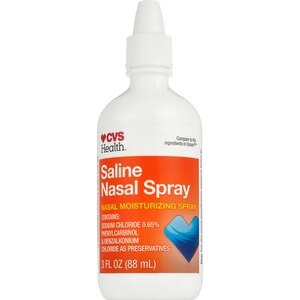
This saline nasal spray contains a simple formulation with purified water and sodium chloride, which are generally safe and effective for nasal irrigation. However, the presence of benzalkonium chloride, a preservative that can cause irritation with prolonged use, and phenylcarbinol, a synthetic compound, slightly lowers its safety profile. The product is moderately processed due to these additives, which impacts its overall rating.
Key ingredients 6
Purified WaterNeutral
Purified water is used as a solvent and carrier for other ingredients. It is essential for dissolving salts and other components in the solution. It is generally considered safe and non-reactive.
Risks
There are no significant risks associated with purified water in cosmetic products.
Benefits
Purified water helps in maintaining the consistency and stability of the product.
Sodium Chloride 0.65%Neutral
Sodium chloride is used to mimic the natural salt concentration in the body, making the solution isotonic. It helps in moisturizing and soothing the nasal passages. It is generally safe for use in nasal sprays.
Risks
Excessive use may lead to dryness or irritation in sensitive individuals.
Benefits
It helps in relieving nasal congestion and maintaining moisture balance in the nasal tissues.
Disodium PhosphateNeutral
Disodium phosphate is used as a buffering agent to maintain the pH of the solution. It helps in stabilizing the product and preventing degradation. It is generally recognized as safe in cosmetic formulations.
Risks
There are minimal risks associated with its use in small concentrations.
Benefits
It ensures the product remains effective and safe for use over time.
PhenylcarbinolNeutral
Phenylcarbinol, also known as benzyl alcohol, is used as a preservative and solvent. It helps in preventing microbial growth in the product. It is generally safe in low concentrations but can cause irritation in some individuals.
Risks
Potential for skin or mucosal irritation, especially in sensitive individuals.
Benefits
It extends the shelf life of the product by preventing microbial contamination.
Monosodium PhosphateNeutral
Monosodium phosphate acts as a buffering agent to maintain the pH balance of the solution. It works in conjunction with disodium phosphate to stabilize the product. It is considered safe for use in cosmetics.
Risks
There are minimal risks associated with its use in small concentrations.
Benefits
It helps in maintaining the stability and effectiveness of the product.
Benzalkonium ChlorideBad
Benzalkonium chloride is used as a preservative and antimicrobial agent. It is effective in preventing bacterial growth but can be irritating to the skin and mucous membranes. It is often criticized for its potential to cause allergic reactions.
Risks
May cause irritation or allergic reactions, particularly with prolonged use.
Benefits
Provides antimicrobial protection, extending the product's shelf life.
Get the full breakdown in the Scout appTake Scout shopping
Scan any product to see lab results, healthy alternatives, and your personalized analysis.
Download on theApp Store GET IT ONGoogle Play