
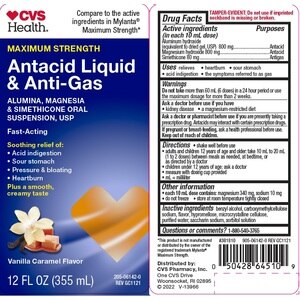
CVS Health Maximum Strength Antacid Liquid & Anti-Gas, Vanilla Caramel Flavor, 12 oz
Analysis updated October 2026 · How Scout scores
At a glance
Summary
This antacid contains effective active ingredients like aluminum hydroxide and magnesium hydroxide, which are beneficial for neutralizing stomach acid and relieving indigestion. However, the presence of saccharin sodium, an artificial sweetener, and unspecified 'flavor' raises concerns about ingredient transparency and potential artificial components. These factors, along with the moderate level of processing, influence the overall rating.
Key ingredients 11
Aluminum HydroxideGood
Aluminum hydroxide is an effective antacid that neutralizes stomach acid. It is commonly used to relieve symptoms of indigestion and heartburn. Its effectiveness in reducing acid makes it a beneficial active ingredient in antacid formulations.
Risks
Excessive use may lead to constipation or phosphate depletion.
Benefits
Provides relief from acid-related discomfort and helps maintain stomach pH balance.
Magnesium HydroxideGood
Magnesium hydroxide acts as both an antacid and a laxative, helping to neutralize stomach acid and relieve constipation. It is a well-tolerated ingredient in over-the-counter antacid products. Its dual action makes it a valuable component in digestive health products.
Risks
Overuse can lead to diarrhea or electrolyte imbalance.
Benefits
Helps alleviate symptoms of indigestion and supports regular bowel movements.
SimethiconeNeutral
Simethicone is an anti-foaming agent that helps reduce bloating and discomfort caused by excess gas. It is considered safe and effective for relieving gas symptoms. Its inert nature means it does not interact with other medications or affect nutrient absorption.
Benefits
Provides relief from gas-related discomfort without systemic absorption.
Carboxymethylcellulose SodiumNeutral
Carboxymethylcellulose sodium is a thickening agent that provides texture and stability to liquid formulations. It is widely used in food and pharmaceutical products. Its inert nature means it does not affect the active ingredients' efficacy.
Benefits
Enhances product consistency and stability without affecting taste or efficacy.
HypromelloseNeutral
Hypromellose is a cellulose derivative used as a thickener and stabilizer in pharmaceutical products. It is considered safe and inert. Its role in maintaining product consistency is important for user experience.
Benefits
Contributes to the product's texture and stability without affecting active ingredients.
Microcrystalline CelluloseNeutral
Microcrystalline cellulose is a common excipient used to provide bulk and improve the texture of pharmaceutical formulations. It is generally recognized as safe and inert. Its use is widespread in the industry due to its stability and non-reactive nature.
Benefits
Improves product texture and stability without impacting active ingredient performance.
Purified WaterNeutral
Purified water is used as a solvent and carrier for active ingredients in liquid formulations. It is essential for dissolving and distributing ingredients evenly. Its purity ensures that it does not introduce contaminants into the product.
Benefits
Serves as a clean and safe medium for delivering active ingredients.
Sorbitol SolutionNeutral
Sorbitol solution is a sugar alcohol used as a sweetener and humectant in pharmaceutical products. It is generally recognized as safe and provides a mild sweetness. Its role in maintaining moisture and texture is beneficial for liquid formulations.
Risks
Excessive consumption may lead to gastrointestinal discomfort or laxative effects.
Benefits
Helps maintain product moisture and provides a mild sweetness without significant calories.
Benzyl AlcoholBad
Processed additive flagged under Scout's ingredient doctrine.
Risks
May cause irritation in sensitive individuals if used in high concentrations.
Benefits
Helps maintain product integrity and prevent microbial growth.
FlavorBad
The use of unspecified 'flavor' can include artificial components that may not be disclosed. This lack of transparency can be concerning for consumers seeking natural products. The potential inclusion of artificial flavors is a downside in terms of ingredient quality.
Risks
May contain artificial additives that some consumers prefer to avoid.
Benefits
Enhances the palatability of the product, making it more pleasant to consume.
Saccharin SodiumBad
Saccharin sodium is an artificial sweetener that provides sweetness without calories. It has been controversial due to past studies linking it to health concerns, though it is currently deemed safe by regulatory agencies. Its artificial nature and potential health concerns make it less desirable than natural sweeteners.
Risks
May pose health concerns for sensitive individuals or when consumed in large quantities.
Benefits
Provides sweetness without adding calories, which can be beneficial for calorie-restricted diets.
Processing
Processed Foods
Get the full breakdown in the Scout appTake Scout shopping
Scan any product to see lab results, healthy alternatives, and your personalized analysis.
Download on theApp Store GET IT ONGoogle Play