
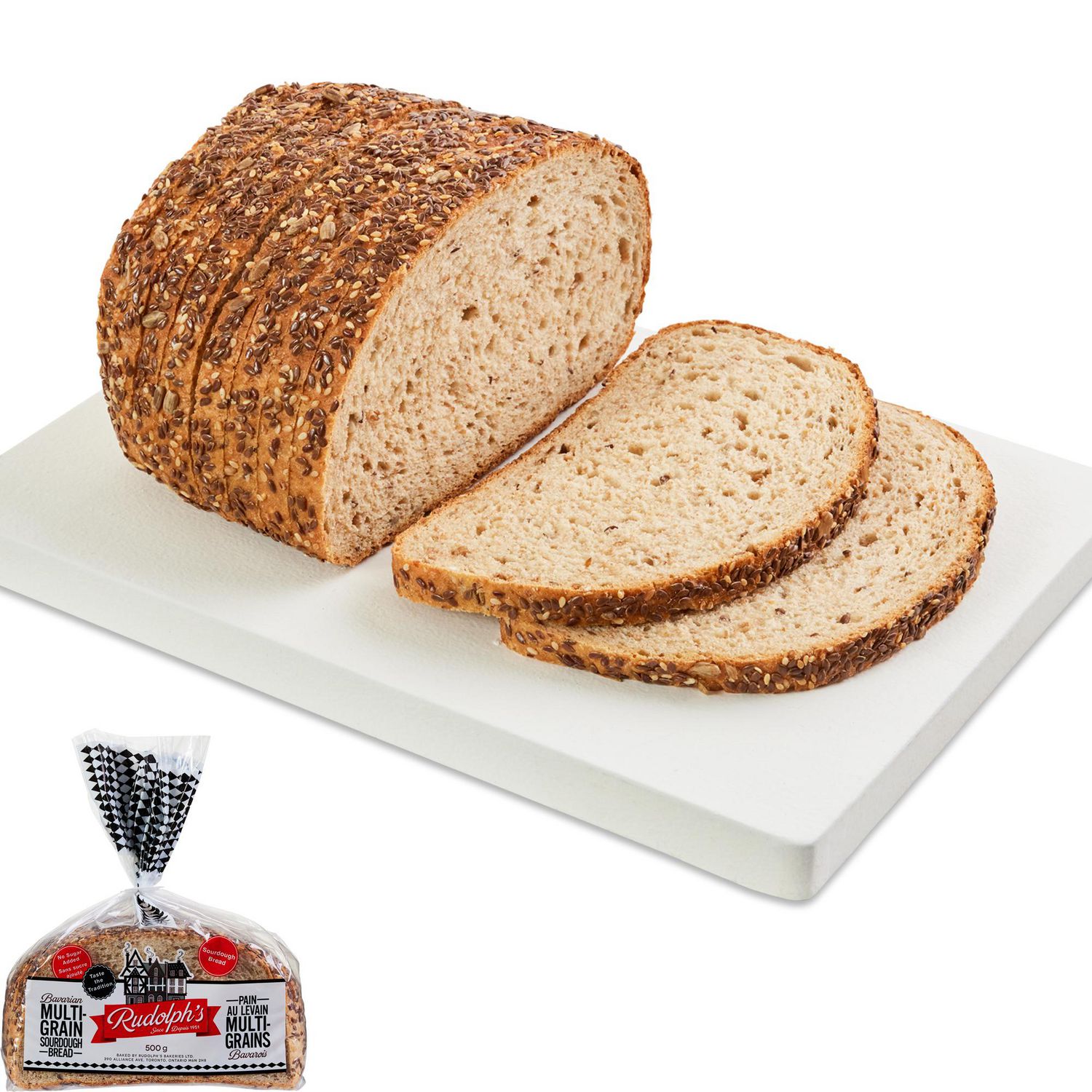


Rudolph's Bavarian Multi-Grain Sourdough Bread
Summary
This bread contains a variety of whole grains and seeds, which contribute to its nutritional value and provide fiber, healthy fats, and essential nutrients. However, it is classified as ultra-processed due to the presence of calcium propionate, a synthetic preservative, and the use of refined flour. Despite its beneficial ingredients, the processing level limits its overall health score.
At a glance
Key ingredients 15
Unbleached wheat flourNeutral
Unbleached wheat flour is a common base for bread products, providing structure and texture. It is less processed than bleached flour, retaining more nutrients. However, it is still a refined flour and lacks the fiber of whole grain options.
Risks
May contribute to blood sugar spikes due to its refined nature.
Benefits
Provides essential carbohydrates for energy.
WaterNeutral
Water is a fundamental ingredient in bread making, hydrating the flour and activating yeast. It is essential for dough formation and texture. Water quality can affect the final product, but generally poses no health risks.
Benefits
Essential for hydration and dough consistency.
Whole wheat flourGood
Whole wheat flour is a nutrient-dense ingredient that retains the bran and germ of the wheat kernel. It provides more fiber, vitamins, and minerals compared to refined flours. Its inclusion supports digestive health and provides sustained energy.
Risks
May cause digestive discomfort in individuals with wheat sensitivities.
Benefits
Rich in dietary fiber and essential nutrients, supporting overall health.
Sour (water, dark rye flour and bacterial culture)Good
Sourdough starter made from water, dark rye flour, and bacterial culture contributes to the bread's flavor and digestibility. The fermentation process enhances nutrient availability and reduces phytic acid. It also imparts a unique tangy taste.
Benefits
Improves digestibility and nutrient absorption due to fermentation.
Cracked whole wheatGood
Cracked whole wheat adds texture and nutritional value to the bread. It is a whole grain, providing fiber and essential nutrients. Its inclusion supports heart health and aids in digestion.
Risks
May cause digestive issues for those with wheat allergies.
Benefits
Rich in fiber and nutrients, promoting digestive health.
Whole rye seedGood
Whole rye seeds are a nutritious addition, offering fiber, vitamins, and minerals. They contribute to the bread's hearty texture and flavor. Rye is known for its potential to improve blood sugar control.
Risks
May not be suitable for individuals with rye allergies.
Benefits
Supports heart health and provides sustained energy.
Coarse whole rye grainGood
Coarse whole rye grain enhances the bread's texture and nutritional profile. It is high in fiber and beneficial compounds like lignans. Rye grains are linked to improved digestive health and reduced inflammation.
Risks
May cause allergic reactions in sensitive individuals.
Benefits
Promotes digestive health and provides essential nutrients.
Flax seedVery Good
Flax seeds are a rich source of omega-3 fatty acids, fiber, and lignans. They support heart health and have anti-inflammatory properties. Their inclusion in bread boosts nutritional value significantly.
Risks
Excessive consumption may lead to digestive discomfort.
Benefits
Rich in omega-3s and fiber, supporting heart and digestive health.
Sunflower seedGood
Sunflower seeds provide healthy fats, protein, and essential vitamins and minerals. They enhance the bread's nutritional profile and add a pleasant crunch. Sunflower seeds are known for their antioxidant properties.
Risks
May cause allergic reactions in some individuals.
Benefits
Rich in healthy fats and antioxidants, supporting overall health.
Whole rolled oatsGood
Whole rolled oats are a nutritious whole grain, providing soluble fiber and beta-glucans. They support heart health and help regulate blood sugar levels. Oats add a chewy texture and mild flavor to the bread.
Risks
May contain gluten, posing a risk for those with celiac disease.
Benefits
Supports heart health and provides sustained energy.
Sesame seedGood
Sesame seeds are a good source of healthy fats, protein, and minerals like calcium and magnesium. They add a nutty flavor and crunchy texture to the bread. Sesame seeds are linked to improved heart health and bone strength.
Risks
Potential allergen for some individuals.
Benefits
Rich in nutrients that support heart and bone health.
YeastNeutral
Yeast is essential for leavening bread, contributing to its rise and texture. It is a natural ingredient that ferments sugars to produce carbon dioxide. Yeast also adds a subtle flavor to the bread.
Benefits
Essential for bread leavening and texture.
SaltNeutral
Salt is used in bread to enhance flavor and control yeast activity. It is a common ingredient in baking, contributing to the overall taste profile. However, excessive salt intake can be a health concern.
Risks
High sodium intake may contribute to hypertension.
Benefits
Enhances flavor and regulates yeast activity in bread.
Whey powderGood
Whey powder is a high-quality protein source derived from milk. It provides essential amino acids and supports muscle health. Its inclusion in bread can enhance the protein content and nutritional value.
Risks
May cause issues for those with lactose intolerance or milk allergies.
Benefits
Rich in protein, supporting muscle health and recovery.
Calcium propionateBad
Calcium propionate is a preservative used to extend shelf life by inhibiting mold growth. It is considered safe in small amounts but is a synthetic additive. Some individuals may experience digestive discomfort from its consumption.
Risks
Potential for digestive discomfort and allergic reactions in sensitive individuals.
Benefits
Extends shelf life by preventing mold growth.
Processing
Ultra-Processed Foods
Get the full breakdown in the Scout app
Scan any product to see lab results, healthy alternatives, and your personalized analysis.
Download on theApp Store