
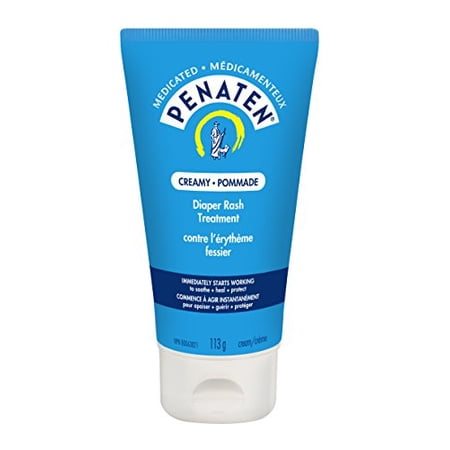
Penaten Medicated Creamy Diaper Rash Treatment 113g
Analysis updated August 2026 · How Scout scores
At a glance
Summary
This diaper rash treatment contains beneficial ingredients like zinc oxide, aloe vera, and beeswax, which provide soothing and protective properties. However, the presence of petrolatum and phenoxyethanol, which have potential contamination and irritation concerns, affects the overall safety profile. The product balances natural and synthetic components, resulting in a moderate processing level.
Key ingredients 18
Aloe Barbadensis Leaf ExtractVery Good
Aloe Barbadensis Leaf Extract is a natural ingredient known for its soothing and moisturizing properties. It is often used to calm irritated skin and provide hydration. Its anti-inflammatory properties make it beneficial for sensitive skin.
Risks
There are minimal risks, though some individuals may experience allergic reactions.
Benefits
It provides soothing, anti-inflammatory, and moisturizing benefits, making it ideal for sensitive or irritated skin.
Cera AlbaVery Good
Cera Alba, or beeswax, is a natural wax used for its emollient properties. It helps to form a protective barrier on the skin, locking in moisture. It is valued for its natural origin and skin-conditioning benefits.
Risks
Rarely, it may cause allergic reactions in individuals sensitive to bee products.
Benefits
It provides a natural barrier to protect and moisturize the skin.
Zinc OxideGood
Zinc Oxide is a mineral used in creams for its protective and soothing properties. It forms a barrier on the skin to protect against irritants. It is widely recognized for its effectiveness in treating diaper rash.
Risks
There are minimal risks associated with topical use, though it may cause minor irritation in rare cases.
Benefits
It provides a protective barrier and has anti-inflammatory properties, making it beneficial for sensitive skin.
GlycerinGood
Glycerin is a humectant that attracts moisture to the skin. It is widely used in skincare for its hydrating properties. It helps to maintain skin moisture balance and improve skin texture.
Risks
Generally safe, but may cause irritation in very sensitive skin.
Benefits
It effectively hydrates the skin and improves its texture.
Tocopheryl AcetateGood
Tocopheryl Acetate is a form of Vitamin E used for its antioxidant properties. It helps to protect the skin from environmental damage. It is widely used in cosmetics for its skin-conditioning benefits.
Risks
Rarely, it may cause skin irritation or allergic reactions.
Benefits
It provides antioxidant protection and improves skin health.
1, 2-HexanediolNeutral
1, 2-Hexanediol is a synthetic preservative and moisture-binding agent. It helps to stabilize formulations and improve product shelf life. It is generally considered safe for use in cosmetics.
Risks
In rare cases, it may cause skin irritation or allergic reactions.
Benefits
It helps to maintain product stability and can enhance skin hydration.
Caprylyl GlycolNeutral
Caprylyl Glycol is a skin-conditioning agent that also acts as a preservative. It helps to improve the texture and feel of products. It is generally considered safe for use in cosmetics.
Risks
May cause mild irritation in sensitive individuals.
Benefits
It enhances skin hydration and improves product texture.
Cera MicrocristallinaNeutral
Cera Microcristallina is a refined wax used to thicken and stabilize formulations. It helps to improve the texture and consistency of products. It is generally considered safe for use in cosmetics.
Risks
May cause minor irritation in sensitive individuals.
Benefits
It enhances product stability and texture.
Magnesium SulfateNeutral
Magnesium Sulfate is used as a thickening agent in cosmetics. It helps to improve the texture and consistency of products. It is generally considered safe for use in cosmetics.
Risks
May cause minor irritation if used in high concentrations.
Benefits
It helps to stabilize formulations and improve texture.
PEG-30 DipolyhydroxystearateNeutral
PEG-30 Dipolyhydroxystearate is an emulsifier used to stabilize formulations. It helps to mix oil and water-based ingredients. It is generally considered safe for use in cosmetics.
Risks
May cause irritation in sensitive skin or if used in high concentrations.
Benefits
It improves product stability and texture.
Potassium HydroxideNeutral
Potassium Hydroxide is used to adjust the pH of cosmetic formulations. It helps to maintain product stability and effectiveness. It is generally considered safe when used in low concentrations.
Risks
Can cause irritation if used in high concentrations.
Benefits
It helps to stabilize formulations by adjusting pH levels.
Sorbitan SesquioleateNeutral
Sorbitan Sesquioleate is an emulsifier used to stabilize formulations. It helps to mix oil and water-based ingredients. It is generally considered safe for use in cosmetics.
Risks
May cause irritation in sensitive skin.
Benefits
It improves product stability and texture.
TropoloneNeutral
Tropolone is a preservative used to prevent microbial growth in products. It is effective at low concentrations and helps to extend product shelf life. It is generally considered safe for use in cosmetics.
Risks
May cause irritation in sensitive individuals.
Benefits
It effectively preserves products by preventing microbial growth.
WaterNeutral
Water is used as a solvent in cosmetic formulations. It helps to dissolve other ingredients and improve product texture. It is a fundamental component in many cosmetic products.
Risks
There are no significant risks associated with water in cosmetics.
Benefits
It acts as a solvent and helps to improve product texture.
DimethiconeBad
Occlusive silicone film-former — flagged under clean-beauty doctrine.
Risks
May cause build-up on the skin with prolonged use.
Benefits
It provides a smooth application and helps to lock in moisture.
Mineral OilBad
Processed additive flagged under Scout's ingredient doctrine.
Risks
May cause pore blockage and acne in some individuals.
Benefits
It provides effective moisture retention and skin protection.
PhenoxyethanolBad
Phenoxyethanol is a preservative used to prevent microbial growth in products. It is effective at low concentrations but is penalized due to potential skin irritation and toxicity concerns. It is a common alternative to parabens.
Risks
May cause skin irritation and allergic reactions in sensitive individuals.
Benefits
It effectively preserves products by preventing microbial growth.
PetrolatumVery Bad
Petrolatum is a petroleum-derived product used for its occlusive properties. It forms a barrier on the skin to prevent moisture loss. However, it is heavily penalized due to its origin and potential contamination concerns.
Risks
Potential contamination with harmful substances and may cause pore blockage.
Benefits
It provides effective moisture retention and skin protection.
Get the full breakdown in the Scout appTake Scout shopping
Scan any product to see lab results, healthy alternatives, and your personalized analysis.
Download on theApp Store GET IT ONGoogle PlayAmazon pricing & content
Amazon price as of . Product prices and availability are accurate as of the date/time indicated and are subject to change. Any price and availability information displayed on Amazon.com at the time of purchase will apply to the purchase of this product.
CERTAIN CONTENT THAT APPEARS ON THIS SITE COMES FROM AMAZON. THIS CONTENT IS PROVIDED “AS IS” AND IS SUBJECT TO CHANGE OR REMOVAL AT ANY TIME.