
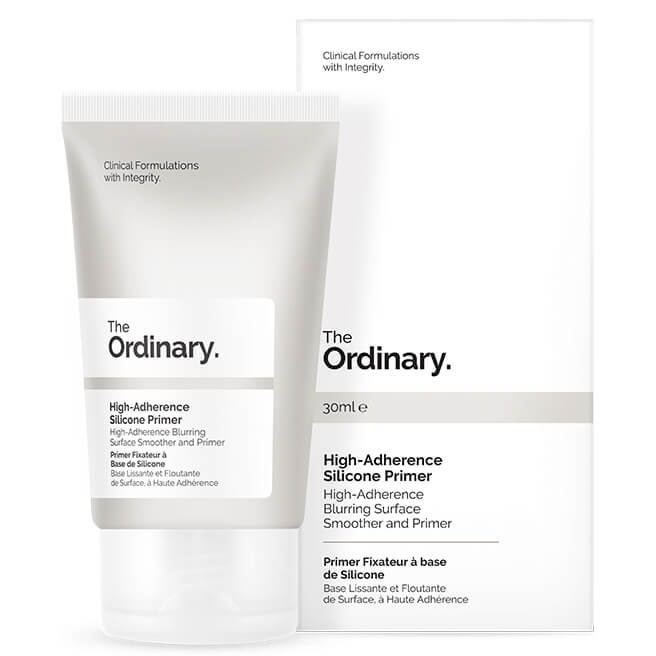



The Ordinary High-Adherence Silicone Primer 1oz - Imperfect Box
OrdinaryAnalysis updated October 2026 · How Scout scores
At a glance
Summary
This primer contains a mix of synthetic ingredients, including dimethicone and other silicones, which are common in cosmetics for their smoothing properties but contribute to a higher level of processing. The presence of phenoxyethanol as a preservative is a moderate concern due to potential irritation risks. However, the inclusion of tocopherol, a beneficial antioxidant, provides some skin health benefits, balancing the overall formulation.
Key ingredients 14
TocopherolVery Good
Tocopherol, also known as Vitamin E, is an antioxidant that helps protect the skin from free radical damage. It is commonly used in cosmetics for its skin conditioning properties. It is considered beneficial for skin health.
Risks
There are minimal risks, though it may cause irritation in very sensitive skin.
Benefits
It provides antioxidant protection and conditions the skin.
Aqua (Water)Neutral
Water is a common solvent used in cosmetics to dissolve other ingredients. It helps in the application and absorption of the product. It does not have any direct benefits or risks associated with its use in cosmetics.
Risks
There are no significant risks associated with water in cosmetics.
Benefits
Water helps in the application and absorption of the product.
Isodecyl NeopentanoateNeutral
Isodecyl Neopentanoate is an emollient that helps to soften and smooth the skin. It is commonly used in cosmetics for its ability to improve texture. It is generally considered safe for use in cosmetics.
Risks
There are minimal risks associated with this ingredient, though it may cause irritation in very sensitive skin.
Benefits
It improves the texture of the skin by providing a smooth and soft feel.
DimethiconeNeutral
Dimethicone is a silicone-based polymer used as a skin protectant and conditioning agent. It forms a barrier on the skin's surface, helping to lock in moisture. It is widely used in cosmetics and is considered safe.
Risks
There are minimal risks, but it may cause breakouts in acne-prone skin due to its occlusive nature.
Benefits
It helps to lock in moisture and provides a smooth application.
Dimethicone/Bis-Isobutyl PPG-20 CrosspolymerNeutral
This ingredient is a silicone-based polymer that provides a silky feel and improves the spreadability of the product. It is used to enhance the texture and application of cosmetics. It is generally considered safe for use.
Risks
There are minimal risks, though it may cause irritation in sensitive skin.
Benefits
It enhances the texture and spreadability of the product.
Hydroxyethyl Acrylate/Sodium Acryloyldimethyl Taurate CopolymerNeutral
This copolymer is used as a thickening agent and stabilizer in cosmetics. It helps to maintain the consistency and stability of the product. It is considered safe for use in cosmetics.
Risks
There are minimal risks associated with this ingredient.
Benefits
It helps maintain the consistency and stability of the product.
IsohexadecaneNeutral
Isohexadecane is a lightweight emollient that provides a silky feel and enhances the spreadability of products. It is commonly used in cosmetics for its non-greasy texture. It is considered safe for use.
Risks
There are minimal risks, though it may cause irritation in sensitive skin.
Benefits
It provides a silky feel and enhances spreadability without a greasy residue.
HexamethyldisiloxaneNeutral
Hexamethyldisiloxane is a volatile silicone used to improve the spreadability and drying time of cosmetics. It evaporates quickly, leaving a smooth finish. It is considered safe for use in cosmetics.
Risks
There are minimal risks, though it may cause irritation in sensitive skin.
Benefits
It improves spreadability and provides a smooth finish.
Isoceteth-20Neutral
Isoceteth-20 is a nonionic surfactant used to help mix oil and water-based ingredients. It is commonly used in cosmetics for its emulsifying properties. It is considered safe for use.
Risks
There are minimal risks, though it may cause irritation in sensitive skin.
Benefits
It helps to emulsify and stabilize formulations.
Polysilicone-11Neutral
Polysilicone-11 is a silicone elastomer that provides a smooth, powdery finish to cosmetics. It is used to improve the texture and feel of products. It is considered safe for use.
Risks
There are minimal risks, though it may cause irritation in sensitive skin.
Benefits
It provides a smooth, powdery finish and enhances texture.
Polysorbate 60Neutral
Polysorbate 60 is an emulsifier used to stabilize and blend ingredients in cosmetics. It helps to maintain the consistency of the product. It is considered safe for use.
Risks
There are minimal risks, though it may cause irritation in sensitive skin.
Benefits
It helps to stabilize and blend ingredients effectively.
Trisodium Ethylenediamine DisuccinateNeutral
This ingredient is a chelating agent used to improve the stability and efficacy of cosmetic formulations. It helps to bind metal ions and prevent degradation. It is considered safe for use.
Risks
There are minimal risks associated with this ingredient.
Benefits
It improves the stability and efficacy of formulations.
ChlorphenesinNeutral
Chlorphenesin is a preservative used to prevent the growth of bacteria and fungi in cosmetics. It is effective in maintaining product safety. It is generally considered safe for use.
Risks
There are minimal risks, though it may cause irritation in sensitive skin.
Benefits
It helps to maintain product safety by preventing microbial growth.
PhenoxyethanolBad
Phenoxyethanol is a preservative used to prevent microbial growth in cosmetics. It is effective but can cause irritation and allergic reactions in some individuals. It is considered a moderate risk ingredient.
Risks
It may cause irritation and allergic reactions, especially in sensitive individuals.
Benefits
It effectively prevents microbial growth, extending product shelf life.
Get the full breakdown in the Scout appTake Scout shopping
Scan any product to see lab results, healthy alternatives, and your personalized analysis.
Download on theApp Store GET IT ONGoogle Play