
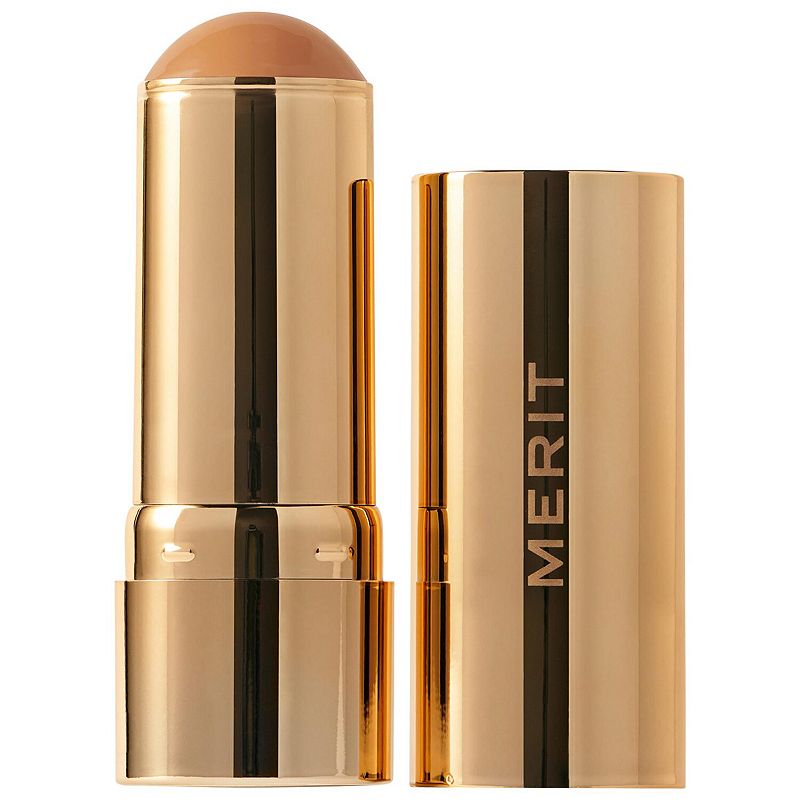
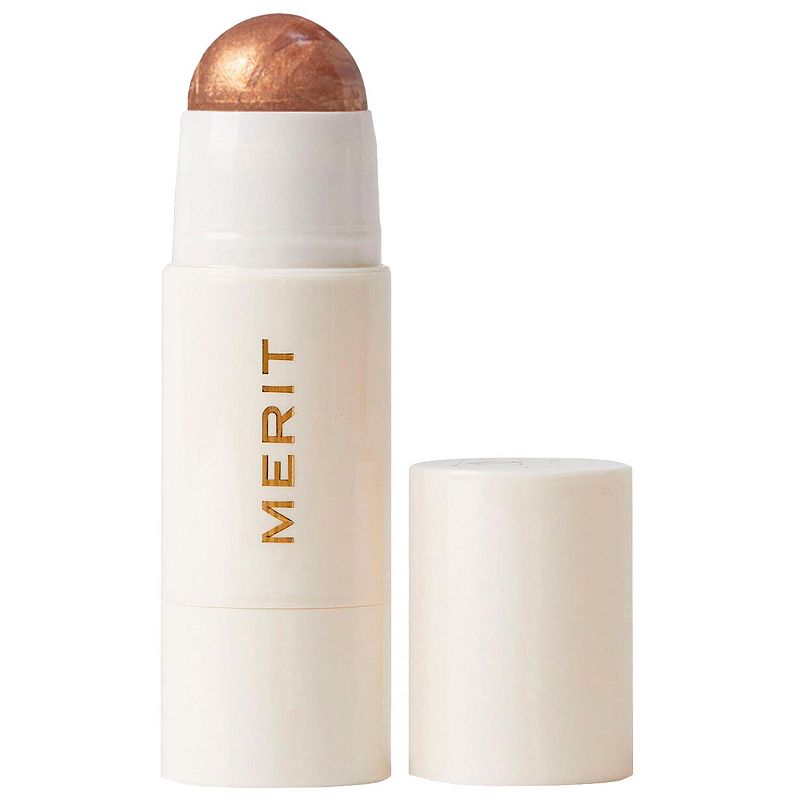

MERIT Bronze Balm Sheer Sculpting Bronzer Color: Quince Size: N/A
Analysis updated August 2026 · How Scout scores
At a glance
Summary
This bronzer contains BHT, a controversial antioxidant associated with potential health concerns such as skin irritation and endocrine disruption. While the product includes some synthetic ingredients, it lacks multiple harmful substances found in lower-scoring cosmetics. The presence of BHT and synthetic components affects its overall safety profile, resulting in a moderate score.
Key ingredients 22
Octyldodecyl MyristateNeutral
Octyldodecyl Myristate is an emollient that helps to soften and smooth the skin. It is commonly used in cosmetics for its ability to improve texture. It is generally considered safe for use in cosmetics.
Risks
There are minimal risks associated with this ingredient, though it may cause irritation in very sensitive individuals.
Benefits
It provides a smooth application and helps to maintain skin moisture.
Isononyl IsononanoateNeutral
Isononyl Isononanoate is used as an emollient and skin conditioning agent. It is known for its lightweight feel and non-greasy finish. It is generally regarded as safe for use in cosmetics.
Risks
There is a low risk of skin irritation, primarily in individuals with sensitive skin.
Benefits
It helps to improve the texture and spreadability of cosmetic products.
Pentaerythrityl TetraisostearateNeutral
Pentaerythrityl Tetraisostearate is an emollient that provides a smooth, silky feel to the skin. It is often used in cosmetics for its moisturizing properties. It is considered safe for use in personal care products.
Risks
There is a low potential for skin irritation, especially in sensitive individuals.
Benefits
It enhances the texture and application of cosmetic formulations.
Synthetic WaxNeutral
Synthetic Wax is used to provide structure and stability to cosmetic products. It helps in achieving the desired consistency and texture. It is generally safe for use in cosmetics.
Risks
There are minimal risks, though it may cause mild irritation in sensitive skin types.
Benefits
It contributes to the product's stability and application smoothness.
Diisostearyl MalateNeutral
Diisostearyl Malate is an emollient that enhances the texture and feel of cosmetic products. It is known for its moisturizing properties. It is considered safe for use in cosmetics.
Risks
There is a low risk of irritation, primarily for those with sensitive skin.
Benefits
It provides a smooth application and helps to maintain skin hydration.
Synthetic FluorphlogopiteNeutral
Synthetic Fluorphlogopite is a synthetic mica used to add shimmer and shine to cosmetics. It is valued for its ability to enhance the visual appeal of products. It is generally considered safe for use in cosmetics.
Risks
There is a low risk of irritation, especially in sensitive individuals.
Benefits
It provides a shimmering effect, enhancing the aesthetic appeal of the product.
SilicaNeutral
Silica is used in cosmetics as an absorbent and anti-caking agent. It helps to improve the texture and longevity of products. It is generally considered safe for use in cosmetics.
Risks
Inhalation of silica dust can be harmful, but this risk is minimal in cosmetic applications.
Benefits
It helps to control oil and improve the texture of cosmetic formulations.
Bis-Diglyceryl Polyacyladipate-2Neutral
Bis-Diglyceryl Polyacyladipate-2 is an emollient that provides a smooth, glossy finish to cosmetics. It is used for its moisturizing properties. It is considered safe for use in cosmetics.
Risks
There is a low risk of skin irritation, particularly in sensitive individuals.
Benefits
It enhances the texture and provides a glossy finish to cosmetic products.
Diisostearoyl Polyglyceryl-3 Dimer DilinoleateNeutral
Diisostearoyl Polyglyceryl-3 Dimer Dilinoleate is an emollient and skin conditioning agent. It is used for its ability to improve the texture and feel of products. It is generally considered safe for use in cosmetics.
Risks
There is a low potential for skin irritation, especially in sensitive individuals.
Benefits
It provides a smooth application and enhances the moisturizing properties of products.
Caprylic/Capric GlyceridesNeutral
Caprylic/Capric Glycerides are used as emollients and skin conditioning agents. They are known for their lightweight, non-greasy feel. They are generally considered safe for use in cosmetics.
Risks
There is a low risk of irritation, primarily for those with sensitive skin.
Benefits
They help to improve the texture and spreadability of cosmetic products.
Caprylic/Capric TriglycerideNeutral
Caprylic/Capric Triglyceride is an emollient that provides a silky, smooth feel to the skin. It is used for its moisturizing properties. It is considered safe for use in cosmetics.
Risks
There is a low risk of skin irritation, particularly in sensitive individuals.
Benefits
It enhances the texture and application of cosmetic formulations.
Sorbitan IsostearateNeutral
Sorbitan Isostearate is an emulsifier used to stabilize cosmetic formulations. It helps to blend oil and water components. It is generally considered safe for use in cosmetics.
Risks
There is a low potential for skin irritation, especially in sensitive individuals.
Benefits
It helps to maintain the stability and consistency of cosmetic products.
Microcrystalline WaxNeutral
Microcrystalline Wax is used to provide structure and stability to cosmetic products. It helps in achieving the desired consistency and texture. It is generally safe for use in cosmetics.
Risks
There are minimal risks, though it may cause mild irritation in sensitive skin types.
Benefits
It contributes to the product's stability and application smoothness.
Ethylene/Propylene CopolymerNeutral
Ethylene/Propylene Copolymer is used as a film-forming agent in cosmetics. It helps to improve the texture and wear of products. It is generally considered safe for use in cosmetics.
Risks
There is a low risk of irritation, primarily for those with sensitive skin.
Benefits
It enhances the durability and application of cosmetic formulations.
TriethoxycaprylylsilaneNeutral
Triethoxycaprylylsilane is used as a surface modifier in cosmetics. It helps to improve the dispersion of pigments and enhance product stability. It is generally considered safe for use in cosmetics.
Risks
There is a low risk of irritation, primarily for those with sensitive skin.
Benefits
It enhances the stability and application of cosmetic formulations.
MethiconeNeutral
Methicone is used as an anti-foaming agent and conditioning agent in cosmetics. It helps to improve the texture and feel of products. It is generally considered safe for use in cosmetics.
Risks
There is a low potential for skin irritation, especially in sensitive individuals.
Benefits
It provides a smooth application and enhances the texture of cosmetic products.
WaterNeutral
Water is used as a solvent in cosmetics to dissolve other ingredients. It is essential for the formulation of many cosmetic products. It is universally considered safe for use in cosmetics.
Risks
There are no significant risks associated with water in cosmetics.
Benefits
It acts as a solvent and helps to hydrate the skin.
Iron Oxide Yellow (Ci 77492)Neutral
Iron Oxide Yellow is a pigment used to provide color in cosmetics. It is valued for its stability and non-reactivity. It is generally considered safe for use in cosmetics.
Risks
There is a low risk of irritation, primarily for those with sensitive skin.
Benefits
It provides color and enhances the visual appeal of cosmetic products.
Iron Oxide Red (Ci 77491)Neutral
Iron Oxide Red is a pigment used to provide color in cosmetics. It is valued for its stability and non-reactivity. It is generally considered safe for use in cosmetics.
Risks
There is a low risk of irritation, primarily for those with sensitive skin.
Benefits
It provides color and enhances the visual appeal of cosmetic products.
Iron Oxide Black (Ci 77499)Neutral
Iron Oxide Black is a pigment used to provide color in cosmetics. It is valued for its stability and non-reactivity. It is generally considered safe for use in cosmetics.
Risks
There is a low risk of irritation, primarily for those with sensitive skin.
Benefits
It provides color and enhances the visual appeal of cosmetic products.
LecithinBad
Processed additive flagged under Scout's ingredient doctrine.
Risks
There is a low potential for skin irritation, especially in sensitive individuals.
Benefits
It helps to maintain the stability and consistency of cosmetic products.
BHTBad
BHT (Butylated Hydroxytoluene) is used as an antioxidant in cosmetics to prevent product spoilage. However, it has been associated with potential health concerns, including skin irritation and endocrine disruption. It is considered controversial in cosmetics due to these concerns.
Risks
BHT may cause skin irritation and has been linked to potential endocrine disruption.
Benefits
It helps to extend the shelf life of cosmetic products by preventing oxidation.
Get the full breakdown in the Scout appTake Scout shopping
Scan any product to see lab results, healthy alternatives, and your personalized analysis.
Download on theApp Store GET IT ONGoogle PlayAmazon pricing & content
Amazon price as of . Product prices and availability are accurate as of the date/time indicated and are subject to change. Any price and availability information displayed on Amazon.com at the time of purchase will apply to the purchase of this product.
CERTAIN CONTENT THAT APPEARS ON THIS SITE COMES FROM AMAZON. THIS CONTENT IS PROVIDED “AS IS” AND IS SUBJECT TO CHANGE OR REMOVAL AT ANY TIME.