
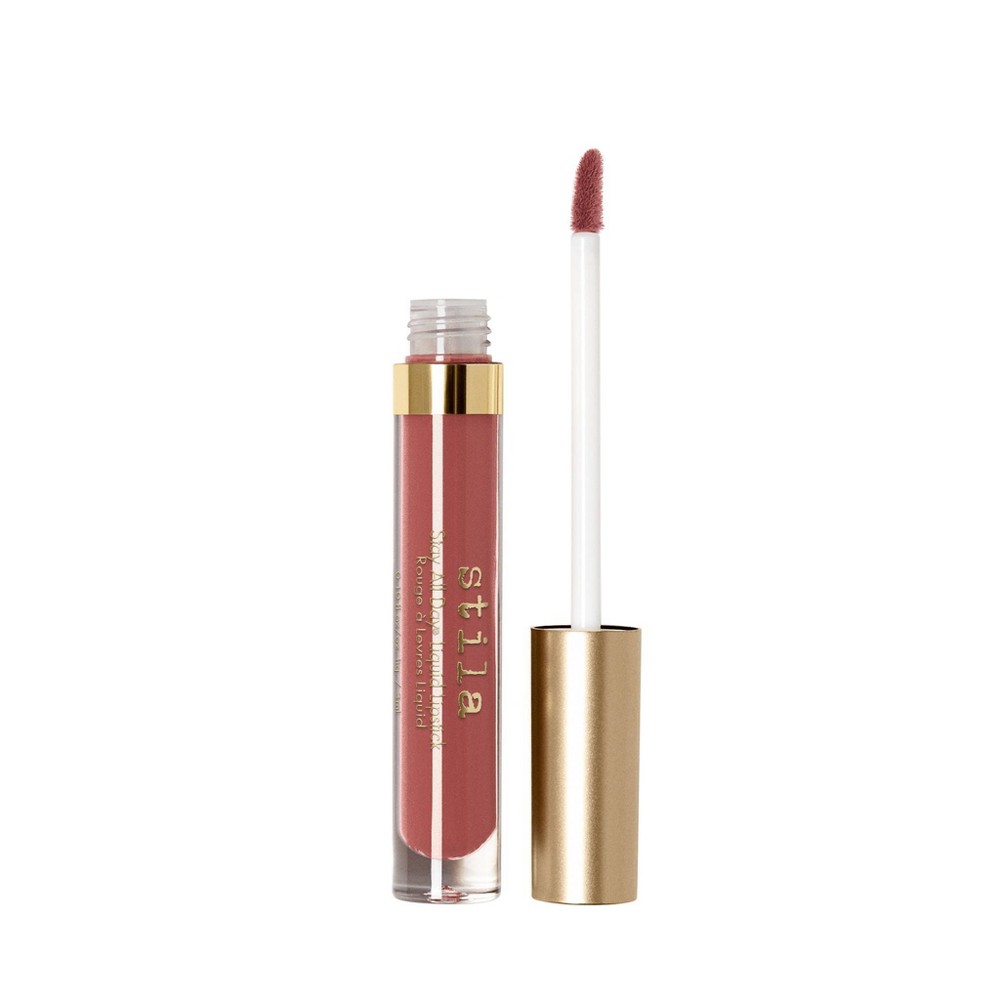

Stila Stay All Day Liquid Lipstick - Palermo - 0.1 fl oz - Ulta Beauty: Moisturizing, Medium Tones Matte, Single Container
Analysis updated August 2026 · How Scout scores
At a glance
Summary
This liquid lipstick contains beneficial ingredients like beeswax, avocado oil, and tocopherol, which provide moisturizing and antioxidant benefits. However, the presence of petrolatum, a petroleum-derived ingredient, and synthetic flavor/aroma detracts from its overall safety profile. The product also includes several color additives, which contribute to its moderate processing level.
Key ingredients 27
Beeswax/Cera Alba/Cire D'abeilleVery Good
Beeswax is a natural wax produced by honeybees. It is used in cosmetics for its emollient and thickening properties.
Risks
Allergic reactions are rare but possible, especially in individuals allergic to bee products.
Benefits
It provides a protective barrier on the skin and helps to lock in moisture.
Persea Gratissima (Avocado) OilVery Good
Avocado oil is a natural oil rich in fatty acids and vitamins. It is used for its moisturizing and nourishing properties.
Risks
Allergic reactions are rare but possible, especially in individuals with avocado allergies.
Benefits
It provides deep hydration and nourishment to the skin.
TocopherolVery Good
Tocopherol, also known as Vitamin E, is an antioxidant used to protect the skin from free radical damage. It also helps to extend the shelf life of products.
Risks
It is generally considered safe, but high concentrations can cause skin irritation in sensitive individuals.
Benefits
It provides antioxidant protection and helps to maintain skin health.
MicaGood
Beneficial ingredient — whole-food or functional value in this product class.
Risks
Inhalation of mica particles can be a concern, but this is more relevant to loose powders.
Benefits
It provides a natural shimmer and enhances the visual appeal of the product.
KaolinGood
Beneficial ingredient — whole-food or functional value in this product class.
Risks
Kaolin is generally safe, but excessive use can lead to dryness.
Benefits
It helps to mattify the skin and improve the wear time of the product.
IsododecaneNeutral
Isododecane is a hydrocarbon commonly used in cosmetics for its lightweight and non-greasy feel. It helps in the smooth application of products. It is generally considered safe for use in cosmetics.
Risks
There are minimal risks associated with isododecane, primarily related to potential skin irritation in sensitive individuals.
Benefits
It provides a silky texture and enhances the spreadability of the product.
TrimethylsiloxysilicateNeutral
Trimethylsiloxysilicate is a film-forming agent that helps products adhere to the skin. It is often used in long-wear cosmetics.
Risks
There is a low risk of skin irritation, particularly for those with sensitive skin.
Benefits
It enhances the durability and water resistance of the product.
PolybuteneNeutral
Polybutene is a polymer used as a binder and thickener in cosmetics. It helps in the even application of the product.
Risks
Polybutene is generally considered safe, but it may cause mild irritation in some individuals.
Benefits
It provides a glossy finish and improves the texture of the product.
CyclohexasiloxaneNeutral
Cyclohexasiloxane is a type of silicone used to improve the spreadability of products. It evaporates quickly, leaving a silky feel.
Risks
There are environmental concerns regarding its persistence and bioaccumulation.
Benefits
It provides a smooth application and enhances the texture of the product.
Barium SulfateNeutral
Barium sulfate is used as a pigment and opacifying agent in cosmetics. It provides a white color and increases opacity.
Risks
It is considered safe in cosmetics, but ingestion or inhalation should be avoided.
Benefits
It enhances the color and opacity of the product.
Disteardimonium HectoriteNeutral
Disteardimonium Hectorite is a thickening agent used to stabilize emulsions. It helps to maintain the consistency of the product.
Risks
There are minimal risks associated with its use in cosmetics.
Benefits
It improves the texture and stability of the formulation.
Silica Dimethyl SilylateNeutral
Silica Dimethyl Silylate is used as a thickening agent and to provide a matte finish. It helps to control shine and oiliness.
Risks
Inhalation of silica particles can be a concern, but this is more relevant to loose powders.
Benefits
It provides a matte finish and improves the texture of the product.
Glyceryl Behenate/EicosadioateNeutral
Glyceryl Behenate/Eicosadioate is an ester used as an emollient and thickening agent. It helps to improve the texture of the product.
Risks
There are minimal risks associated with its use in cosmetics.
Benefits
It provides a smooth application and enhances the consistency of the product.
Propylene CarbonateNeutral
Propylene Carbonate is a solvent used to dissolve other ingredients. It helps to maintain the fluidity of the product.
Risks
It is generally considered safe, but can cause irritation in sensitive individuals.
Benefits
It helps to keep the product in a usable consistency.
Aluminum HydroxideNeutral
Aluminum Hydroxide is used as a colorant and opacifying agent in cosmetics. It provides opacity and enhances the color of the product.
Risks
There are minimal risks associated with its use in cosmetics.
Benefits
It enhances the color and opacity of the product.
Rosin/Colophonium/ColophaneNeutral
Rosin is a natural resin used as a film-forming agent in cosmetics. It helps products adhere to the skin.
Risks
It can cause allergic reactions in some individuals, particularly those with sensitivity to pine resins.
Benefits
It enhances the durability and adhesion of the product.
CyclopentasiloxaneNeutral
Cyclopentasiloxane is a type of silicone used to improve the spreadability of products. It evaporates quickly, leaving a silky feel.
Risks
There are environmental concerns regarding its persistence and bioaccumulation.
Benefits
It provides a smooth application and enhances the texture of the product.
Titanium Dioxide (CI 77891)Neutral
Titanium Dioxide is used as a pigment and UV filter in cosmetics. It provides opacity and sun protection.
Risks
Inhalation of titanium dioxide particles can be a concern, but this is more relevant to loose powders.
Benefits
It provides sun protection and enhances the color of the product.
Iron Oxides (CI 77491, CI 77492, CI 77499)Neutral
Iron Oxides are used as pigments in cosmetics. They provide a range of colors and are considered safe for use.
Risks
There are minimal risks associated with their use in cosmetics.
Benefits
They provide natural-looking color and are stable in formulations.
Red 7 Lake (CI 15850)Neutral
Red 7 Lake is a synthetic pigment used to provide color in cosmetics. It is widely used for its vibrant hue.
Risks
There are minimal risks associated with its use in cosmetics.
Benefits
It provides a vibrant color to the product.
Red 6 (CI 15850)Neutral
Red 6 is a synthetic pigment used to provide color in cosmetics. It is widely used for its vibrant hue.
Risks
There are minimal risks associated with its use in cosmetics.
Benefits
It provides a vibrant color to the product.
Blue 1 Lake (CI 42090:1)Neutral
Blue 1 Lake is a synthetic pigment used to provide color in cosmetics. It is widely used for its vibrant hue.
Risks
There are minimal risks associated with its use in cosmetics.
Benefits
It provides a vibrant color to the product.
Yellow 5 Lake (CI 19140)Neutral
Yellow 5 Lake is a synthetic pigment used to provide color in cosmetics. It is widely used for its vibrant hue.
Risks
There are minimal risks associated with its use in cosmetics.
Benefits
It provides a vibrant color to the product.
DimethiconeBad
Occlusive silicone film-former — flagged under clean-beauty doctrine.
Risks
Some individuals may experience skin irritation or breakouts from silicones.
Benefits
It helps to create a smooth, matte finish and can improve the longevity of the product on the skin.
Flavor/AromaBad
Flavor or aroma in cosmetics can refer to synthetic or natural fragrances. These are often added to enhance the sensory experience.
Risks
Fragrances can cause allergic reactions and irritation, especially in sensitive individuals.
Benefits
They can enhance the user experience by providing a pleasant scent.
Benzyl AlcoholBad
Processed additive flagged under Scout's ingredient doctrine.
Risks
It can cause irritation and allergic reactions in sensitive individuals.
Benefits
It helps to preserve the product and prevent microbial growth.
PetrolatumVery Bad
Petrolatum is a petroleum-derived occlusive agent used to lock in moisture. It is effective at forming a barrier on the skin.
Risks
There are concerns about contamination with polycyclic aromatic hydrocarbons (PAHs) and its non-biodegradable nature.
Benefits
It is highly effective at preventing moisture loss and protecting the skin.
Get the full breakdown in the Scout appTake Scout shopping
Scan any product to see lab results, healthy alternatives, and your personalized analysis.
Download on theApp Store GET IT ONGoogle PlayAmazon pricing & content
Amazon price as of . Product prices and availability are accurate as of the date/time indicated and are subject to change. Any price and availability information displayed on Amazon.com at the time of purchase will apply to the purchase of this product.
CERTAIN CONTENT THAT APPEARS ON THIS SITE COMES FROM AMAZON. THIS CONTENT IS PROVIDED “AS IS” AND IS SUBJECT TO CHANGE OR REMOVAL AT ANY TIME.