
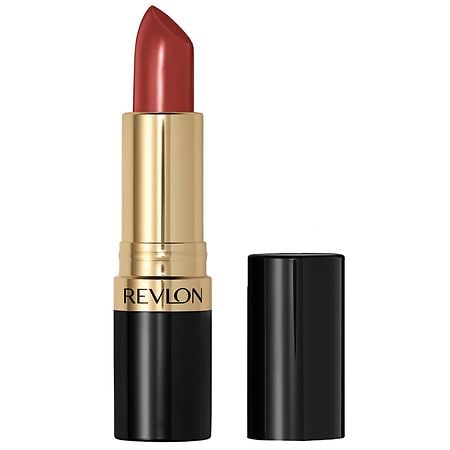

Revlon Super Lustrous Lipstick - 535 Rum Raisin - 0.15oz
Analysis updated July 2026 · How Scout scores
At a glance
Summary
This lipstick contains a mix of synthetic and natural ingredients, with some beneficial components like aloe extract and tocopheryl acetate. However, it also includes synthetic waxes and colorants, as well as BHT, which is a controversial preservative. The presence of multiple artificial colorants and synthetic waxes indicates a moderate level of processing, which impacts the overall score.
Key ingredients 38
Aloe Barbadensis Leaf ExtractVery Good
Aloe Barbadensis Leaf Extract is a natural extract known for its soothing and moisturizing properties. It helps to calm and hydrate the skin. It is well-regarded for its skin benefits.
Risks
There are no significant risks associated with this ingredient.
Benefits
It provides soothing and moisturizing benefits to the skin.
Caprylic/Capric TriglycerideGood
Caprylic/Capric Triglyceride is derived from coconut oil and glycerin, used as an emollient. It helps to moisturize and condition the skin. It is well-tolerated and considered safe.
Risks
There are no significant risks associated with this ingredient.
Benefits
It provides moisturizing benefits and enhances skin softness.
Tocopheryl AcetateGood
Tocopheryl Acetate is a form of Vitamin E used as an antioxidant. It helps to protect the skin from free radical damage. It is well-tolerated and considered beneficial for skin health.
Risks
There are no significant risks associated with this ingredient.
Benefits
It provides antioxidant benefits and supports skin health.
Ascorbyl PalmitateGood
Beneficial ingredient — whole-food or functional value in this product class.
Risks
There are no significant risks associated with this ingredient.
Benefits
It provides antioxidant benefits and supports skin health.
MicaGood
Beneficial ingredient — whole-food or functional value in this product class.
Risks
There are no significant risks associated with this ingredient.
Benefits
It adds a shimmering effect and improves the product's appearance.
Trioctyldodecyl CitrateNeutral
Trioctyldodecyl Citrate is an emollient that helps to soften and smooth the skin. It is generally considered safe for use in cosmetics. However, it does not provide significant additional benefits beyond its emollient properties.
Risks
There are no significant risks associated with this ingredient.
Benefits
It helps to improve the texture and feel of the product on the skin.
OzokeriteNeutral
Ozokerite is a mineral wax used to thicken and stabilize formulations. It provides structure to the product, allowing it to maintain its shape. It is inert and generally considered safe.
Risks
There are no significant risks associated with this ingredient.
Benefits
It helps to provide a stable and consistent texture to the product.
PolybuteneNeutral
Polybutene is a polymer used as a binder and film-forming agent in cosmetics. It helps to improve the adhesion of the product to the skin. It is generally considered safe for use.
Risks
There are no significant risks associated with this ingredient.
Benefits
It enhances the longevity and wear of the product on the skin.
Ethylhexyl PalmitateNeutral
Ethylhexyl Palmitate is an ester of 2-ethylhexyl alcohol and palmitic acid, used as an emollient. It provides a smooth application and enhances the spreadability of the product. It is generally considered safe.
Risks
There are no significant risks associated with this ingredient.
Benefits
It improves the texture and application of the product.
Octyldodecyl NeopentanoateNeutral
Octyldodecyl Neopentanoate is an ester used as an emollient and skin conditioning agent. It provides a silky feel and enhances the spreadability of the product. It is generally considered safe.
Risks
There are no significant risks associated with this ingredient.
Benefits
It contributes to a smooth and pleasant application experience.
Pentaerythrityl TetraisostearateNeutral
Pentaerythrityl Tetraisostearate is an ester used as an emollient and thickening agent. It helps to improve the texture and consistency of the product. It is generally considered safe.
Risks
There are no significant risks associated with this ingredient.
Benefits
It enhances the product's texture and application.
C10-30 Cholesterol/Lanosterol EstersNeutral
C10-30 Cholesterol/Lanosterol Esters are used as skin conditioning agents. They help to improve the texture and feel of the product. They are generally considered safe.
Risks
There are no significant risks associated with this ingredient.
Benefits
They contribute to a smooth and pleasant application experience.
Bis-diglyceryl Polyacyladipate-2Neutral
Bis-diglyceryl Polyacyladipate-2 is an emollient and thickening agent used in cosmetics. It provides a smooth application and enhances the texture of the product. It is generally considered safe.
Risks
There are no significant risks associated with this ingredient.
Benefits
It improves the product's texture and application.
Cera Microcristallina (Microcrystalline Wax)Neutral
Microcrystalline Wax is used to thicken and stabilize formulations. It provides structure and consistency to the product. It is generally considered safe.
Risks
There are no significant risks associated with this ingredient.
Benefits
It helps to maintain the product's shape and consistency.
SilicaNeutral
Silica is used as a thickening agent and absorbent in cosmetics. It helps to improve the texture and mattify the product. It is generally considered safe.
Risks
There are no significant risks associated with this ingredient.
Benefits
It enhances the texture and finish of the product.
Synthetic FluorphlogopiteNeutral
Synthetic Fluorphlogopite is a synthetic mica used to add shimmer and improve texture. It provides a pearlescent effect and is generally considered safe. It is used to enhance the visual appeal of the product.
Risks
There are no significant risks associated with this ingredient.
Benefits
It adds a shimmering effect and improves the product's appearance.
Calcium Sodium BorosilicateNeutral
Calcium Sodium Borosilicate is used as a filler and to add shimmer in cosmetics. It provides a reflective effect and is generally considered safe. It is used to enhance the visual appeal of the product.
Risks
There are no significant risks associated with this ingredient.
Benefits
It adds a shimmering effect and improves the product's appearance.
Synthetic WaxNeutral
Synthetic Wax is used to thicken and stabilize formulations. It provides structure and consistency to the product. It is generally considered safe.
Risks
There are no significant risks associated with this ingredient.
Benefits
It helps to maintain the product's shape and consistency.
Serica (Silk Powder)Neutral
Silk Powder is used to improve the texture and feel of cosmetics. It provides a smooth and silky finish. It is generally considered safe.
Risks
There are no significant risks associated with this ingredient.
Benefits
It enhances the texture and feel of the product.
Pentaerythrityl TetraethylhexanoateNeutral
Pentaerythrityl Tetraethylhexanoate is an ester used as an emollient and thickening agent. It helps to improve the texture and consistency of the product. It is generally considered safe.
Risks
There are no significant risks associated with this ingredient.
Benefits
It enhances the product's texture and application.
Ethylene/Propylene CopolymerNeutral
Ethylene/Propylene Copolymer is used as a film-forming agent and thickener. It provides structure and consistency to the product. It is generally considered safe.
Risks
There are no significant risks associated with this ingredient.
Benefits
It helps to maintain the product's shape and consistency.
Palmitic AcidNeutral
Palmitic Acid is a fatty acid used as an emollient and thickening agent. It helps to improve the texture and consistency of the product. It is generally considered safe.
Risks
There are no significant risks associated with this ingredient.
Benefits
It enhances the product's texture and application.
Hydrogenated PolyisobuteneNeutral
Hydrogenated Polyisobutene is used as an emollient and thickening agent. It provides a smooth application and improves the texture of the product. It is generally considered safe.
Risks
There are no significant risks associated with this ingredient.
Benefits
It contributes to a smooth and consistent application.
Benzoic AcidNeutral
Benzoic Acid is used as a preservative in cosmetics. It helps to prevent microbial growth and extend the shelf life of the product. It is generally considered safe.
Risks
There are no significant risks associated with this ingredient.
Benefits
It helps to preserve the product and prevent spoilage.
Titanium Dioxide (CI 77891)Neutral
Titanium Dioxide is used as a pigment and UV filter in cosmetics. It provides opacity and sun protection. It is generally considered safe when used in non-nano form.
Risks
There are no significant risks associated with this ingredient when used in non-nano form.
Benefits
It provides pigmentation and sun protection benefits.
Iron Oxides (CI 77491, CI 77492, CI 77499)Neutral
Iron Oxides are used as pigments in cosmetics. They provide color and are generally considered safe. They are used to achieve the desired shade in the product.
Risks
There are no significant risks associated with these ingredients.
Benefits
They provide pigmentation and color to the product.
Red 33 Lake (CI 17200)Neutral
Red 33 Lake is a synthetic dye used to add color to cosmetics. It provides vibrant pigmentation and is generally considered safe. It is used to achieve the desired shade in the product.
Risks
There are no significant risks associated with this ingredient.
Benefits
It provides vibrant color to the product.
Yellow 5 Lake (CI 19140)Neutral
Yellow 5 Lake is a synthetic dye used to add color to cosmetics. It provides vibrant pigmentation and is generally considered safe. It is used to achieve the desired shade in the product.
Risks
There are no significant risks associated with this ingredient.
Benefits
It provides vibrant color to the product.
Yellow 6 Lake (CI 15985)Neutral
Yellow 6 Lake is a synthetic dye used to add color to cosmetics. It provides vibrant pigmentation and is generally considered safe. It is used to achieve the desired shade in the product.
Risks
There are no significant risks associated with this ingredient.
Benefits
It provides vibrant color to the product.
Blue 1 Lake (CI 42090)Neutral
Blue 1 Lake is a synthetic dye used to add color to cosmetics. It provides vibrant pigmentation and is generally considered safe. It is used to achieve the desired shade in the product.
Risks
There are no significant risks associated with this ingredient.
Benefits
It provides vibrant color to the product.
Red 6 Lake (CI 15850)Neutral
Red 6 Lake is a synthetic dye used to add color to cosmetics. It provides vibrant pigmentation and is generally considered safe. It is used to achieve the desired shade in the product.
Risks
There are no significant risks associated with this ingredient.
Benefits
It provides vibrant color to the product.
Red 7 Lake (CI 15850)Neutral
Red 7 Lake is a synthetic dye used to add color to cosmetics. It provides vibrant pigmentation and is generally considered safe. It is used to achieve the desired shade in the product.
Risks
There are no significant risks associated with this ingredient.
Benefits
It provides vibrant color to the product.
Red 27 Lake (CI 45410)Neutral
Red 27 Lake is a synthetic dye used to add color to cosmetics. It provides vibrant pigmentation and is generally considered safe. It is used to achieve the desired shade in the product.
Risks
There are no significant risks associated with this ingredient.
Benefits
It provides vibrant color to the product.
Bismuth Oxychloride (CI 77163)Neutral
Bismuth Oxychloride is used as a pigment and to add shimmer in cosmetics. It provides a pearlescent effect and is generally considered safe. It is used to enhance the visual appeal of the product.
Risks
There are no significant risks associated with this ingredient.
Benefits
It adds a shimmering effect and improves the product's appearance.
Carmine (CI 75470)Neutral
Carmine is a natural dye derived from cochineal insects, used to add color to cosmetics. It provides vibrant pigmentation and is generally considered safe. It is used to achieve the desired shade in the product.
Risks
There are no significant risks associated with this ingredient.
Benefits
It provides vibrant color to the product.
ParaffinBad
Processed additive flagged under Scout's ingredient doctrine.
Risks
There are no significant risks associated with this ingredient.
Benefits
It contributes to a smooth and consistent application.
BHTBad
BHT is a synthetic antioxidant used to preserve the product. It has been associated with potential health concerns, including skin irritation and endocrine disruption. It is used to extend the shelf life of the product.
Risks
Potential risks include skin irritation and endocrine disruption.
Benefits
It helps to preserve the product and extend its shelf life.
PolyethyleneVery Bad
Heavily flagged ingredient class under Scout's doctrine.
Risks
There are no significant risks associated with this ingredient.
Benefits
It helps to maintain the product's shape and consistency.
Get the full breakdown in the Scout appTake Scout shopping
Scan any product to see lab results, healthy alternatives, and your personalized analysis.
Download on theApp Store GET IT ONGoogle PlayAmazon pricing & content
Amazon price as of . Product prices and availability are accurate as of the date/time indicated and are subject to change. Any price and availability information displayed on Amazon.com at the time of purchase will apply to the purchase of this product.
CERTAIN CONTENT THAT APPEARS ON THIS SITE COMES FROM AMAZON. THIS CONTENT IS PROVIDED “AS IS” AND IS SUBJECT TO CHANGE OR REMOVAL AT ANY TIME.