
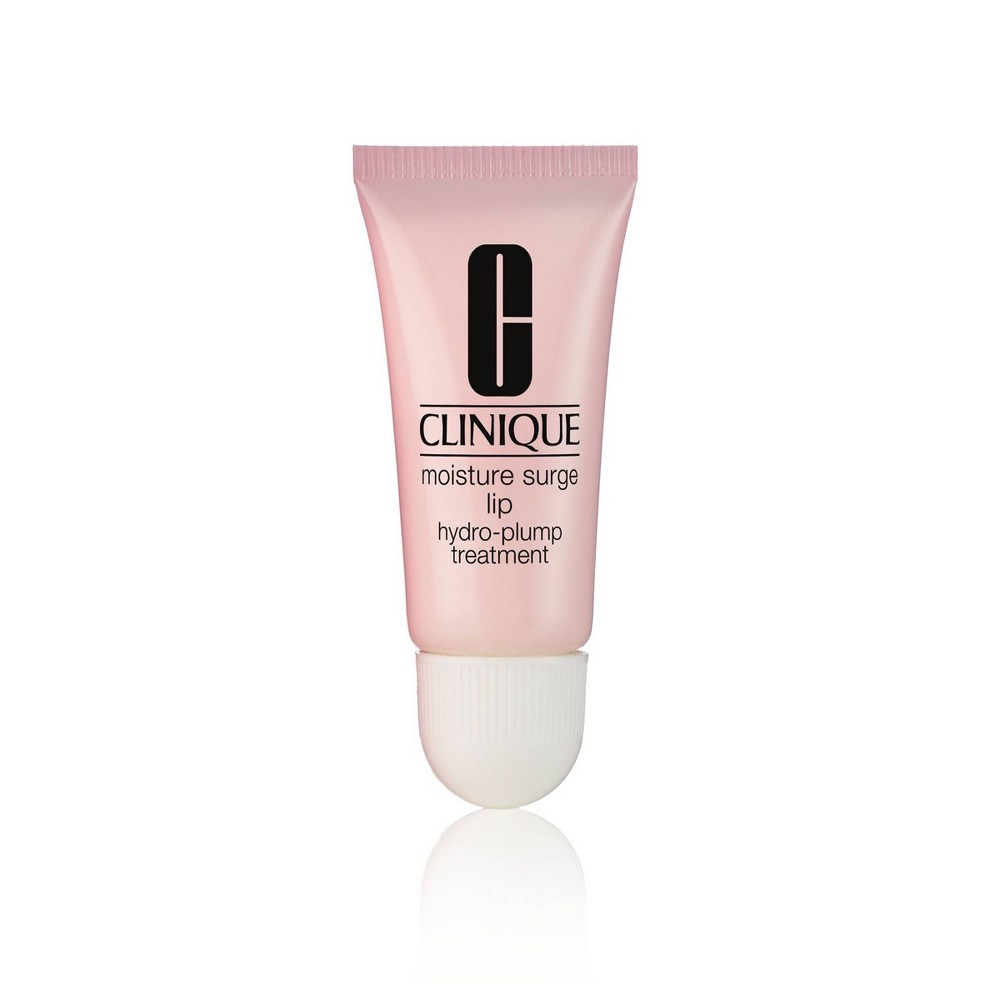

Clinique Moisture Surge Lip Treatment
Analysis updated August 2026 · How Scout scores
At a glance
Summary
This lip treatment contains beneficial ingredients like shea butter, ceramides, and tocopheryl acetate, which provide moisturizing and antioxidant benefits. However, the presence of petrolatum, a petroleum derivative, raises concerns due to its environmental impact and potential purity issues. The product also includes synthetic polymers, which contribute to a higher level of processing, affecting its overall score.
Key ingredients 23
Ceramide NgVery Good
Ceramide Ng is a lipid molecule that helps restore the skin barrier. It is essential for maintaining skin hydration and integrity.
Risks
There are no significant risks associated with this ingredient.
Benefits
It supports skin barrier function and improves moisture retention.
Astrocaryum Murumuru Seed ButterVery Good
Murumuru Seed Butter is a natural butter known for its moisturizing properties. It is rich in fatty acids that nourish the skin.
Risks
There are minimal risks associated with its use.
Benefits
It provides deep hydration and helps soften the skin.
Butyrospermum Parkii (Shea Butter)Very Good
Shea Butter is a natural fat extracted from the nuts of the shea tree. It is renowned for its moisturizing and healing properties.
Risks
There are minimal risks associated with its use.
Benefits
It deeply moisturizes and nourishes the skin, improving elasticity.
Tetrahexyldecyl AscorbateVery Good
Tetrahexyldecyl Ascorbate is a stable form of Vitamin C. It is known for its antioxidant properties and ability to brighten the skin.
Risks
There are no significant risks associated with this ingredient.
Benefits
It helps reduce signs of aging and improves skin radiance.
Tocopheryl AcetateGood
Tocopheryl Acetate is a form of Vitamin E, known for its antioxidant properties. It helps protect the skin from free radical damage.
Risks
Rarely, it can cause skin irritation in sensitive individuals.
Benefits
It supports skin health by providing antioxidant protection.
Caprylic/Capric/Myristic/Stearic TriglycerideGood
This ingredient is a blend of fatty acids used as an emollient. It is derived from coconut oil and glycerin.
Risks
There are minimal risks associated with its use.
Benefits
It provides excellent skin conditioning and moisturizing properties.
Sea Whip ExtractGood
Sea Whip Extract is known for its anti-inflammatory properties. It helps soothe and calm irritated skin.
Risks
There are no significant risks associated with this ingredient.
Benefits
It reduces redness and irritation, promoting skin comfort.
CholesterolGood
Cholesterol is a lipid that helps maintain the skin barrier. It is crucial for skin hydration and repair.
Risks
There are no significant risks associated with this ingredient.
Benefits
It supports skin barrier function and enhances moisture retention.
Caprylic/Capric TriglycerideGood
This ingredient is an emollient derived from coconut oil and glycerin. It is known for its skin-replenishing properties.
Risks
There are minimal risks associated with its use.
Benefits
It provides lightweight moisture and improves skin texture.
Hydrogenated LecithinGood
Hydrogenated Lecithin is used as an emulsifier and skin conditioning agent. It helps improve the texture and stability of the product.
Risks
There are minimal risks associated with its use.
Benefits
It enhances skin hydration and improves product consistency.
PolybuteneNeutral
Polybutene is a synthetic polymer used as a thickener and binder. It is generally considered safe for use in cosmetics.
Risks
There are minimal risks associated with its use in cosmetics.
Benefits
It helps improve the texture and spreadability of the product.
Polyglyceryl-2 TriisostearateNeutral
This ingredient is an emulsifier that helps blend oil and water components. It is derived from glycerin and isostearic acid.
Risks
There are no significant risks associated with this ingredient.
Benefits
It enhances the stability and consistency of the formulation.
Hydrogenated PolyisobuteneNeutral
Hydrogenated Polyisobutene is a synthetic emollient used to provide a smooth application. It is considered safe for use in cosmetics.
Risks
There are minimal risks associated with its use.
Benefits
It acts as a lubricant on the skin's surface, giving it a soft and smooth appearance.
Pvp/Hexadecene CopolymerNeutral
This copolymer is used as a film-forming agent in cosmetics. It helps in providing a smooth and even application.
Risks
There are no significant risks associated with this ingredient.
Benefits
It enhances the product's adherence to the skin.
SilicaNeutral
Silica is used as a thickening agent and absorbent in cosmetics. It is generally considered safe for use.
Risks
Inhalation of silica dust can be harmful, but this is not a concern in topical applications.
Benefits
It helps control the viscosity and provides a matte finish.
Hydrogenated Castor OilNeutral
Standard formulation ingredient — neither beneficial nor harmful at typical use.
Risks
There are minimal risks associated with its use.
Benefits
It provides hydration and improves the texture of the product.
PPG-51/Smdi CopolymerNeutral
This copolymer is used as a film-forming agent and emollient. It helps in providing a smooth application.
Risks
There are no significant risks associated with this ingredient.
Benefits
It enhances the product's texture and longevity on the skin.
Caprylyl GlycolNeutral
Caprylyl Glycol is used as a skin conditioning agent and preservative. It helps improve the product's shelf life.
Risks
There are minimal risks associated with its use.
Benefits
It provides moisturizing benefits and enhances product stability.
C12-16 AlcoholsNeutral
C12-16 Alcohols are fatty alcohols used as emollients and thickeners. They are generally considered safe for use in cosmetics.
Risks
There are no significant risks associated with this ingredient.
Benefits
They help improve the texture and consistency of the product.
Ethylene/Propylene/Styrene CopolymerNeutral
This copolymer is used as a film-forming agent in cosmetics. It helps in providing a smooth and even application.
Risks
There are no significant risks associated with this ingredient.
Benefits
It enhances the product's adherence to the skin.
Palmitic AcidNeutral
Palmitic Acid is a fatty acid used as an emollient and surfactant. It is naturally found in the skin and is considered safe for use.
Risks
There are no significant risks associated with this ingredient.
Benefits
It helps improve the texture and feel of the product.
Butylene/Ethylene/Styrene CopolymerNeutral
This copolymer is used as a film-forming agent in cosmetics. It helps in providing a smooth and even application.
Risks
There are no significant risks associated with this ingredient.
Benefits
It enhances the product's adherence to the skin.
PetrolatumVery Bad
Petrolatum is a petroleum derivative used for its occlusive properties. It can create a barrier on the skin, but its origin from crude oil raises environmental and purity concerns.
Risks
Potential contamination with polycyclic aromatic hydrocarbons (PAHs) is a concern.
Benefits
It provides effective moisture retention by forming a barrier on the skin.
Get the full breakdown in the Scout appTake Scout shopping
Scan any product to see lab results, healthy alternatives, and your personalized analysis.
Download on theApp Store GET IT ONGoogle PlayAmazon pricing & content
Amazon price as of . Product prices and availability are accurate as of the date/time indicated and are subject to change. Any price and availability information displayed on Amazon.com at the time of purchase will apply to the purchase of this product.
CERTAIN CONTENT THAT APPEARS ON THIS SITE COMES FROM AMAZON. THIS CONTENT IS PROVIDED “AS IS” AND IS SUBJECT TO CHANGE OR REMOVAL AT ANY TIME.