
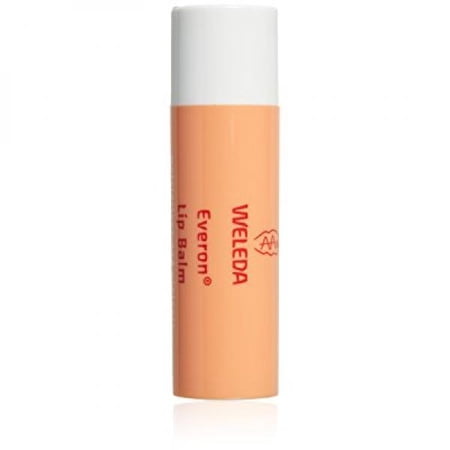
Weleda Everon Lip Balm, 0.17 Ounces
Analysis updated September 2026 · How Scout scores
At a glance
Summary
This lip balm features a blend of natural ingredients like jojoba oil, beeswax, and shea butter, which are known for their moisturizing and protective properties. The presence of 'parfum' introduces a potential for irritation due to undisclosed synthetic compounds, slightly impacting the overall safety profile. However, the product remains largely composed of beneficial, minimally processed ingredients, contributing to its favorable rating.
Key ingredients 14
Simmondsia Chinensis Seed OilVery Good
Simmondsia Chinensis Seed Oil, commonly known as jojoba oil, is a natural oil that closely resembles the skin's natural sebum. It is highly moisturizing and helps to balance oil production in the skin.
Risks
There are minimal risks associated with jojoba oil, though rare allergic reactions can occur.
Benefits
Jojoba oil is beneficial for its moisturizing properties and ability to soothe and protect the skin.
BeeswaxVery Good
Beeswax is a natural wax produced by honey bees and is known for its ability to create a protective barrier on the skin. It helps to lock in moisture and protect the skin from environmental irritants.
Risks
Beeswax is generally safe, but it may cause allergic reactions in individuals sensitive to bee products.
Benefits
Beeswax provides excellent emollient properties, helping to soften and hydrate the skin.
Butyrospermum Parkii ButterVery Good
Butyrospermum Parkii Butter, commonly known as shea butter, is a natural fat extracted from the nuts of the shea tree. It is rich in vitamins and fatty acids, making it an excellent moisturizer for the skin.
Risks
Shea butter is generally safe, but it may cause allergic reactions in individuals with nut allergies.
Benefits
Shea butter is highly moisturizing and nourishing, providing essential nutrients to the skin.
Euphorbia Cerifera WaxGood
Euphorbia Cerifera Wax, also known as candelilla wax, is a plant-based wax that provides a glossy finish and helps to stabilize emulsions. It is a vegan alternative to beeswax.
Risks
There are minimal risks associated with candelilla wax, though it may cause irritation in sensitive individuals.
Benefits
Candelilla wax is beneficial for its emollient properties and ability to improve the texture of cosmetic products.
Copernicia Cerifera WaxGood
Copernicia Cerifera Wax, also known as carnauba wax, is a natural wax derived from the leaves of the carnauba palm. It is used to add gloss and improve the texture of cosmetic products.
Risks
Carnauba wax is generally safe, but it may cause irritation in sensitive individuals.
Benefits
Carnauba wax is beneficial for its ability to provide a glossy finish and enhance the stability of formulations.
CitronellolNeutral
Citronellol is a natural component of rose and geranium oils, used for its floral scent. It is commonly used in fragrances and personal care products.
Risks
Citronellol can cause skin irritation or allergic reactions in sensitive individuals.
Benefits
Citronellol provides a pleasant scent and may have insect-repelling properties.
GeraniolNeutral
Geraniol is a naturally occurring monoterpenoid and alcohol found in essential oils. It is used for its rose-like scent in fragrances.
Risks
Geraniol can cause skin irritation or allergic reactions in sensitive individuals.
Benefits
Geraniol provides a pleasant floral scent and may have antioxidant properties.
FarnesolNeutral
Farnesol is a natural organic compound found in essential oils. It is used for its floral scent and potential antimicrobial properties.
Risks
Farnesol can cause skin irritation or allergic reactions in sensitive individuals.
Benefits
Farnesol provides a pleasant floral scent and may offer antimicrobial benefits.
ParfumBad
Parfum, or fragrance, is a mixture of aromatic compounds used to impart scent to products. It can contain a variety of synthetic chemicals that may cause irritation or allergic reactions.
Risks
Fragrance is a common allergen and can cause skin irritation or sensitization, especially in sensitive individuals.
Benefits
While it provides a pleasant scent, the benefits of fragrance are primarily sensory and do not contribute to skin health.
LimoneneBad
Processed additive flagged under Scout's ingredient doctrine.
Risks
Limonene can oxidize and become a skin irritant or sensitizer, especially in sensitive individuals.
Benefits
Limonene may provide antioxidant benefits and contribute to the fragrance of the product.
LinaloolBad
Processed additive flagged under Scout's ingredient doctrine.
Risks
Linalool can cause allergic reactions or skin irritation in sensitive individuals, especially when oxidized.
Benefits
Linalool contributes to the fragrance profile of the product and may have calming properties.
Benzyl AlcoholBad
Processed additive flagged under Scout's ingredient doctrine.
Risks
Benzyl Alcohol can cause skin irritation or allergic reactions in some individuals, particularly in high concentrations.
Benefits
Benzyl Alcohol acts as a preservative, extending the shelf life of cosmetic products.
CitralBad
Processed additive flagged under Scout's ingredient doctrine.
Risks
Citral can cause skin irritation or allergic reactions in sensitive individuals.
Benefits
Citral provides a fresh citrus scent and may offer antimicrobial benefits.
EugenolBad
Processed additive flagged under Scout's ingredient doctrine.
Risks
Eugenol can cause skin irritation or allergic reactions in sensitive individuals.
Benefits
Eugenol provides a warm, spicy scent and may have antimicrobial properties.
Get the full breakdown in the Scout appTake Scout shopping
Scan any product to see lab results, healthy alternatives, and your personalized analysis.
Download on theApp Store GET IT ONGoogle PlayAmazon pricing & content
Amazon price as of . Product prices and availability are accurate as of the date/time indicated and are subject to change. Any price and availability information displayed on Amazon.com at the time of purchase will apply to the purchase of this product.
CERTAIN CONTENT THAT APPEARS ON THIS SITE COMES FROM AMAZON. THIS CONTENT IS PROVIDED “AS IS” AND IS SUBJECT TO CHANGE OR REMOVAL AT ANY TIME.