
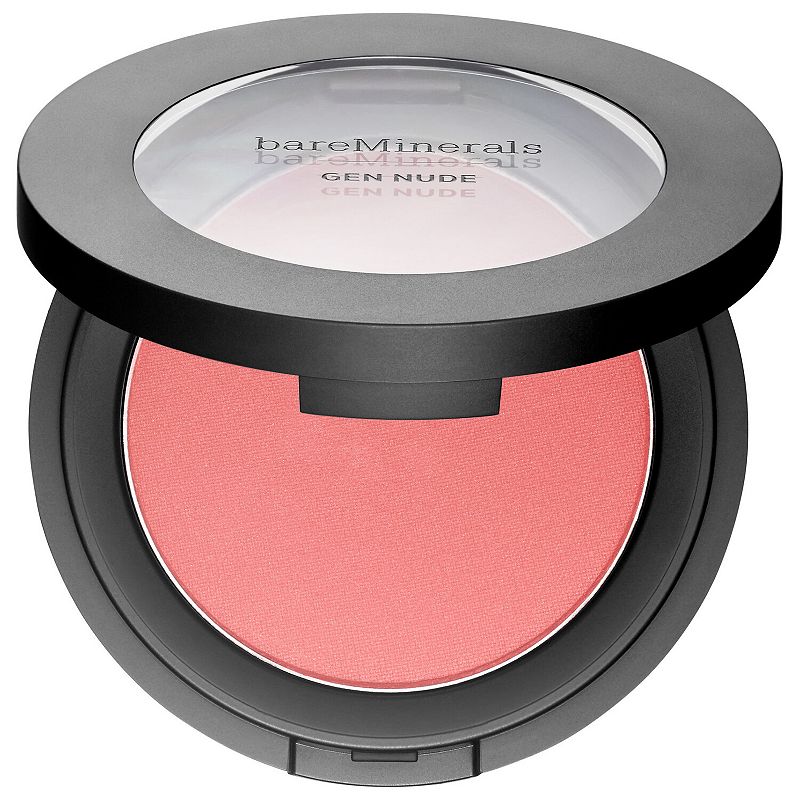

bareMinerals Gen Nude Powder Blush Call My Blush
Analysis updated September 2026 · How Scout scores
At a glance
Summary
This product contains beneficial ingredients like sunflower seed oil and tocopherol, which provide moisturizing and antioxidant benefits. However, it also includes synthetic components such as synthetic fluorphlogopite and dimethicone, which are common in cosmetics but may not be as desirable as natural alternatives. The presence of iron oxides and titanium dioxide as colorants is typical and generally considered safe, but the inclusion of synthetic elements slightly lowers the overall ingredient safety score.
Key ingredients 18
Helianthus Annuus (Sunflower) Seed OilVery Good
Sunflower seed oil is a natural oil used in cosmetics for its moisturizing and nourishing properties. It is rich in essential fatty acids and vitamins, making it beneficial for skin health. It is considered safe and effective for use in cosmetics.
Risks
There are minimal risks associated with sunflower seed oil, primarily related to potential allergic reactions in sensitive individuals.
Benefits
It provides moisturizing and nourishing benefits, improving skin health and texture.
TocopherolVery Good
Tocopherol, also known as Vitamin E, is an antioxidant used in cosmetics for its skin-protective properties. It helps protect the skin from environmental damage and supports skin health. It is considered safe and beneficial for use in cosmetics.
Risks
There are minimal risks associated with tocopherol, primarily related to potential allergic reactions in sensitive individuals.
Benefits
It provides antioxidant benefits, protecting the skin from environmental damage and supporting skin health.
MicaGood
Beneficial ingredient — whole-food or functional value in this product class.
Risks
Inhalation of mica particles can pose respiratory risks, especially in loose powder form.
Benefits
Mica adds a natural shimmer and glow to cosmetic products, enhancing their visual appeal.
Synthetic FluorphlogopiteNeutral
Synthetic fluorphlogopite is a synthetic version of mica, used to add shimmer and shine to cosmetics. It is considered safe for use in cosmetics and does not pose significant health risks. It is often preferred over natural mica due to its purity and consistency.
Risks
There are minimal risks associated with synthetic fluorphlogopite, primarily related to inhalation if used in loose powder form.
Benefits
It provides a smooth, shimmering finish to cosmetic products, enhancing their aesthetic appeal.
Diisostearyl MalateNeutral
Diisostearyl malate is an ester used in cosmetics for its emollient properties, providing a smooth application. It is considered safe for use in cosmetics. It helps improve the texture and spreadability of products.
Risks
There are minimal risks associated with diisostearyl malate, primarily related to potential skin irritation in sensitive individuals.
Benefits
It enhances the texture and feel of cosmetic products, making them more pleasant to use.
Dipentaerythrityl HexahydroxystearateNeutral
This ingredient is used as a thickening agent and emollient in cosmetics. It is considered safe for use in cosmetics and helps improve product stability. It contributes to the creamy texture of products.
Risks
There are minimal risks associated with this ingredient, primarily related to potential skin irritation in sensitive individuals.
Benefits
It helps stabilize and thicken cosmetic formulations, improving their texture and application.
Lauroyl LysineNeutral
Lauroyl lysine is an amino acid derivative used in cosmetics for its conditioning properties. It is considered safe for use in cosmetics and helps improve product texture. It enhances the feel and application of products.
Risks
There are minimal risks associated with lauroyl lysine, primarily related to potential skin irritation in sensitive individuals.
Benefits
It improves the texture and feel of cosmetic products, enhancing their application and wear.
Vinyl Dimethicone/Methicone Silsesquioxane CrosspolymerNeutral
This ingredient is used as a film-forming agent in cosmetics, providing a smooth, matte finish. It is considered safe for use in cosmetics and helps improve product longevity. It enhances the texture and appearance of products.
Risks
There are minimal risks associated with this ingredient, primarily related to potential skin irritation in sensitive individuals.
Benefits
It provides a smooth, matte finish to cosmetic products, enhancing their appearance and wear.
TriethylhexanoinNeutral
Triethylhexanoin is an emollient used in cosmetics for its moisturizing properties. It is considered safe for use in cosmetics and helps improve product texture. It enhances the feel and application of products.
Risks
There are minimal risks associated with triethylhexanoin, primarily related to potential skin irritation in sensitive individuals.
Benefits
It provides moisturizing benefits, improving the texture and feel of cosmetic products.
Sorbitan SesquiisostearateNeutral
Sorbitan sesquiisostearate is an emulsifier used in cosmetics to stabilize formulations. It is considered safe for use in cosmetics and helps improve product consistency. It enhances the stability and texture of products.
Risks
There are minimal risks associated with this ingredient, primarily related to potential skin irritation in sensitive individuals.
Benefits
It helps stabilize cosmetic formulations, improving their consistency and application.
Hydrogen DimethiconeNeutral
Hydrogen dimethicone is a silicone-based ingredient used in cosmetics for its smoothing properties. It is considered safe for use in cosmetics and helps improve product texture. It enhances the feel and application of products.
Risks
There are minimal risks associated with hydrogen dimethicone, primarily related to potential skin irritation in sensitive individuals.
Benefits
It provides a smooth, silky feel to cosmetic products, enhancing their application and wear.
ChlorphenesinNeutral
Chlorphenesin is a preservative used in cosmetics to prevent microbial growth. It is considered safe for use in cosmetics at low concentrations. It helps extend the shelf life of products.
Risks
There are minimal risks associated with chlorphenesin, primarily related to potential skin irritation in sensitive individuals.
Benefits
It helps preserve cosmetic formulations, preventing microbial contamination and extending shelf life.
SilicaNeutral
Silica is used in cosmetics as an absorbent and anti-caking agent. It is considered safe for use in cosmetics and helps improve product texture. It enhances the feel and application of products.
Risks
There are minimal risks associated with silica, primarily related to inhalation if used in loose powder form.
Benefits
It helps improve the texture and application of cosmetic products, providing a smooth finish.
Isopropyl Titanium TriisostearateNeutral
This ingredient is used as a pigment dispersant in cosmetics, helping to improve color consistency. It is considered safe for use in cosmetics and enhances product appearance. It contributes to the even distribution of pigments.
Risks
There are minimal risks associated with this ingredient, primarily related to potential skin irritation in sensitive individuals.
Benefits
It helps improve color consistency and appearance in cosmetic products, enhancing their visual appeal.
Iron Oxides (CI 77491, CI 77492, CI 77499)Neutral
Iron oxides are used as colorants in cosmetics, providing a range of shades. They are considered safe for use in cosmetics and are widely used for their stability and non-reactivity. They contribute to the color and appearance of products.
Risks
There are minimal risks associated with iron oxides, primarily related to potential skin irritation in sensitive individuals.
Benefits
They provide stable, non-reactive color to cosmetic products, enhancing their visual appeal.
Red 7 Lake (CI 15850)Neutral
Red 7 Lake is a synthetic colorant used in cosmetics to provide vibrant red hues. It is considered safe for use in cosmetics and is widely used for its stability and color intensity. It contributes to the color and appearance of products.
Risks
There are minimal risks associated with Red 7 Lake, primarily related to potential skin irritation in sensitive individuals.
Benefits
It provides vibrant, stable color to cosmetic products, enhancing their visual appeal.
Titanium Dioxide (CI 77891)Neutral
Titanium dioxide is used in cosmetics as a pigment and UV filter. It is considered safe for use in cosmetics and provides opacity and sun protection. It contributes to the color and protective properties of products.
Risks
There are minimal risks associated with titanium dioxide, primarily related to inhalation if used in loose powder form.
Benefits
It provides opacity and sun protection to cosmetic products, enhancing their functionality and appearance.
DimethiconeBad
Occlusive silicone film-former — flagged under clean-beauty doctrine.
Risks
There are minimal risks associated with dimethicone, primarily related to potential skin irritation in sensitive individuals.
Benefits
It provides a smooth, silky feel to cosmetic products, enhancing their application and wear.
Get the full breakdown in the Scout appTake Scout shopping
Scan any product to see lab results, healthy alternatives, and your personalized analysis.
Download on theApp Store GET IT ONGoogle PlayAmazon pricing & content
Amazon price as of . Product prices and availability are accurate as of the date/time indicated and are subject to change. Any price and availability information displayed on Amazon.com at the time of purchase will apply to the purchase of this product.
CERTAIN CONTENT THAT APPEARS ON THIS SITE COMES FROM AMAZON. THIS CONTENT IS PROVIDED “AS IS” AND IS SUBJECT TO CHANGE OR REMOVAL AT ANY TIME.