
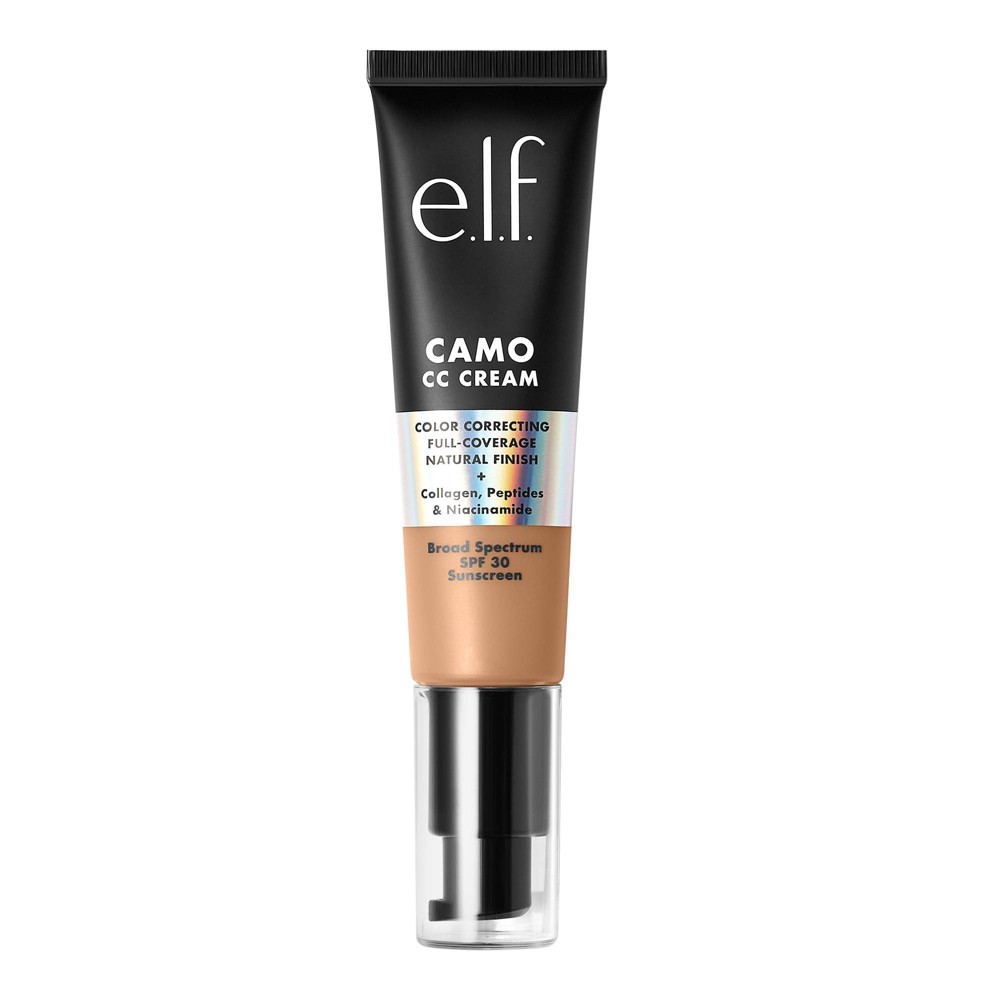
e.l.f. Camo CC Cream - 355 W Medium - 1.05oz: SPF 30, Full Coverage, Paraben-Free, Contains Hyaluronic Acid
Analysis updated August 2026 · How Scout scores
At a glance
Summary
This product contains several beneficial ingredients such as Sodium Hyaluronate, Niacinamide, and Panthenol, which are known for their moisturizing and skin-enhancing properties. However, the presence of Phenoxyethanol, a preservative that can cause irritation, and the use of PEG/PPG compounds contribute to a moderate level of processing. Despite these concerns, the product is free from parabens and includes skin-friendly actives, which positively influence its rating.
Key ingredients 41
PanthenolVery Good
Panthenol is a form of Vitamin B5 known for its moisturizing and soothing properties. It helps improve skin hydration and reduce irritation. It is highly beneficial for maintaining skin health.
Risks
There are minimal risks associated with its use.
Benefits
Provides hydration and soothes irritated skin.
Helianthus Annuus (Sunflower) Seed OilVery Good
Sunflower Seed Oil is a natural oil known for its emollient and antioxidant properties. It helps soften and smooth the skin, improving texture and hydration. It is highly beneficial for maintaining skin health.
Risks
There are minimal risks associated with its use.
Benefits
Softens and smooths the skin, providing hydration and antioxidant protection.
Palmitoyl Tripeptide-1Very Good
Palmitoyl Tripeptide-1 is a peptide known for its anti-aging and skin-repairing properties. It helps improve skin elasticity and reduce the appearance of fine lines. It is highly beneficial for maintaining youthful skin.
Risks
There are minimal risks associated with its use.
Benefits
Improves skin elasticity and reduces fine lines.
Palmitoyl Tetrapeptide-7Very Good
Palmitoyl Tetrapeptide-7 is a peptide known for its anti-inflammatory and skin-repairing properties. It helps reduce skin inflammation and improve skin texture. It is highly beneficial for maintaining skin health.
Risks
There are minimal risks associated with its use.
Benefits
Reduces skin inflammation and improves texture.
Tocopheryl AcetateGood
Tocopheryl Acetate is a form of Vitamin E used for its antioxidant properties. It helps protect the skin from free radical damage. It is considered beneficial for skin health.
Risks
Rarely, it may cause irritation in sensitive individuals.
Benefits
Provides antioxidant protection and supports skin health.
Sodium HyaluronateGood
Sodium Hyaluronate is a form of hyaluronic acid known for its excellent moisturizing properties. It helps retain moisture in the skin, improving hydration and plumpness. It is highly beneficial for maintaining skin health.
Risks
There are minimal risks associated with its use.
Benefits
Provides deep hydration and improves skin plumpness.
NiacinamideGood
Niacinamide is a form of Vitamin B3 known for its anti-inflammatory and brightening properties. It helps improve skin texture and tone, reducing the appearance of pores and fine lines. It is highly beneficial for overall skin health.
Risks
There are minimal risks associated with its use.
Benefits
Improves skin texture and tone, providing anti-inflammatory benefits.
Ascorbyl PalmitateGood
Ascorbyl Palmitate is a stable form of Vitamin C used for its antioxidant properties. It helps protect the skin from free radical damage and supports collagen production. It is beneficial for maintaining skin health.
Risks
Rarely, it may cause irritation in sensitive individuals.
Benefits
Provides antioxidant protection and supports collagen production.
Soluble CollagenGood
Soluble Collagen is used for its moisturizing and skin-conditioning properties. It helps improve skin elasticity and hydration. It is beneficial for maintaining youthful skin appearance.
Risks
There are minimal risks associated with its use.
Benefits
Improves skin elasticity and hydration.
Canola OilGood
Canola Oil is a natural oil used for its emollient properties. It helps soften and smooth the skin, improving texture and hydration. It is beneficial for maintaining skin health.
Risks
There are minimal risks associated with its use.
Benefits
Softens and smooths the skin, providing hydration.
GlycerinGood
Glycerin is a humectant used for its excellent moisturizing properties. It helps attract and retain moisture in the skin, improving hydration. It is beneficial for maintaining skin health.
Risks
There are minimal risks associated with its use.
Benefits
Provides deep hydration and improves skin moisture retention.
Daucus Carota Sativa (Carrot) Seed OilGood
Carrot Seed Oil is a natural oil known for its antioxidant and skin-conditioning properties. It helps protect the skin from free radical damage and improves texture. It is beneficial for maintaining skin health.
Risks
There are minimal risks associated with its use.
Benefits
Provides antioxidant protection and improves skin texture.
Daucus Carota Sativa (Carrot) Root ExtractGood
Carrot Root Extract is known for its antioxidant and skin-conditioning properties. It helps protect the skin from free radical damage and improves texture. It is beneficial for maintaining skin health.
Risks
There are minimal risks associated with its use.
Benefits
Provides antioxidant protection and improves skin texture.
Beta-CaroteneGood
Beta-Carotene is a precursor to Vitamin A known for its antioxidant properties. It helps protect the skin from free radical damage and supports skin health. It is beneficial for maintaining a healthy complexion.
Risks
There are minimal risks associated with its use.
Benefits
Provides antioxidant protection and supports skin health.
Water (Aqua)Neutral
Water is a common solvent used in cosmetics to dissolve other ingredients. It helps in the application and absorption of the product. It does not provide direct benefits or risks.
Risks
There are no significant risks associated with water in cosmetics.
Benefits
Water helps in the application and absorption of the product.
CyclopentasiloxaneNeutral
Cyclopentasiloxane is a silicone that provides a silky texture and helps spread other ingredients evenly. It evaporates quickly, leaving a smooth feel. It is widely used in cosmetics for its texture-enhancing properties.
Risks
There are minimal risks, though it may cause irritation in sensitive individuals.
Benefits
It enhances texture and provides a smooth application.
Butylene GlycolNeutral
Butylene Glycol is a common solvent and conditioning agent in cosmetics. It helps improve the texture and spreadability of products. It is generally considered safe for use.
Risks
May cause irritation in sensitive skin types.
Benefits
Improves texture and spreadability of the product.
Phenyl TrimethiconeNeutral
Phenyl Trimethicone is a silicone that provides a glossy finish and improves spreadability. It is used to enhance the texture of cosmetic products. It is considered safe for use in cosmetics.
Risks
Minimal risks, though it may cause irritation in sensitive individuals.
Benefits
Provides a glossy finish and improves product spreadability.
Cetyl PEG/PPG-10/1 DimethiconeNeutral
This is a silicone-based emulsifier that helps blend water and oil-based ingredients. It improves the texture and stability of the product. It is generally considered safe for use in cosmetics.
Risks
May cause irritation in sensitive skin types.
Benefits
Improves texture and stability of the product.
Butylene Glycol Dicaprylate/DicaprateNeutral
This ingredient is an emollient that helps soften and smooth the skin. It is used to improve the texture and feel of cosmetic products. It is considered safe for use.
Risks
May cause irritation in sensitive individuals.
Benefits
Softens and smooths the skin, improving product texture.
Polyglyceryl-4 IsostearateNeutral
This is an emulsifier that helps blend water and oil-based ingredients. It improves the texture and stability of cosmetic products. It is considered safe for use.
Risks
May cause irritation in sensitive individuals.
Benefits
Improves texture and stability of the product.
Methyl Methacrylate CrosspolymerNeutral
This ingredient is used as a film-forming agent to provide a smooth finish. It helps improve the texture and longevity of cosmetic products. It is generally considered safe for use.
Risks
May cause irritation in sensitive skin types.
Benefits
Provides a smooth finish and improves product longevity.
CyclohexasiloxaneNeutral
Cyclohexasiloxane is a silicone that provides a silky texture and helps spread other ingredients evenly. It evaporates quickly, leaving a smooth feel. It is widely used in cosmetics for its texture-enhancing properties.
Risks
There are minimal risks, though it may cause irritation in sensitive individuals.
Benefits
It enhances texture and provides a smooth application.
Acrylates/Polytrimethylsiloxymethacrylate CopolymerNeutral
This copolymer is used as a film-forming agent to provide a smooth finish. It helps improve the texture and longevity of cosmetic products. It is generally considered safe for use.
Risks
May cause irritation in sensitive skin types.
Benefits
Provides a smooth finish and improves product longevity.
Hexyl LaurateNeutral
Hexyl Laurate is an emollient that helps soften and smooth the skin. It is used to improve the texture and feel of cosmetic products. It is considered safe for use.
Risks
May cause irritation in sensitive individuals.
Benefits
Softens and smooths the skin, improving product texture.
Magnesium SulfateNeutral
Magnesium Sulfate is used as a thickening agent in cosmetics. It helps improve the texture and stability of products. It is generally considered safe for use.
Risks
May cause irritation in sensitive skin types.
Benefits
Improves texture and stability of the product.
TriethoxycaprylylsilaneNeutral
Triethoxycaprylylsilane is a silicone-based compound used as a binding agent. It helps improve the texture and stability of cosmetic products. It is generally considered safe for use.
Risks
May cause irritation in sensitive skin types.
Benefits
Improves texture and stability of the product.
Disteardimonium HectoriteNeutral
Disteardimonium Hectorite is a thickening agent used to improve the texture of cosmetics. It helps stabilize emulsions and suspensions. It is considered safe for use.
Risks
May cause irritation in sensitive individuals.
Benefits
Improves texture and stabilizes emulsions.
Hydrated SilicaNeutral
Hydrated Silica is used as an abrasive and thickening agent in cosmetics. It helps improve the texture and feel of products. It is generally considered safe for use.
Risks
May cause irritation in sensitive skin types.
Benefits
Improves texture and provides a smooth feel.
Aluminum HydroxideNeutral
Aluminum Hydroxide is used as a thickening agent and opacifier in cosmetics. It helps improve the texture and appearance of products. It is generally considered safe for use.
Risks
May cause irritation in sensitive individuals.
Benefits
Improves texture and appearance of the product.
Propylene CarbonateNeutral
Propylene Carbonate is used as a solvent and viscosity regulator in cosmetics. It helps improve the texture and spreadability of products. It is generally considered safe for use.
Risks
May cause irritation in sensitive skin types.
Benefits
Improves texture and spreadability of the product.
Caprylyl GlycolNeutral
Caprylyl Glycol is used as a skin conditioning agent and preservative booster. It helps improve the texture and feel of cosmetic products. It is generally considered safe for use.
Risks
May cause irritation in sensitive individuals.
Benefits
Improves texture and boosts preservative efficacy.
EthylhexylglycerinNeutral
Ethylhexylglycerin is used as a skin conditioning agent and preservative booster. It helps improve the texture and feel of cosmetic products. It is generally considered safe for use.
Risks
May cause irritation in sensitive individuals.
Benefits
Improves texture and boosts preservative efficacy.
1,2-HexanediolNeutral
1,2-Hexanediol is used as a solvent and preservative booster in cosmetics. It helps improve the texture and stability of products. It is generally considered safe for use.
Risks
May cause irritation in sensitive individuals.
Benefits
Improves texture and boosts preservative efficacy.
CarbomerNeutral
Carbomer is used as a thickening agent to improve the texture of cosmetics. It helps stabilize emulsions and suspensions. It is considered safe for use.
Risks
May cause irritation in sensitive individuals.
Benefits
Improves texture and stabilizes emulsions.
Polysorbate 20Neutral
Polysorbate 20 is used as an emulsifier to blend water and oil-based ingredients. It helps improve the texture and stability of cosmetic products. It is generally considered safe for use.
Risks
May cause irritation in sensitive individuals.
Benefits
Improves texture and stability of the product.
DimethiconeBad
Occlusive silicone film-former — flagged under clean-beauty doctrine.
Risks
Some individuals may experience skin irritation or breakouts.
Benefits
It provides a smooth application and helps retain skin moisture.
Butyloctyl SalicylateBad
Processed additive flagged under Scout's ingredient doctrine.
Risks
May cause irritation in sensitive skin types.
Benefits
Improves spreadability and feel of sunscreen products.
PhenoxyethanolBad
Phenoxyethanol is a preservative used to prevent microbial growth in cosmetics. It is effective but can cause irritation and allergic reactions in some individuals. It is considered a moderate risk ingredient.
Risks
May cause irritation and allergic reactions in sensitive individuals.
Benefits
Prevents microbial growth, extending product shelf life.
Dimethicone/Methicone CopolymerBad
Processed additive flagged under Scout's ingredient doctrine.
Risks
May cause irritation in sensitive skin types.
Benefits
Provides a smooth finish and improves product longevity.
Disodium EDTABad
Processed additive flagged under Scout's ingredient doctrine.
Risks
May cause irritation in sensitive skin types.
Benefits
Improves stability and prevents product degradation.
Get the full breakdown in the Scout appTake Scout shopping
Scan any product to see lab results, healthy alternatives, and your personalized analysis.
Download on theApp Store GET IT ONGoogle Play