
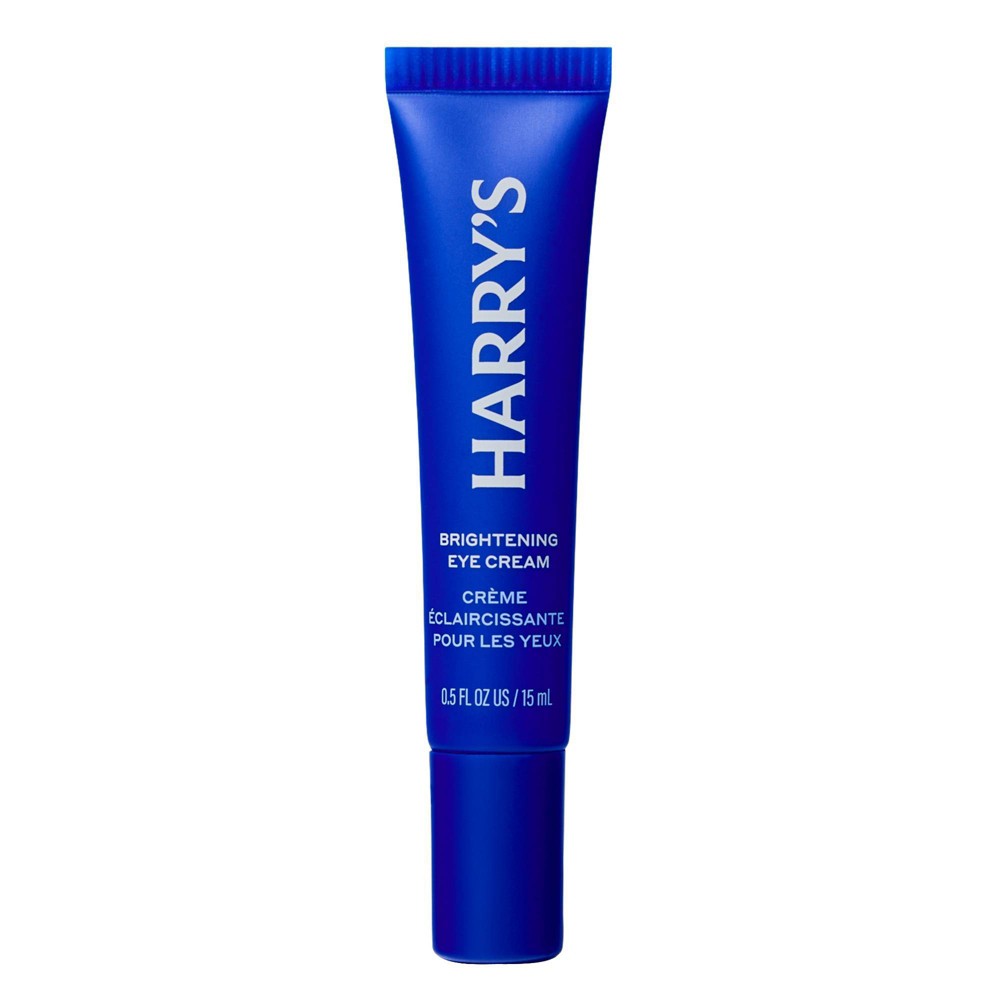
Harry's Brightening Eye Cream for Men with Seaweed and Algae Extract - 0.5 fl oz: Paraben-Free, Unscented
Analysis updated August 2026 · How Scout scores
At a glance
Summary
This eye cream contains several beneficial ingredients such as niacinamide, squalane, and algae extracts, which provide hydration and antioxidant benefits. However, the presence of phenoxyethanol, a preservative that can cause irritation in some individuals, slightly detracts from its overall safety profile. The product is processed, which limits its maximum potential score despite the absence of parabens and synthetic fragrances.
Key ingredients 22
SQUALANEVery Good
Squalane is a highly effective emollient that mimics the skin's natural oils, providing deep hydration without clogging pores. It is suitable for all skin types and is known for its moisturizing and anti-aging properties. It is considered a highly beneficial ingredient in skincare.
Risks
There are minimal risks associated with squalane, making it suitable for sensitive skin.
Benefits
Squalane provides deep hydration and helps to improve skin elasticity and texture.
GLYCERINGood
Glycerin is a humectant that attracts moisture to the skin, helping to keep it hydrated. It is widely used in skincare for its moisturizing properties. It is considered safe and beneficial for most skin types.
Risks
There are minimal risks associated with glycerin, though it may cause irritation in very sensitive individuals.
Benefits
Glycerin helps to maintain skin hydration and improve skin barrier function.
NIACINAMIDEGood
Niacinamide is a form of vitamin B3 that offers multiple skin benefits, including improving skin tone, reducing inflammation, and enhancing barrier function. It is well-tolerated by most skin types and is a popular ingredient in skincare. It is considered highly beneficial for skin health.
Risks
Niacinamide is generally well-tolerated, but some individuals may experience mild irritation.
Benefits
It helps to improve skin texture, reduce redness, and enhance overall skin health.
ASPARAGOPSIS ARMATA EXTRACTGood
Asparagopsis armata extract is derived from red algae and is known for its antioxidant properties. It helps to protect the skin from environmental stressors and improve hydration. It is considered a beneficial ingredient in skincare.
Risks
There are minimal risks associated with this extract, though allergic reactions are possible.
Benefits
It provides antioxidant protection and helps to maintain skin hydration.
ASCOPHYLLUM NODOSUM EXTRACTGood
Ascophyllum nodosum extract is derived from brown algae and is rich in vitamins and minerals. It offers antioxidant benefits and helps to soothe and hydrate the skin. It is considered a beneficial ingredient in skincare formulations.
Risks
Allergic reactions are possible, though rare.
Benefits
It provides antioxidant protection and helps to soothe and hydrate the skin.
WATER/ AQUA/EAUNeutral
Water is a common solvent used in cosmetics to dissolve other ingredients. It is essential for the formulation but does not provide direct skin benefits. It is generally considered safe and non-irritating.
Risks
There are no significant risks associated with water in cosmetics.
Benefits
Water helps to hydrate the skin by providing moisture.
DIISOSTEARYL MALATENeutral
Diisostearyl malate is an emollient that helps to soften and smooth the skin. It is often used in cosmetics for its texture-enhancing properties. It is generally considered safe for use in skincare products.
Risks
There are no significant risks associated with diisostearyl malate.
Benefits
It provides a smooth application and helps to improve the texture of the product.
SILICANeutral
Silica is used in cosmetics as a thickening agent and to improve the texture of products. It helps to absorb excess oil and provides a matte finish. It is generally considered safe for topical use.
Risks
Inhalation of silica dust can be harmful, but this is not a concern in topical applications.
Benefits
Silica helps to control oil and improve the texture of the skin.
BORON NITRIDENeutral
Boron nitride is used in cosmetics to improve the texture and feel of products. It provides a silky finish and enhances the spreadability of formulations. It is considered safe for use in cosmetics.
Risks
There are no significant risks associated with boron nitride in topical applications.
Benefits
It enhances the texture and application of cosmetic products.
HYDROGENATED STARCH HYDROLYSATENeutral
Hydrogenated starch hydrolysate is a humectant that helps to retain moisture in the skin. It is used in cosmetics for its moisturizing properties and is generally considered safe. It does not provide significant additional benefits beyond hydration.
Risks
There are no significant risks associated with this ingredient.
Benefits
It helps to maintain skin hydration and improve moisture retention.
HYDROGENATED LECITHINNeutral
Hydrogenated lecithin is an emulsifier that helps to stabilize formulations and improve texture. It is derived from natural sources and is generally considered safe for use in cosmetics. It does not provide significant direct skin benefits.
Risks
There are no significant risks associated with hydrogenated lecithin.
Benefits
It helps to stabilize formulations and improve product texture.
CARBOMERNeutral
Carbomer is a thickening agent used to create gel-like textures in cosmetics. It helps to stabilize formulations and is considered safe for use. It does not provide direct skin benefits but enhances product consistency.
Risks
There are no significant risks associated with carbomer.
Benefits
It helps to create a smooth, gel-like texture in cosmetic products.
AMMONIUM ACRYLOYLDIMETHYLTAURATE /VP COPOLYMERNeutral
This copolymer is used as a thickening and stabilizing agent in cosmetics. It helps to improve the texture and consistency of products. It is generally considered safe for use in skincare formulations.
Risks
There are no significant risks associated with this copolymer.
Benefits
It helps to stabilize and thicken cosmetic formulations.
SODIUM HYDROXIDENeutral
Sodium hydroxide is used to adjust the pH of cosmetic formulations. It is effective in small amounts but can be irritating in higher concentrations. It is generally considered safe when used appropriately.
Risks
High concentrations can cause skin irritation or burns.
Benefits
It helps to maintain the desired pH level of cosmetic products.
SODIUM CARBONATENeutral
Sodium carbonate is used as a pH adjuster and buffering agent in cosmetics. It helps to maintain the stability of formulations. It is generally considered safe for use in skincare products.
Risks
High concentrations can cause skin irritation.
Benefits
It helps to stabilize the pH of cosmetic formulations.
T-BUTYL ALCOHOLNeutral
T-butyl alcohol is used as a solvent and denaturant in cosmetics. It helps to dissolve other ingredients and improve product consistency. It is generally considered safe for use in small amounts.
Risks
High concentrations can cause skin irritation or dryness.
Benefits
It helps to dissolve ingredients and improve product texture.
HYDROXYACETOPHENONENeutral
Hydroxyacetophenone is used as an antioxidant and preservative in cosmetics. It helps to protect formulations from degradation. It is generally considered safe for use in skincare products.
Risks
There are no significant risks associated with hydroxyacetophenone.
Benefits
It helps to preserve the product and protect it from oxidation.
ETHYLHEXYLGLYCERINNeutral
Ethylhexylglycerin is used as a preservative and skin conditioning agent in cosmetics. It helps to enhance the efficacy of other preservatives. It is generally considered safe for use in skincare products.
Risks
Some individuals may experience mild irritation or allergic reactions.
Benefits
It helps to preserve the product and improve skin feel.
BISMUTH OXYCHLORIDE (CI 77163)Neutral
Bismuth oxychloride is used as a pigment and texture enhancer in cosmetics. It provides a pearlescent finish and improves product application. It is generally considered safe for use in cosmetics.
Risks
Some individuals may experience mild irritation or allergic reactions.
Benefits
It enhances the appearance and texture of cosmetic products.
DIMETHICONEBad
Occlusive silicone film-former — flagged under clean-beauty doctrine.
Risks
Some individuals may experience irritation or breakouts from silicones.
Benefits
Dimethicone helps to smooth the skin and prevent moisture loss.
POTASSIUM SORBATEBad
Synthetic preservative — flagged in daily-use products.
Risks
Some individuals may experience mild irritation or allergic reactions.
Benefits
It helps to preserve the product and extend its shelf life.
PHENOXYETHANOLBad
Phenoxyethanol is a preservative used to prevent microbial growth in cosmetics. It is effective but can cause irritation in some individuals. It is considered safe in low concentrations but has potential for skin sensitivity.
Risks
It can cause skin irritation and allergic reactions in sensitive individuals.
Benefits
It helps to preserve the product and prevent contamination.
Processing
Processed Foods
Get the full breakdown in the Scout appTake Scout shopping
Scan any product to see lab results, healthy alternatives, and your personalized analysis.
Download on theApp Store GET IT ONGoogle Play