







365 Whole Foods Market SMOKED TURKEY BREAST
365 Whole Foods MarketAnalysis updated August 2026 · How Scout scores
At a glance
Summary
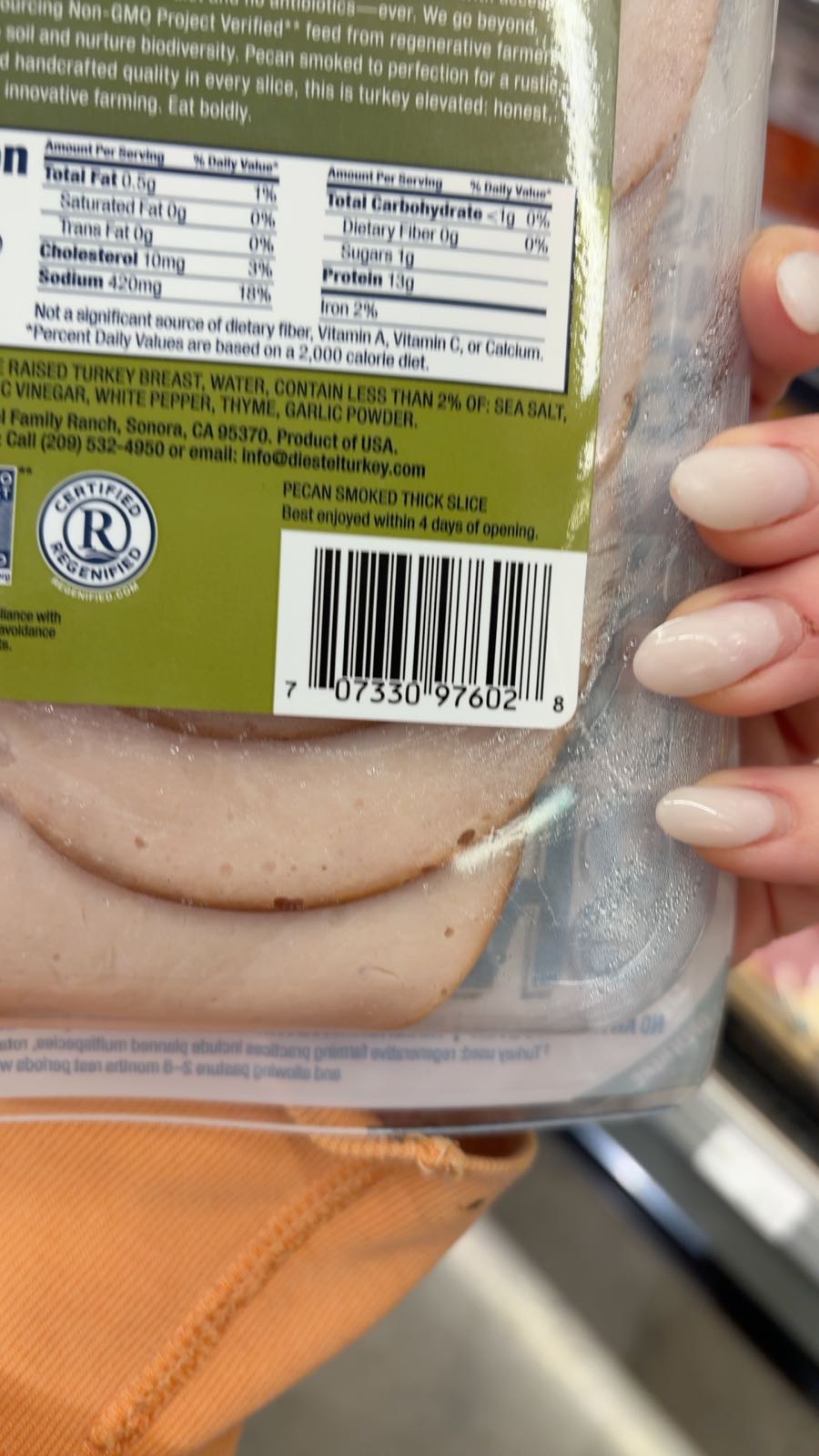
This smoked turkey breast is ultra-processed, which limits its score despite having some beneficial ingredients like turkey breast and sea salt. The presence of 'natural flavors' indicates additional processing and lack of transparency, which can be concerning for consumers with allergies or sensitivities. While it provides a good source of protein, the processing level and inclusion of additives reduce its overall healthiness.
Key ingredients 7
Turkey breastGood
Turkey breast is a lean source of high-quality protein. It provides essential amino acids necessary for muscle repair and growth. As a minimally processed meat, it retains most of its natural nutrients.
Benefits
Rich in protein and low in fat, making it a healthy choice for muscle maintenance and weight management.
Sea saltGood
Sea salt is a natural source of sodium and trace minerals. It is less processed than regular table salt and can enhance flavor. Its mineral content can provide additional health benefits compared to refined salt.
Risks
Excessive sodium intake can lead to high blood pressure and cardiovascular issues.
Benefits
Contains trace minerals that may support overall health and enhance the flavor of foods.
WaterNeutral
Water is used as a processing aid and does not contribute nutritional value. It helps maintain moisture in the product. As a neutral ingredient, it poses no health risks or benefits.
See more about Water →Potato starchNeutral
Potato starch is used as a thickening agent and stabilizer. It is a refined carbohydrate with minimal nutritional value. It does not significantly impact the health profile of the product.
Risks
Excessive consumption of refined carbohydrates can contribute to blood sugar spikes.
Benefits
Provides texture and stability to the product without adding significant calories or fat.
Vinegar powderNeutral
Vinegar powder is used for flavoring and preservation. It is derived from fermented vinegar and retains some acetic acid properties. It does not significantly alter the nutritional profile of the product.
Benefits
May provide a tangy flavor and act as a natural preservative.
Cultured celery powderNeutral
Cultured celery powder is used as a natural preservative due to its nitrate content. It is often used as a substitute for synthetic nitrates in processed meats. While it is a natural ingredient, its health impact is similar to that of added nitrates.
Risks
Excessive consumption of nitrates can be linked to health concerns such as increased cancer risk.
Benefits
Acts as a natural preservative, helping to extend the shelf life of the product.
Natural flavorsBad
Natural flavors are a broad category that can include various additives. They are often highly processed and lack transparency in their composition. The lack of specific ingredient disclosure can be concerning for those with allergies or sensitivities.
Risks
Potential allergens or sensitivities due to undisclosed components.
Benefits
Enhances the flavor profile of the product without adding calories.
Processing
Ultra-Processed Foods
Get the full breakdown in the Scout appTake Scout shopping
Scan any product to see lab results, healthy alternatives, and your personalized analysis.
Download on theApp Store GET IT ONGoogle PlayAmazon pricing & content
CERTAIN CONTENT THAT APPEARS ON THIS SITE COMES FROM AMAZON. THIS CONTENT IS PROVIDED “AS IS” AND IS SUBJECT TO CHANGE OR REMOVAL AT ANY TIME.