
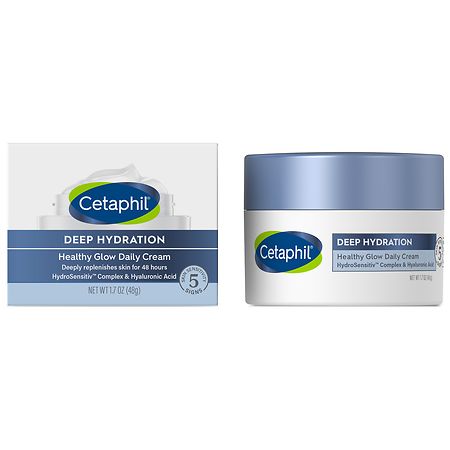


Cetaphil Daily Deep Hydrating Face Moisturizer Cream for Dry Skin - 1.7oz: Unscented, Combination & Sensitive Skin, Hyaluronic Acid
Summary
This moisturizer contains beneficial skin actives such as hyaluronic acid, niacinamide, and aloe vera, which are known for their hydrating and soothing properties. However, the presence of synthetic ingredients like dimethicone and phenoxyethanol, along with the processed nature of the product, slightly lowers its score. The absence of harsh chemicals and fragrances is a positive aspect, contributing to its suitability for sensitive skin.
At a glance
Key ingredients 15
Water
Water is a universal solvent and is used as a base in many cosmetic formulations. It helps dissolve other ingredients and provides hydration to the skin. It is essential for the consistency and application of the product.
Risks
There are no significant risks associated with water in cosmetics.
Benefits
Water hydrates the skin and helps in the absorption of other beneficial ingredients.
Glycerin
Glycerin is a humectant that attracts moisture to the skin, helping to keep it hydrated. It is commonly used in skincare products for its moisturizing properties. It also helps to improve the skin barrier function.
Risks
Glycerin is generally safe, but in rare cases, it can cause irritation if used in high concentrations.
Benefits
Glycerin helps maintain skin hydration and improves skin texture.
Cetearyl Alcohol
Cetearyl Alcohol is a fatty alcohol used as an emollient and thickening agent in cosmetics. It helps to soften and smooth the skin. It also stabilizes and thickens formulations.
Risks
It is generally considered safe, but some individuals may experience mild irritation.
Benefits
Cetearyl Alcohol provides a smooth texture and helps to lock in moisture.
Dimethicone
Dimethicone is a silicone-based polymer used to create a smooth, silky texture in skincare products. It forms a protective barrier on the skin, preventing moisture loss. It also helps to fill in fine lines and wrinkles temporarily.
Risks
Dimethicone can potentially clog pores in some individuals, leading to breakouts.
Benefits
Dimethicone provides a smooth application and helps retain skin moisture.
Ceteareth-20
Ceteareth-20 is an emulsifier that helps blend oil and water-based ingredients. It is used to stabilize formulations and improve texture. It enhances the spreadability of the product.
Risks
There is a potential risk of contamination with 1,4-dioxane, a byproduct of ethoxylation.
Benefits
Ceteareth-20 improves product consistency and application.
Hyaluronic Acid
Hyaluronic Acid is a powerful humectant that can hold up to 1000 times its weight in water. It is used in skincare for its exceptional hydrating properties. It helps to plump the skin and reduce the appearance of fine lines.
Risks
Hyaluronic Acid is generally safe, but overuse can lead to skin dryness in low humidity conditions.
Benefits
Hyaluronic Acid provides deep hydration and improves skin elasticity.
Niacinamide
Niacinamide is a form of Vitamin B3 that offers multiple skin benefits. It helps to improve skin tone, reduce redness, and strengthen the skin barrier. It also has anti-inflammatory properties.
Risks
Niacinamide is generally well-tolerated, but high concentrations may cause mild irritation.
Benefits
Niacinamide improves skin texture and reduces signs of aging.
Panthenol
Panthenol, also known as Provitamin B5, is used for its moisturizing and soothing properties. It helps to improve skin hydration and elasticity. It also aids in skin repair and regeneration.
Risks
Panthenol is generally safe, but in rare cases, it can cause skin irritation.
Benefits
Panthenol enhances skin moisture and promotes healing.
Tocopheryl Acetate
Tocopheryl Acetate is a form of Vitamin E used for its antioxidant properties. It helps to protect the skin from free radical damage. It also provides moisturizing benefits.
Risks
It is generally safe, but some individuals may experience allergic reactions.
Benefits
Tocopheryl Acetate protects the skin and improves moisture retention.
Aloe Barbadensis Leaf Juice
Aloe Vera is known for its soothing and hydrating properties. It is used in skincare to calm irritated skin and provide moisture. It also has anti-inflammatory and healing benefits.
Risks
Aloe Vera is generally safe, but some people may experience allergic reactions.
Benefits
Aloe Vera soothes the skin and provides hydration.
Sodium Hydroxide
Sodium Hydroxide is used to adjust the pH of cosmetic formulations. It helps to maintain the stability and effectiveness of the product. It is used in very small amounts to ensure safety.
Risks
In high concentrations, it can be corrosive and cause skin irritation.
Benefits
Sodium Hydroxide ensures the product has the correct pH for skin compatibility.
Phenoxyethanol
Phenoxyethanol is a preservative used to prevent microbial growth in cosmetics. It helps to extend the shelf life of the product. It is considered a safer alternative to parabens.
Risks
Phenoxyethanol can cause skin irritation and allergic reactions in some individuals.
Benefits
Phenoxyethanol preserves the product and prevents contamination.
Ethylhexylglycerin
Ethylhexylglycerin is used as a skin conditioning agent and preservative enhancer. It helps to improve the efficacy of other preservatives. It also provides mild moisturizing benefits.
Risks
It is generally safe, but can cause mild irritation in sensitive individuals.
Benefits
Ethylhexylglycerin enhances preservation and provides skin conditioning.
Caprylyl Glycol
Caprylyl Glycol is used as a skin conditioning agent and preservative. It helps to moisturize the skin and enhance the effectiveness of other preservatives. It also has antimicrobial properties.
Risks
Caprylyl Glycol is generally safe, but may cause irritation in sensitive skin.
Benefits
Caprylyl Glycol conditions the skin and supports preservation.
Disodium EDTA
Disodium EDTA is a chelating agent used to improve the stability of cosmetic formulations. It binds to metal ions, preventing them from affecting the product's stability and appearance. It is used in small amounts to ensure safety.
Risks
Disodium EDTA can cause skin irritation and is not biodegradable, posing environmental concerns.
Benefits
Disodium EDTA stabilizes the product and enhances its shelf life.
Processing
Processed Foods
Get the full breakdown in the Scout app
Scan any product to see lab results, healthy alternatives, and your personalized analysis.
Download on theApp Store