
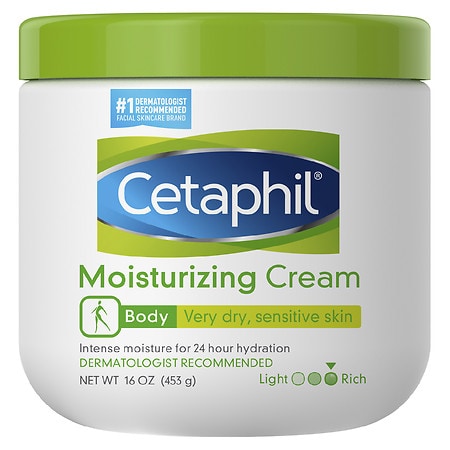
Cetaphil Moisturizing Cream Hydrating Moisturizer For Dry To Very Dry Sensitive Skin Fragrance Free Non-Greasy Dermatologist Recommended 16 Oz.
Summary
This moisturizer contains mostly safe ingredients suitable for sensitive skin, with no synthetic fragrance, which is a positive aspect. However, it includes some synthetic emulsifiers and preservatives that slightly lower its rating. The product is processed, but it avoids major harmful chemicals, making it a relatively safe choice for skincare.
At a glance
Key ingredients 7
Glycerin
Glycerin is a humectant that attracts moisture to the skin, helping to keep it hydrated. It is widely used in skincare products due to its ability to improve skin barrier function. It is considered safe and effective for most skin types.
Risks
There are minimal risks associated with glycerin, though it may cause irritation in very sensitive individuals.
Benefits
Glycerin helps maintain skin hydration and improves skin texture.
Petrolatum
Petrolatum is a petroleum-derived ingredient used for its occlusive properties, forming a barrier on the skin to prevent moisture loss. However, it is heavily processed and may contain impurities if not properly refined. It is often criticized for being non-biodegradable and potentially clogging pores.
Risks
Potential risks include skin irritation and pore blockage, especially if not fully refined.
Benefits
It is effective in preventing moisture loss and protecting the skin barrier.
DimethiconeNeutral
Dimethicone is a silicone-based polymer used to create a smooth application and provide a protective barrier on the skin. It is non-comedogenic and helps to fill in fine lines and wrinkles temporarily. It is generally considered safe for use in cosmetics.
Risks
Some individuals may experience skin irritation or allergic reactions.
Benefits
Dimethicone provides a silky texture and helps to lock in moisture.
Niacinamide
Niacinamide is a form of Vitamin B3 that is known for its anti-inflammatory properties and ability to improve skin elasticity. It helps to reduce redness, blotchiness, and hyperpigmentation. It is well-tolerated by most skin types and is a popular ingredient in skincare.
Risks
There are minimal risks, though high concentrations may cause irritation in sensitive skin.
Benefits
Niacinamide improves skin texture, reduces inflammation, and enhances skin barrier function.
Helianthus Annuus (Sunflower) Seed Oil
Sunflower seed oil is a natural oil rich in linoleic acid, which helps to maintain the skin's natural barrier and reduce moisture loss. It is non-comedogenic and suitable for all skin types. It also contains Vitamin E, which provides antioxidant benefits.
Risks
There are minimal risks, though it may cause allergic reactions in individuals with sunflower seed allergies.
Benefits
Sunflower seed oil moisturizes the skin and provides antioxidant protection.
Propylene GlycolNeutral
Propylene glycol is a synthetic humectant that helps to retain moisture in the skin. It is commonly used in cosmetics for its ability to improve texture and absorption. It is generally recognized as safe, though it can cause irritation in some individuals.
Risks
Potential risks include skin irritation and allergic reactions, particularly in sensitive skin.
Benefits
Propylene glycol enhances moisture retention and improves product texture.
Phenoxyethanol
Phenoxyethanol is a preservative used to prevent microbial growth in cosmetics. It is considered a safer alternative to parabens but can still cause irritation in some individuals. It is effective in low concentrations but has been associated with allergic reactions.
Risks
Potential risks include skin irritation and allergic reactions, especially in sensitive individuals.
Benefits
Phenoxyethanol helps to preserve the product and extend its shelf life.
Processing
Processed Foods
Get the full breakdown in the Scout app
Scan any product to see lab results, healthy alternatives, and your personalized analysis.
Download on theApp Store