
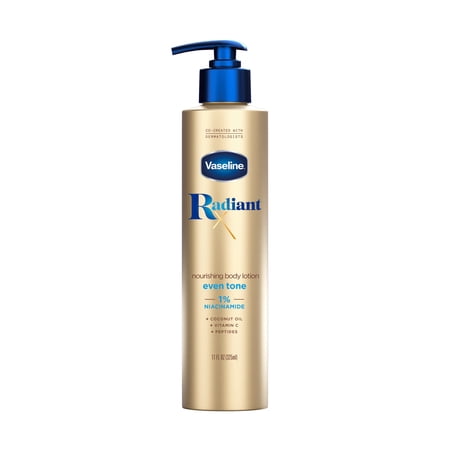


Vaseline Radiant X Even Tone for Dark Spots Nourishing Body Lotion With 1% Niacinamide Coconut Oil & Vitamin C 11 fl oz
Summary
This body lotion contains beneficial ingredients like glycerin, coconut oil, niacinamide, and vitamin C, which provide hydration, nourishment, and skin tone improvement. However, the presence of synthetic ingredients such as acrylates, fragrance, and phenoxyethanol introduces potential skin irritation and environmental concerns. The processing level and inclusion of these synthetic components prevent it from achieving a higher score.
At a glance
Key ingredients 15
WaterNeutral
Water is primarily used as a solvent in cosmetic formulations. It helps dissolve other ingredients and provides a base for the lotion. The quality of water can vary, but it generally does not contribute significant benefits or risks in skincare products.
See more about Water →GlycerinGood
Glycerin is a humectant that attracts moisture to the skin, helping to keep it hydrated. It is derived from natural sources and is minimally processed, making it a beneficial ingredient in skincare. Its ability to improve skin barrier function makes it a staple in moisturizing products.
Benefits
Helps maintain skin hydration and improve barrier function.
Coconut OilVery Good
Coconut oil is a natural emollient that provides deep moisturization and nourishment to the skin. It is minimally processed and rich in fatty acids, which help to restore the skin's lipid barrier. Its antimicrobial properties also offer additional skin protection.
Risks
May cause breakouts in acne-prone skin due to its comedogenic nature.
Benefits
Rich in fatty acids that nourish and moisturize the skin.
NiacinamideVery Good
Niacinamide is a form of vitamin B3 that offers multiple skin benefits, including improving skin tone and reducing inflammation. It is well-tolerated and effective in various concentrations, making it a versatile ingredient in skincare. Its ability to enhance skin barrier function and reduce hyperpigmentation is well-documented.
Benefits
Improves skin tone, reduces inflammation, and enhances barrier function.
Vitamin CVery Good
Vitamin C is a potent antioxidant that helps protect the skin from environmental damage and promotes collagen production. It is often used in skincare for its brightening and anti-aging properties. Its effectiveness can be influenced by formulation stability and pH levels.
Risks
May cause irritation in sensitive skin types if used in high concentrations.
Benefits
Brightens skin and promotes collagen production.
PeptidesGood
Peptides are short chains of amino acids that can help improve skin elasticity and firmness. They are synthesized to mimic natural skin proteins, enhancing their effectiveness in skincare. Their role in stimulating collagen production makes them valuable in anti-aging formulations.
Benefits
Enhances skin elasticity and stimulates collagen production.
DimethiconeNeutral
Dimethicone is a silicone-based polymer used to provide a smooth application and form a protective barrier on the skin. It is synthetically derived and widely used for its non-comedogenic properties. While it helps prevent moisture loss, it does not offer additional skin benefits.
Benefits
Provides a smooth application and prevents moisture loss.
Stearic AcidNeutral
Stearic acid is a fatty acid used as an emulsifier and thickener in cosmetic formulations. It is derived from natural sources and helps stabilize products. While it aids in product consistency, it does not provide direct skin benefits.
Benefits
Helps stabilize and thicken formulations.
Cetearyl AlcoholNeutral
Cetearyl alcohol is a fatty alcohol used as an emulsifier and thickener in skincare products. It is derived from natural oils and helps improve product texture. It is considered safe and non-irritating for most skin types.
Benefits
Improves product texture and stability.
Acrylates/C10-30 Alkyl Acrylate CrosspolymerBad
This ingredient is a synthetic polymer used as a thickening agent in cosmetic formulations. It is highly processed and can contribute to microplastic pollution. Its primary function is to improve product texture, but it does not offer skin benefits.
Risks
Potential environmental impact due to microplastic pollution.
FragranceVery Bad
Fragrance is a mixture of various aromatic compounds used to impart scent to products. It is often synthetic and can cause skin irritation or allergic reactions in sensitive individuals. The lack of transparency in fragrance components can pose additional risks.
Risks
May cause skin irritation or allergic reactions.
PhenoxyethanolBad
Phenoxyethanol is a synthetic preservative used to prevent microbial growth in cosmetic products. It is effective at low concentrations but can cause irritation in some individuals. Concerns about its potential neurotoxicity have been raised, although it is generally considered safe in small amounts.
Risks
Potential for skin irritation and concerns about neurotoxicity.
EthylhexylglycerinNeutral
Ethylhexylglycerin is a synthetic compound used as a preservative and skin conditioning agent. It is often used in combination with other preservatives to enhance their effectiveness. While it helps maintain product stability, it does not provide direct skin benefits.
Benefits
Enhances preservative efficacy and maintains product stability.
Sodium HydroxideNeutral
Sodium hydroxide is used to adjust the pH of cosmetic formulations. It is a highly alkaline compound that is neutralized during product formulation. While it is necessary for pH balance, it does not provide direct skin benefits.
See more about Sodium Hydroxide →Citric AcidNeutral
Citric acid is used to adjust the pH and as a mild exfoliant in skincare products. It is derived from citrus fruits and is minimally processed. While it helps maintain product stability, its exfoliating properties are limited in rinse-off products.
Benefits
Helps adjust pH and provides mild exfoliation.
Processing
Processed Foods
Get the full breakdown in the Scout app
Scan any product to see lab results, healthy alternatives, and your personalized analysis.
Download on theApp Store