
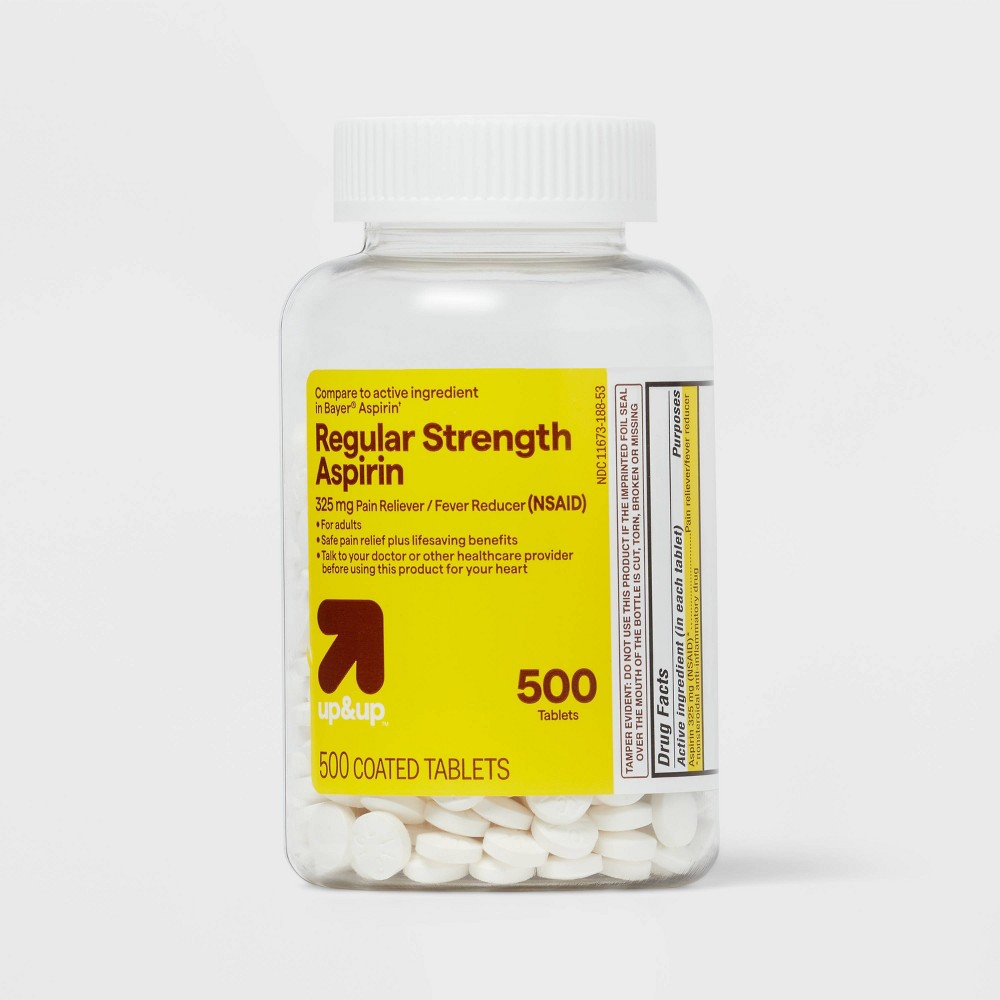


Aspirin (NSAID) Regular Strength Pain Reliever & Fever Reducer Coated Tablets - 500ct - up&up™
Analysis updated September 2026 · How Scout scores
At a glance
Summary
This product contains aspirin, which is an effective pain reliever and anti-inflammatory agent, contributing positively to its formulation. However, the presence of mineral oil, a petroleum-derived ingredient, raises some concerns due to its non-natural origin. The product also includes several processing aids like corn starch and microcrystalline cellulose, which are common in tablet formulations but indicate a moderate level of processing.
Key ingredients 7
AspirinGood
Aspirin is an effective pain reliever and anti-inflammatory agent. It works by inhibiting enzymes that cause inflammation and pain. It is widely used for its cardiovascular benefits in low doses.
Risks
May cause gastrointestinal irritation or bleeding, especially with prolonged use.
Benefits
Reduces pain, inflammation, and can lower the risk of heart attacks when used appropriately.
Corn StarchNeutral
Corn starch is used as a filler and binder in tablets. It is a common excipient with no significant health impact. It is generally considered safe for consumption in small amounts.
See more about Corn Starch →Croscarmellose SodiumNeutral
Croscarmellose sodium is a disintegrant that helps tablets dissolve quickly. It is a chemically modified cellulose derivative. It is generally recognized as safe for use in pharmaceuticals.
Benefits
Facilitates the rapid disintegration of tablets for quicker absorption.
HypromelloseNeutral
Hypromellose is used as a coating agent and controlled-release component. It is a cellulose derivative that is inert and non-toxic. It helps in the controlled release of active ingredients.
Benefits
Provides controlled release of active ingredients, enhancing efficacy.
Microcrystalline CelluloseNeutral
Microcrystalline cellulose is a common filler and binder in tablets. It is derived from plant cellulose and is inert. It is widely used in the pharmaceutical industry for its stability and safety.
Benefits
Provides structural integrity to tablets without adding active effects.
Mineral OilBad
Mineral oil is used as a lubricant in tablet manufacturing. It is a petroleum-derived product that can be controversial due to its origin. While generally considered safe in small amounts, it is not a natural ingredient.
Risks
May cause digestive issues if consumed in large quantities.
Titanium DioxideVery Bad
Heavily flagged ingredient class under Scout's doctrine.
Risks
Concerns have been raised about its safety in nanoparticle form, but it is generally considered safe in regulated amounts.
Processing
Processed Foods
Get the full breakdown in the Scout appTake Scout shopping
Scan any product to see lab results, healthy alternatives, and your personalized analysis.
Download on theApp Store GET IT ONGoogle Play