
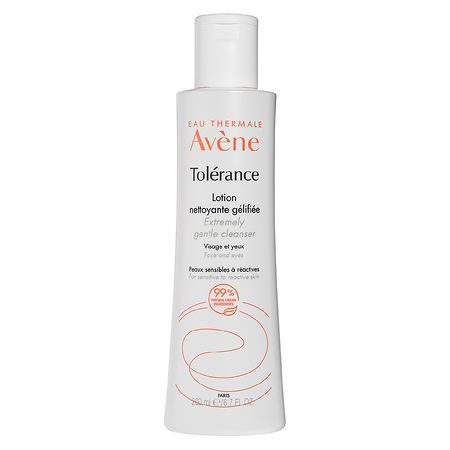

Eau Thermale Avene Tolerance Extremely Gentle Cleanser Lotion for all types of hypersensitive skin, waterless cleanser, 6.7 fl.oz.
Analysis updated August 2026 · How Scout scores
At a glance
Summary
This cleanser contains beneficial ingredients like Avene Thermal Spring Water and Arginine, which are known for their soothing and hydrating properties. However, the presence of Cetrimonium Bromide, a potential skin irritant, and the processed nature of the product limit its score. The formulation is relatively clean but not free from all concerning ingredients, which affects its overall rating.
Key ingredients 15
Avene Thermal Spring Water (Avene Aqua)Very Good
Avene Thermal Spring Water is known for its soothing and anti-irritating properties, making it ideal for sensitive skin. It helps to calm and soften the skin, reducing redness and irritation. This ingredient is often used in skincare for its gentle nature and ability to improve skin comfort.
Risks
There are no significant risks associated with Avene Thermal Spring Water.
Benefits
It provides soothing and calming effects on the skin, making it beneficial for sensitive and irritated skin.
ArginineGood
Arginine is an amino acid that plays a role in skin hydration and repair. It helps to maintain the skin's moisture balance and supports collagen production. This ingredient is beneficial for improving skin elasticity and texture.
Risks
There are minimal risks associated with arginine, though it may cause irritation in very sensitive skin.
Benefits
It aids in skin hydration and supports collagen production, improving skin elasticity.
Cetearyl AlcoholNeutral
Cetearyl Alcohol is a fatty alcohol used as an emollient and thickening agent in skincare products. It helps to soften and smooth the skin while providing a creamy texture to formulations. It is generally considered safe and non-irritating for most skin types.
Risks
In rare cases, it may cause mild irritation or allergic reactions in sensitive individuals.
Benefits
It acts as an emollient, helping to soften and smooth the skin.
Aquaphilus Dolomiae Extract FiltrateNeutral
Aquaphilus Dolomiae Extract Filtrate is derived from a microorganism found in thermal spring water. It is used for its potential skin-soothing and protective properties. However, there is limited research on its efficacy and safety.
Risks
There is limited data on potential risks, but it is generally considered safe for topical use.
Benefits
It may offer soothing and protective benefits for the skin.
Caprylyl GlycolNeutral
Caprylyl Glycol is a skin-conditioning agent that also acts as a preservative booster. It helps to improve the texture of formulations and provides moisturizing benefits. It is generally well-tolerated by most skin types.
Risks
It may cause mild irritation in sensitive skin types.
Benefits
It provides moisturizing benefits and enhances the texture of skincare products.
Coco-GlucosideNeutral
Coco-Glucoside is a mild, non-ionic surfactant derived from coconut oil and glucose. It is used for its gentle cleansing properties and is suitable for sensitive skin. It is biodegradable and considered environmentally friendly.
Risks
There are minimal risks, though it may cause mild irritation in very sensitive skin.
Benefits
It provides gentle cleansing without stripping the skin's natural oils.
Disodium PhosphateNeutral
Disodium Phosphate is used as a buffering agent to maintain the pH balance of skincare products. It helps to stabilize formulations and ensure product efficacy. It is generally considered safe for use in cosmetics.
Risks
There are no significant risks associated with disodium phosphate in cosmetic formulations.
Benefits
It helps maintain the pH balance and stability of skincare products.
Hydroxycapric AcidNeutral
Hydroxycapric Acid is a lesser-known ingredient that may function as a skin-conditioning agent. Its specific benefits and risks are not well-documented in the literature. It is generally considered safe for use in cosmetics.
Risks
There is limited information on potential risks, but it is generally considered safe.
Benefits
It may provide skin-conditioning benefits.
Magnesium OxideNeutral
Magnesium Oxide is used as an absorbent and pH adjuster in skincare products. It helps to control oil and shine on the skin's surface. It is generally considered safe and non-irritating.
Risks
There are minimal risks, though it may cause mild irritation in sensitive skin.
Benefits
It helps control oil and shine, providing a matte finish.
Potassium PhosphateNeutral
Potassium Phosphate is used as a buffering agent to maintain the pH of skincare products. It helps to stabilize formulations and ensure product efficacy. It is generally considered safe for use in cosmetics.
Risks
There are no significant risks associated with potassium phosphate in cosmetic formulations.
Benefits
It helps maintain the pH balance and stability of skincare products.
Sodium Cetearyl SulfateNeutral
Sodium Cetearyl Sulfate is a surfactant and emulsifier used to improve the texture and stability of skincare products. It helps to mix oil and water components effectively. It is generally considered safe for use in cosmetics.
Risks
It may cause mild irritation in sensitive skin types.
Benefits
It improves the texture and stability of formulations, aiding in emulsification.
Sodium HydroxideNeutral
Sodium Hydroxide is used as a pH adjuster in skincare products. It helps to maintain the desired pH level for product stability and efficacy. It is generally considered safe in low concentrations.
Risks
In higher concentrations, it can be irritating to the skin and eyes.
Benefits
It helps maintain the pH balance of skincare products, ensuring stability.
TromethamineNeutral
Tromethamine is used as a buffering agent to maintain the pH balance of skincare products. It helps to stabilize formulations and ensure product efficacy. It is generally considered safe for use in cosmetics.
Risks
There are no significant risks associated with tromethamine in cosmetic formulations.
Benefits
It helps maintain the pH balance and stability of skincare products.
Cetrimonium BromideBad
Cetrimonium Bromide is a quaternary ammonium compound used as a preservative and surfactant. It can be irritating to the skin and eyes, especially in higher concentrations. Its use is limited due to potential sensitization and irritation risks.
Risks
It may cause skin and eye irritation, particularly in sensitive individuals.
Benefits
It acts as a preservative and surfactant, helping to stabilize formulations.
Sodium BenzoateBad
Synthetic preservative that can form benzene in the presence of vitamin C.
Risks
It may cause irritation in sensitive skin, especially in higher concentrations.
Benefits
It acts as a preservative, extending the shelf life of products by preventing microbial growth.
Get the full breakdown in the Scout appTake Scout shopping
Scan any product to see lab results, healthy alternatives, and your personalized analysis.
Download on theApp Store GET IT ONGoogle Play