
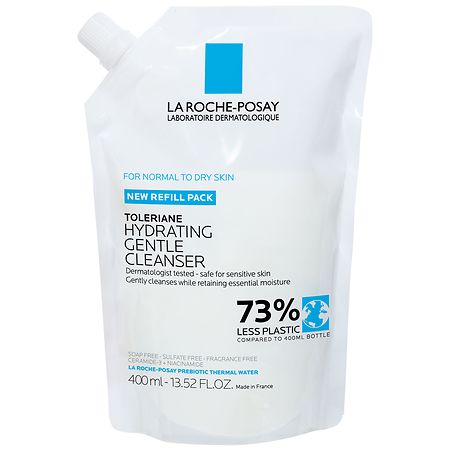


La Roche Posay Toleriane Hydrating Facial Cleanser - Refill - 13.52 fl oz: Alcohol-Free, For Normal to Very Dry Skin
La Roche-PosayAnalysis updated August 2026 · How Scout scores
At a glance
Summary
This facial cleanser contains beneficial ingredients such as glycerin, ceramide NP, niacinamide, panthenol, and tocopherol, which are known for their hydrating and skin-protective properties. The presence of T-Butyl alcohol, which can be drying and irritating, slightly detracts from the overall formulation. However, the product remains largely composed of safe and effective ingredients, making it suitable for normal to very dry skin.
Key ingredients 15
PanthenolVery Good
Panthenol, also known as provitamin B5, is a moisturizing agent that helps to improve skin hydration and elasticity. It is known for its soothing and anti-inflammatory properties. It is well-tolerated by most skin types.
Risks
There are minimal risks associated with panthenol.
Benefits
Improves skin hydration and has soothing properties.
GlycerinGood
Glycerin is a humectant that attracts moisture to the skin, helping to keep it hydrated. It is widely used in skincare for its ability to improve skin barrier function. It is considered safe and effective for all skin types.
Risks
There are minimal risks associated with glycerin, though it may cause irritation in very rare cases.
Benefits
It helps maintain skin hydration and improves skin barrier function.
Ceramide NPGood
Ceramide NP is a lipid that helps to restore and maintain the skin's natural barrier. It is beneficial for improving skin hydration and reducing dryness. It is highly regarded in skincare for its protective properties.
Risks
There are minimal risks associated with ceramides.
Benefits
Restores skin barrier and improves hydration.
NiacinamideGood
Niacinamide is a form of Vitamin B3 that offers multiple skin benefits, including improving skin tone and texture. It helps to reduce inflammation and enhance the skin barrier. It is well-tolerated by most skin types.
Risks
Rarely, it may cause mild irritation or redness.
Benefits
Improves skin tone, reduces inflammation, and enhances skin barrier.
TocopherolGood
Tocopherol, or Vitamin E, is an antioxidant that helps to protect the skin from free radical damage. It also has moisturizing properties and can improve skin texture. It is widely used in skincare for its protective benefits.
Risks
Rarely, it may cause irritation in sensitive individuals.
Benefits
Protects skin from free radicals and improves moisture retention.
Aqua / Water / Eau (La Roche-Posay Prebiotic Thermal Water)Neutral
Water is a universal solvent and is used as a base in many cosmetic formulations. It helps dissolve other ingredients and provides hydration. The prebiotic thermal water may offer additional soothing benefits.
Risks
There are no significant risks associated with water in cosmetic formulations.
Benefits
It hydrates the skin and can help soothe irritation due to its prebiotic properties.
Pentaerythrityl TetraethylhexanoateNeutral
This ingredient is an emollient that helps to soften and smooth the skin. It is used to improve the texture and feel of skincare products. It is generally considered safe for use in cosmetics.
Risks
There are no significant risks associated with this ingredient.
Benefits
It provides a smooth texture and helps to soften the skin.
Ammonium Polyacryloyldimethyl TaurateNeutral
This ingredient is used as a thickening agent and stabilizer in cosmetic formulations. It helps to improve the texture and consistency of products. It is considered safe for use in cosmetics.
Risks
There are no significant risks associated with this ingredient.
Benefits
Improves texture and consistency of cosmetic products.
Sodium ChlorideNeutral
Sodium chloride is used as a thickening agent and to adjust the viscosity of cosmetic products. It is commonly found in skincare formulations. It is generally considered safe for use.
Risks
Excessive use may lead to dryness.
Benefits
Adjusts viscosity and improves product texture.
Coco-BetaineNeutral
Coco-betaine is a mild surfactant derived from coconut oil. It is used to cleanse the skin without stripping natural oils. It is generally considered safe and non-irritating.
Risks
May cause irritation in very sensitive skin.
Benefits
Cleanses skin gently without stripping natural oils.
Caprylyl GlycolNeutral
Caprylyl glycol is a skin conditioning agent that also acts as a preservative. It helps to improve skin hydration and product shelf life. It is generally considered safe for use in cosmetics.
Risks
May cause irritation in sensitive skin types.
Benefits
Improves skin hydration and extends product shelf life.
Propylene GlycolBad
Processed additive flagged under Scout's ingredient doctrine.
Risks
May cause irritation or allergic reactions in sensitive individuals.
Benefits
Helps retain moisture and improves product texture.
Polysorbate 60Bad
Processed additive flagged under Scout's ingredient doctrine.
Risks
May cause irritation in sensitive skin types.
Benefits
Stabilizes formulations and improves product consistency.
Disodium EDTABad
Processed additive flagged under Scout's ingredient doctrine.
Risks
May cause irritation in sensitive individuals.
Benefits
Stabilizes formulations and improves product longevity.
T-Butyl AlcoholBad
T-Butyl alcohol is used as a denaturant and solvent in cosmetics. It can be drying and irritating to the skin, especially in high concentrations. It is generally not favored in skincare due to its potential to cause irritation.
Risks
Can cause skin dryness and irritation.
Benefits
Used as a solvent and denaturant in formulations.
Get the full breakdown in the Scout appTake Scout shopping
Scan any product to see lab results, healthy alternatives, and your personalized analysis.
Download on theApp Store GET IT ONGoogle PlayAmazon pricing & content
Amazon price as of . Product prices and availability are accurate as of the date/time indicated and are subject to change. Any price and availability information displayed on Amazon.com at the time of purchase will apply to the purchase of this product.
CERTAIN CONTENT THAT APPEARS ON THIS SITE COMES FROM AMAZON. THIS CONTENT IS PROVIDED “AS IS” AND IS SUBJECT TO CHANGE OR REMOVAL AT ANY TIME.