



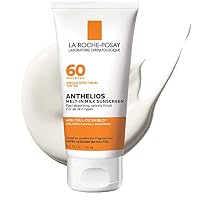

La Roche Posay Anthelios Body & Face Soft Finish Mineral Sunscreen Lotion: Moisturizing Day Skin Care, SPF 50
At a glance
Summary
This sunscreen features mineral UV filters like zinc oxide and titanium dioxide, which are considered safe and effective for broad-spectrum protection. The presence of beneficial ingredients such as tocopherol adds antioxidant benefits. However, the inclusion of phenoxyethanol, a preservative that can cause irritation in sensitive skin, and the processed nature of the product slightly lower its overall rating.
Key ingredients 36
TOCOPHEROLGood
Tocopherol, also known as Vitamin E, is an antioxidant that helps to protect the skin from free radical damage. It is commonly used in cosmetic formulations for its skin conditioning properties. It is considered safe and beneficial for the skin.
Risks
There are no significant risks associated with tocopherol in cosmetic products.
Benefits
It helps in moisturizing the skin and protecting it from oxidative stress.
ZINC OXIDEGood
Zinc Oxide is a mineral sunscreen agent that provides broad-spectrum protection against UV radiation. It is considered safe and effective for use in cosmetics. It is often used in formulations for sensitive skin due to its gentle nature.
Risks
There are no significant risks associated with zinc oxide in cosmetic products.
Benefits
It helps in providing effective sun protection and is suitable for sensitive skin.
WATERNeutral
Water is a common solvent used in cosmetic formulations. It helps dissolve other ingredients and provides a base for the product. It is generally considered safe and non-irritating.
Risks
There are no significant risks associated with water in cosmetic products.
Benefits
Water helps in hydrating the skin and acts as a carrier for other beneficial ingredients.
C12-15 ALKYL BENZOATENeutral
C12-15 Alkyl Benzoate is an emollient that helps to improve the texture and spreadability of the product. It is commonly used in sunscreens and moisturizers. It is generally considered safe for use in cosmetics.
Risks
There are minimal risks associated with this ingredient, though it may cause irritation in very sensitive skin.
Benefits
It provides a silky feel to the skin and helps in reducing the greasy feel of sunscreen formulations.
ISOHEXADECANENeutral
Isohexadecane is a lightweight emollient and solvent used to enhance the texture of cosmetic products. It provides a non-greasy feel and is often used in oil-free formulations. It is considered safe for use in cosmetics.
Risks
There are no significant risks associated with isohexadecane in cosmetic products.
Benefits
It helps in providing a smooth application and enhances the spreadability of the product.
ISONONYL ISONONANOATENeutral
Isononyl Isononanoate is an emollient that provides a smooth and silky feel to the skin. It is used to improve the texture and spreadability of cosmetic products. It is generally considered safe for use in cosmetics.
Risks
There are minimal risks associated with this ingredient, though it may cause irritation in very sensitive skin.
Benefits
It helps in moisturizing the skin and improving the overall feel of the product.
DICAPRYLYL ETHERNeutral
Dicaprylyl Ether is an emollient that provides a light, non-greasy feel to the skin. It is used to enhance the texture and spreadability of cosmetic products. It is considered safe for use in cosmetics.
Risks
There are no significant risks associated with dicaprylyl ether in cosmetic products.
Benefits
It helps in providing a smooth application and enhances the spreadability of the product.
PEG-30 DIPOLYHYDROXYSTEARATENeutral
PEG-30 Dipolyhydroxystearate is an emulsifier that helps to mix oil and water-based ingredients. It is commonly used in sunscreens and other cosmetic formulations. It is generally considered safe for use in cosmetics.
Risks
There is a potential risk of contamination with 1,4-dioxane, a byproduct of ethoxylation, though it is typically removed during processing.
Benefits
It helps in stabilizing emulsions and improving the consistency of the product.
POLYGLYCERYL-4 ISOSTEARATENeutral
Polyglyceryl-4 Isostearate is an emulsifier that helps to blend oil and water-based ingredients. It is used to improve the texture and stability of cosmetic products. It is considered safe for use in cosmetics.
Risks
There are no significant risks associated with polyglyceryl-4 isostearate in cosmetic products.
Benefits
It helps in stabilizing emulsions and improving the consistency of the product.
DICAPRYLYL CARBONATENeutral
Dicaprylyl Carbonate is an emollient that provides a light, non-greasy feel to the skin. It is used to enhance the texture and spreadability of cosmetic products. It is considered safe for use in cosmetics.
Risks
There are no significant risks associated with dicaprylyl carbonate in cosmetic products.
Benefits
It helps in providing a smooth application and enhances the spreadability of the product.
ETHYLENE/ACRYLIC ACID COPOLYMERNeutral
Ethylene/Acrylic Acid Copolymer is a film-forming agent used to provide water resistance in sunscreens. It helps in forming a protective barrier on the skin. It is generally considered safe for use in cosmetics.
Risks
There are no significant risks associated with this ingredient in cosmetic products.
Benefits
It enhances the water resistance of sunscreen formulations, providing longer-lasting protection.
TRIETHYLHEXANOINNeutral
Triethylhexanoin is an emollient that provides a smooth and silky feel to the skin. It is used to improve the texture and spreadability of cosmetic products. It is considered safe for use in cosmetics.
Risks
There are no significant risks associated with triethylhexanoin in cosmetic products.
Benefits
It helps in moisturizing the skin and improving the overall feel of the product.
SILICANeutral
Silica is used as a thickening agent and absorbent in cosmetic formulations. It helps to improve the texture and mattify the skin. It is generally considered safe for use in cosmetics.
Risks
Inhalation of silica particles can be harmful, but this risk is minimal in liquid formulations.
Benefits
It helps in controlling shine and provides a smooth finish to the skin.
POLY C10-30 ALKYL ACRYLATENeutral
Poly C10-30 Alkyl Acrylate is a thickening agent used to improve the texture and stability of cosmetic products. It helps in forming a gel-like consistency. It is considered safe for use in cosmetics.
Risks
There are no significant risks associated with this ingredient in cosmetic products.
Benefits
It helps in stabilizing emulsions and improving the consistency of the product.
CITRIC ACIDNeutral
Citric Acid is used to adjust the pH of cosmetic formulations. It helps in maintaining the stability and effectiveness of the product. It is generally considered safe for use in cosmetics.
Risks
In high concentrations, citric acid can cause skin irritation, but it is typically used in low concentrations in cosmetics.
Benefits
It helps in maintaining the pH balance of the product, ensuring its stability and effectiveness.
SODIUM CHLORIDENeutral
Sodium Chloride is used as a thickening agent and to adjust the viscosity of cosmetic formulations. It is commonly used in small amounts and is generally considered safe. It is a natural mineral salt.
Risks
In high concentrations, it can cause skin dryness, but it is typically used in low concentrations in cosmetics.
Benefits
It helps in improving the texture and consistency of the product.
CAPRYLYL GLYCOLNeutral
Caprylyl Glycol is a humectant and skin conditioning agent used in cosmetic formulations. It helps to retain moisture and improve the texture of the product. It is generally considered safe for use in cosmetics.
Risks
There are no significant risks associated with caprylyl glycol in cosmetic products.
Benefits
It helps in moisturizing the skin and enhancing the overall feel of the product.
DIETHYLHEXYL SYRINGYLIDENEMALONATENeutral
Diethylhexyl Syringylidenemalonate is an antioxidant used to protect the skin from free radical damage. It helps in stabilizing the formulation and enhancing its effectiveness. It is considered safe for use in cosmetics.
Risks
There are no significant risks associated with this ingredient in cosmetic products.
Benefits
It helps in protecting the skin from oxidative stress and enhancing the stability of the product.
TRIETHOXYCAPRYLYLSILANENeutral
Triethoxycaprylylsilane is a surface modifier used to improve the dispersion of pigments in cosmetic formulations. It helps in enhancing the texture and spreadability of the product. It is considered safe for use in cosmetics.
Risks
There are no significant risks associated with triethoxycaprylylsilane in cosmetic products.
Benefits
It helps in improving the texture and application of the product.
ALUMINUM HYDROXIDENeutral
Aluminum Hydroxide is used as a coating agent for pigments in cosmetic formulations. It helps in improving the stability and texture of the product. It is generally considered safe for use in cosmetics.
Risks
There are no significant risks associated with aluminum hydroxide in cosmetic products.
Benefits
It helps in stabilizing pigments and enhancing the texture of the product.
STEARIC ACIDNeutral
Stearic Acid is a fatty acid used as an emulsifier and thickening agent in cosmetic formulations. It helps in stabilizing emulsions and improving the texture of the product. It is considered safe for use in cosmetics.
Risks
There are no significant risks associated with stearic acid in cosmetic products.
Benefits
It helps in stabilizing emulsions and enhancing the texture of the product.
ALUMINUM STEARATENeutral
Aluminum Stearate is used as a thickening agent and stabilizer in cosmetic formulations. It helps in improving the texture and consistency of the product. It is generally considered safe for use in cosmetics.
Risks
There are no significant risks associated with aluminum stearate in cosmetic products.
Benefits
It helps in stabilizing emulsions and enhancing the texture of the product.
CHLORPHENESINNeutral
Chlorphenesin is a preservative used to prevent microbial growth in cosmetic products. It is effective in low concentrations and is generally considered safe. It helps in extending the shelf life of the product.
Risks
It can cause skin irritation and allergic reactions in sensitive individuals.
Benefits
It helps in preserving the product by preventing the growth of bacteria and fungi.
DISTEARDIMONIUM HECTORITENeutral
Disteardimonium Hectorite is a thickening agent used to improve the texture and stability of cosmetic products. It helps in forming a gel-like consistency. It is considered safe for use in cosmetics.
Risks
There are no significant risks associated with disteardimonium hectorite in cosmetic products.
Benefits
It helps in stabilizing emulsions and improving the consistency of the product.
ALUMINANeutral
Alumina is used as an abrasive and thickening agent in cosmetic formulations. It helps in improving the texture and stability of the product. It is generally considered safe for use in cosmetics.
Risks
There are no significant risks associated with alumina in cosmetic products.
Benefits
It helps in enhancing the texture and stability of the product.
POLYHYDROXYSTEARIC ACIDNeutral
Polyhydroxystearic Acid is an emulsifier used to blend oil and water-based ingredients. It helps in improving the texture and stability of cosmetic products. It is considered safe for use in cosmetics.
Risks
There are no significant risks associated with polyhydroxystearic acid in cosmetic products.
Benefits
It helps in stabilizing emulsions and improving the consistency of the product.
P-ANISIC ACIDNeutral
P-Anisic Acid is used as a preservative and fragrance ingredient in cosmetic formulations. It helps in preventing microbial growth and enhancing the scent of the product. It is generally considered safe for use in cosmetics.
Risks
There are no significant risks associated with p-anisic acid in cosmetic products.
Benefits
It helps in preserving the product and providing a pleasant scent.
CAPRYLOYL SALICYLIC ACIDNeutral
Capryloyl Salicylic Acid is a derivative of salicylic acid used for its exfoliating and skin conditioning properties. It helps in improving skin texture and reducing the appearance of blemishes. It is considered safe for use in cosmetics.
Risks
It can cause skin irritation in sensitive individuals, especially if used in high concentrations.
Benefits
It helps in exfoliating the skin and improving its overall appearance.
XANTHAN GUMNeutral
Xanthan Gum is a thickening agent used to improve the texture and stability of cosmetic products. It helps in forming a gel-like consistency. It is considered safe for use in cosmetics.
Risks
There are no significant risks associated with xanthan gum in cosmetic products.
Benefits
It helps in stabilizing emulsions and improving the consistency of the product.
PROPYLENE CARBONATENeutral
Propylene Carbonate is a solvent used to dissolve other ingredients in cosmetic formulations. It helps in improving the texture and spreadability of the product. It is considered safe for use in cosmetics.
Risks
There are no significant risks associated with propylene carbonate in cosmetic products.
Benefits
It helps in enhancing the texture and application of the product.
CAPRYLIC/CAPRIC TRIGLYCERIDENeutral
Caprylic/Capric Triglyceride is an emollient derived from coconut oil and glycerin. It helps in moisturizing the skin and improving the texture of cosmetic products. It is considered safe for use in cosmetics.
Risks
There are no significant risks associated with caprylic/capric triglyceride in cosmetic products.
Benefits
It helps in moisturizing the skin and enhancing the overall feel of the product.
CASSIA ALATA LEAF EXTRACTNeutral
Cassia Alata Leaf Extract is a botanical ingredient used for its antioxidant and skin conditioning properties. It helps in protecting the skin from oxidative stress. It is considered safe for use in cosmetics.
Risks
There are no significant risks associated with cassia alata leaf extract in cosmetic products.
Benefits
It helps in protecting the skin from free radical damage and improving its overall appearance.
MALTODEXTRINNeutral
Maltodextrin is used as a binding and stabilizing agent in cosmetic formulations. It helps in improving the texture and consistency of the product. It is generally considered safe for use in cosmetics.
Risks
There are no significant risks associated with maltodextrin in cosmetic products.
Benefits
It helps in stabilizing emulsions and enhancing the texture of the product.
TITANIUM DIOXIDENeutral
Titanium Dioxide is a mineral sunscreen agent used to protect the skin from UV radiation. It provides broad-spectrum protection and is considered safe for use in cosmetics. It is often used in combination with other sunscreen agents.
Risks
Inhalation of titanium dioxide particles can be harmful, but this risk is minimal in liquid formulations.
Benefits
It helps in providing effective sun protection and reducing the risk of sunburn.
PHENOXYETHANOLBad
Phenoxyethanol is a preservative used to prevent microbial growth in cosmetic products. It is effective in low concentrations but has been associated with skin irritation and allergic reactions. It is considered safe in concentrations up to 1%, but caution is advised for sensitive skin.
Risks
It can cause skin irritation and allergic reactions, especially in sensitive individuals.
Benefits
It helps in preserving the product by preventing the growth of bacteria and fungi.
DISODIUM EDTABad
Processed additive flagged under Scout's ingredient doctrine.
Risks
There are no significant risks associated with disodium EDTA in cosmetic products.
Benefits
It helps in enhancing the stability and effectiveness of the product.
Get the full breakdown in the Scout appTake Scout shopping
Scan any product to see lab results, healthy alternatives, and your personalized analysis.
Download on theApp Store GET IT ONGoogle PlayAmazon pricing & content
Amazon price as of . Product prices and availability are accurate as of the date/time indicated and are subject to change. Any price and availability information displayed on Amazon.com at the time of purchase will apply to the purchase of this product.
CERTAIN CONTENT THAT APPEARS ON THIS SITE COMES FROM AMAZON. THIS CONTENT IS PROVIDED “AS IS” AND IS SUBJECT TO CHANGE OR REMOVAL AT ANY TIME.