


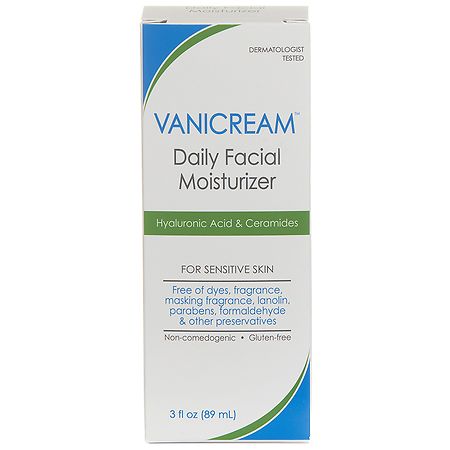
Vanicream Moisturizing Skin Cream Tube Travel Pack 0.25 Oz - 3 Ea
Summary
This moisturizer contains a mix of safe and effective ingredients, including skin-friendly emollients and humectants. However, it also includes some synthetic preservatives and emulsifiers, which slightly lower its overall safety profile. The product is processed, which impacts its score, but it avoids major harmful chemicals and fragrances.
At a glance
Key ingredients 17
Purified Water
Purified water is used as a solvent to dissolve other ingredients. It helps in the application and absorption of the product. It is generally considered safe and non-irritating.
Risks
There are no significant risks associated with purified water in cosmetics.
Benefits
It provides hydration and helps in the even distribution of other ingredients.
Petrolatum
Petrolatum is used as an occlusive agent to lock in moisture. It forms a barrier on the skin to prevent water loss. However, it is a petroleum-derived product.
Risks
There are concerns about contamination with polycyclic aromatic hydrocarbons (PAHs) if not properly refined.
Benefits
It is effective in preventing moisture loss and is widely used for its protective properties.
Sorbitol
Sorbitol is a sugar alcohol used as a humectant to retain moisture in the skin. It helps to keep the skin hydrated. It is generally considered safe for topical use.
Risks
There are minimal risks associated with sorbitol in cosmetics.
Benefits
It helps to maintain skin moisture and improve texture.
Cetearyl Alcohol
Cetearyl alcohol is a fatty alcohol used as an emollient and thickening agent. It helps to stabilize and thicken formulations. It is considered safe and non-irritating.
Risks
There are minimal risks associated with cetearyl alcohol.
Benefits
It provides a smooth, soft feel to the skin and enhances product texture.
Propylene Glycol
Propylene glycol is used as a humectant and solvent in cosmetics. It helps to retain moisture and improve product texture. It is generally recognized as safe but can cause irritation in sensitive individuals.
Risks
It may cause skin irritation or allergic reactions in some people.
Benefits
It enhances skin hydration and improves the spreadability of products.
Ceteareth-20
Ceteareth-20 is an emulsifier that helps to blend oil and water-based ingredients. It stabilizes formulations and improves texture. However, it is an ethoxylated compound.
Risks
There is a potential risk of contamination with 1,4-dioxane, a byproduct of ethoxylation.
Benefits
It helps to create a smooth, stable product consistency.
Simethicone
Simethicone is used as an anti-foaming agent in cosmetics. It helps to reduce surface tension and prevent foaming. It is considered safe and non-irritating.
Risks
There are minimal risks associated with simethicone in cosmetics.
Benefits
It improves the texture and application of products by reducing foaming.
Glyceryl Stearate
Glyceryl stearate is an emulsifier and emollient that helps to blend ingredients and soften the skin. It stabilizes formulations and provides a smooth texture. It is generally considered safe and non-irritating.
Risks
There are minimal risks associated with glyceryl stearate.
Benefits
It enhances skin softness and improves product stability.
PEG-30 Stearate
PEG-30 stearate is an emulsifier used to blend oil and water-based ingredients. It stabilizes formulations and improves texture. However, it is an ethoxylated compound.
Risks
There is a potential risk of contamination with 1,4-dioxane, a byproduct of ethoxylation.
Benefits
It helps to create a smooth, stable product consistency.
Sorbic Acid
Sorbic acid is used as a preservative to prevent microbial growth in cosmetics. It helps to extend the shelf life of products. It is generally considered safe and effective.
Risks
It may cause mild skin irritation in sensitive individuals.
Benefits
It effectively inhibits the growth of mold, yeast, and fungi.
Squalane
Squalane is a natural emollient that mimics the skin's natural oils. It provides deep hydration and improves skin elasticity. It is considered safe and beneficial for all skin types.
Risks
There are minimal risks associated with squalane.
Benefits
It enhances skin moisture and provides a smooth, non-greasy feel.
Pentylene Glycol
Pentylene glycol is used as a humectant and solvent in cosmetics. It helps to retain moisture and improve product texture. It is generally considered safe and non-irritating.
Risks
There are minimal risks associated with pentylene glycol.
Benefits
It enhances skin hydration and improves the spreadability of products.
Polyglyceryl-2 Stearate
Polyglyceryl-2 stearate is an emulsifier that helps to blend oil and water-based ingredients. It stabilizes formulations and improves texture. It is considered safe and non-irritating.
Risks
There are minimal risks associated with polyglyceryl-2 stearate.
Benefits
It helps to create a smooth, stable product consistency.
Stearyl Alcohol
Stearyl alcohol is a fatty alcohol used as an emollient and thickening agent. It helps to stabilize and thicken formulations. It is considered safe and non-irritating.
Risks
There are minimal risks associated with stearyl alcohol.
Benefits
It provides a smooth, soft feel to the skin and enhances product texture.
Hyaluronic Acid
Hyaluronic acid is a powerful humectant that attracts and retains moisture in the skin. It helps to improve skin hydration and elasticity. It is considered safe and beneficial for all skin types.
Risks
There are minimal risks associated with hyaluronic acid.
Benefits
It provides deep hydration and plumps the skin, reducing the appearance of fine lines.
Ceramides
Ceramides are lipids that help to restore and maintain the skin's natural barrier. They improve skin hydration and protect against environmental damage. They are considered safe and beneficial for all skin types.
Risks
There are minimal risks associated with ceramides.
Benefits
They enhance skin barrier function and improve moisture retention.
Glycerin
Glycerin is a humectant that attracts moisture to the skin. It helps to keep the skin hydrated and improve texture. It is considered safe and effective for all skin types.
Risks
There are minimal risks associated with glycerin.
Benefits
It enhances skin hydration and provides a smooth, soft feel.
Processing
Processed Foods
Get the full breakdown in the Scout app
Scan any product to see lab results, healthy alternatives, and your personalized analysis.
Download on theApp Store