
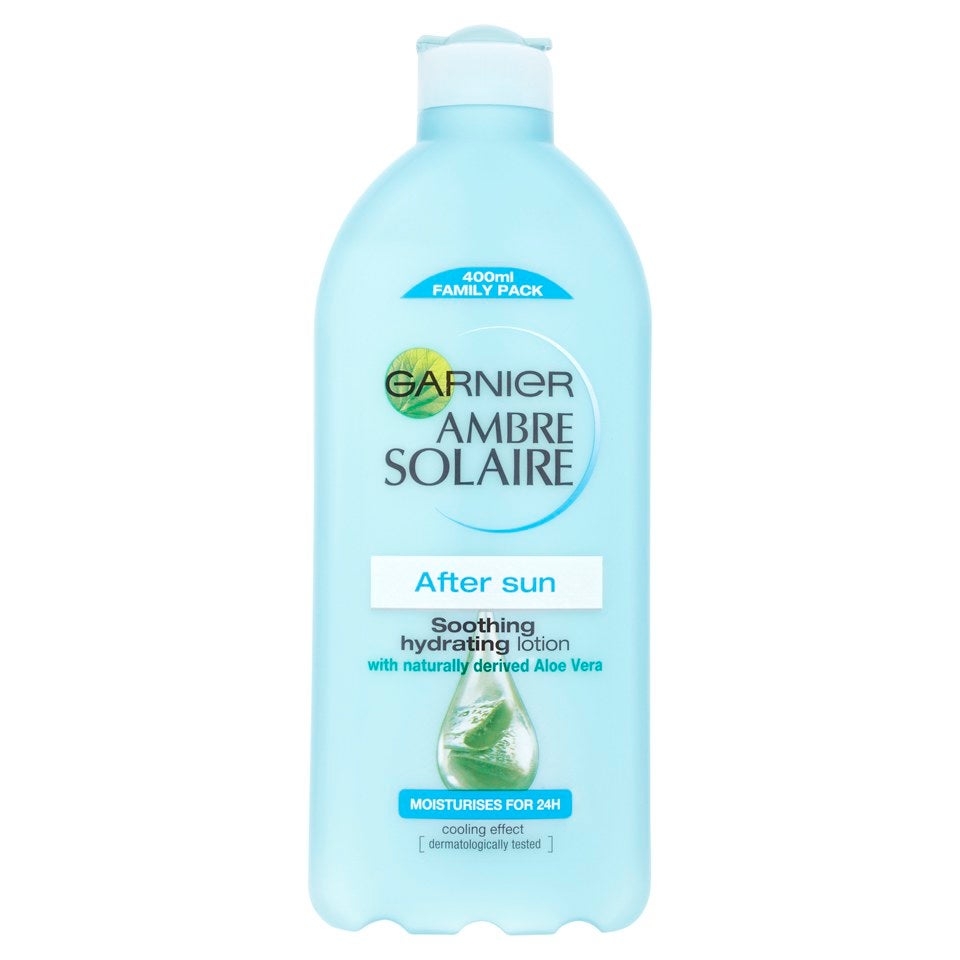
Garnier Ambre Solaire After Sun Lotion 400ml
Analysis updated August 2026 · How Scout scores
At a glance
Summary
This after sun lotion contains beneficial ingredients like shea butter, aloe vera, and bisabolol, which provide moisturizing and soothing properties. However, the presence of paraffinum liquidum (mineral oil) raises concerns due to potential contamination risks, and phenoxyethanol, a preservative, can cause irritation for some users. The product's formulation includes both natural and synthetic components, leading to a moderate processing level.
Key ingredients 12
Butyrospermum Parkii ButterVery Good
Butyrospermum Parkii Butter, or shea butter, is a natural fat extracted from the nuts of the shea tree. It is rich in vitamins and fatty acids, making it highly nourishing and moisturizing for the skin.
Risks
There is a low risk of allergic reactions, particularly for individuals with nut allergies.
Benefits
Shea butter provides deep hydration and has anti-inflammatory properties that can soothe irritated skin.
Aloe Barbadensis Leaf JuiceVery Good
Aloe Barbadensis Leaf Juice, commonly known as aloe vera, is known for its soothing and hydrating properties. It is rich in vitamins and antioxidants, making it beneficial for skin health.
Risks
There is a low risk of allergic reactions, particularly in individuals with sensitive skin.
Benefits
Aloe vera helps to soothe irritated skin and provides hydration, making it ideal for after-sun care.
GlycerinGood
Glycerin is a humectant that attracts moisture to the skin, making it an excellent hydrating agent. It is well-tolerated by most skin types and helps to maintain the skin's natural barrier.
Risks
There are minimal risks associated with glycerin, though it may cause irritation in very sensitive skin.
Benefits
Glycerin helps to keep the skin hydrated and soft, improving its overall texture.
Zinc GluconateGood
Zinc Gluconate is a zinc salt that can help to regulate sebum production and has anti-inflammatory properties. It is often used in skincare products for its potential to reduce acne and irritation.
Risks
There are minimal risks associated with zinc gluconate, though excessive use may lead to dryness.
Benefits
It helps to calm the skin and can reduce the appearance of blemishes.
BisabololGood
Bisabolol is a natural compound derived from chamomile that has anti-inflammatory and soothing properties. It is effective in reducing skin irritation and redness.
Risks
There are minimal risks associated with bisabolol, though it may cause irritation in very sensitive skin.
Benefits
It helps to soothe and calm irritated skin, making it beneficial for sensitive skin types.
AquaNeutral
Aqua, or water, is a common solvent used in cosmetic formulations. It acts as a base for the product, helping to dissolve other ingredients. It does not provide any direct benefits or risks.
Risks
There are no significant risks associated with water in cosmetic products.
Benefits
Water helps to hydrate the skin by providing moisture.
PEG-100 StearateNeutral
PEG-100 Stearate is an emulsifier that helps to blend water and oil components in formulations. It is generally considered safe for use in cosmetics.
Risks
There is a potential risk of contamination with ethylene oxide or 1,4-dioxane, which are by-products of the ethoxylation process.
Benefits
It helps to stabilize formulations, ensuring a smooth and consistent texture.
Glyceryl StearateNeutral
Glyceryl Stearate is an emulsifying agent that helps to bind water and oil in formulations. It also acts as a lubricant on the skin's surface, giving it a soft and smooth appearance.
Risks
There are minimal risks associated with this ingredient, though it may cause irritation in sensitive individuals.
Benefits
It helps to improve the texture and spreadability of cosmetic products.
CarbomerNeutral
Carbomer is a thickening agent used to create gel-like textures in cosmetic products. It is generally considered safe for use in skincare formulations.
Risks
There are minimal risks associated with carbomer, though it may cause irritation in sensitive individuals.
Benefits
It helps to stabilize and thicken formulations, providing a desirable texture.
Paraffinum LiquidumBad
Processed additive flagged under Scout's ingredient doctrine.
Risks
There is a potential risk of clogging pores, which can lead to acne in some individuals.
Benefits
It effectively locks in moisture, providing a protective barrier for the skin.
DimethiconeBad
Occlusive silicone film-former — flagged under clean-beauty doctrine.
Risks
There is a potential risk of clogging pores, which can lead to acne in some individuals.
Benefits
It helps to improve the texture of the product and provides a protective barrier on the skin.
PhenoxyethanolBad
Phenoxyethanol is a preservative used to prevent microbial growth in cosmetic products. While effective, it can cause skin irritation and allergic reactions in some individuals.
Risks
There is a risk of skin irritation and allergic reactions, particularly in sensitive individuals.
Benefits
It helps to preserve the product by preventing the growth of bacteria and mold.
Get the full breakdown in the Scout appTake Scout shopping
Scan any product to see lab results, healthy alternatives, and your personalized analysis.
Download on theApp Store GET IT ONGoogle PlayAmazon pricing & content
Amazon price as of . Product prices and availability are accurate as of the date/time indicated and are subject to change. Any price and availability information displayed on Amazon.com at the time of purchase will apply to the purchase of this product.
CERTAIN CONTENT THAT APPEARS ON THIS SITE COMES FROM AMAZON. THIS CONTENT IS PROVIDED “AS IS” AND IS SUBJECT TO CHANGE OR REMOVAL AT ANY TIME.