
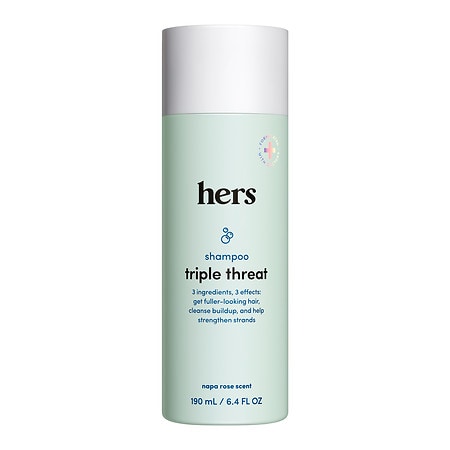

Hers Triple Threat Thickening Shampoo for All Hair Types Napa Rose 6.4 fl oz
Analysis updated August 2026 · How Scout scores
At a glance
Summary
This shampoo contains beneficial ingredients like cocamidopropyl betaine and decyl glucoside, which are gentle surfactants derived from coconut oil, and pumpkin seed oil, known for its nourishing properties. However, the presence of sodium chloride as a thickener and synthetic fragrance, which can cause irritation, slightly detracts from its overall safety profile. The product is moderately processed, which also influences its rating.
Key ingredients 10
Pumpkin Seed OilVery Good
Pumpkin Seed Oil is rich in nutrients and antioxidants, which can help nourish the scalp and hair. It is known for its moisturizing and strengthening properties.
Risks
There are minimal risks associated with pumpkin seed oil.
Benefits
Helps to moisturize and strengthen hair, promoting overall scalp health.
Decyl GlucosideGood
Decyl Glucoside is a gentle, non-ionic surfactant derived from glucose and coconut oil. It is known for being mild and suitable for sensitive skin.
Risks
There are no significant risks associated with Decyl Glucoside.
Benefits
It effectively cleanses without stripping natural oils, making it ideal for all hair types.
Disodium CocoamphodiacetateGood
Disodium Cocoamphodiacetate is a mild surfactant derived from coconut oil, used to reduce irritation from other surfactants. It is gentle on the skin and hair.
Risks
There are minimal risks associated with this ingredient.
Benefits
It helps to cleanse the hair while maintaining moisture balance.
BiotinGood
Beneficial ingredient — whole-food or functional value in this product class.
Risks
There are no significant risks associated with topical biotin.
Benefits
May contribute to hair strength and health.
WaterNeutral
Water is a common solvent used in shampoos to dissolve other ingredients and provide a base for the formulation. It does not have any direct benefits or risks associated with its use in hair care products.
Risks
There are no known risks associated with water in hair care products.
Benefits
Water helps to evenly distribute other ingredients throughout the hair.
Cocamidopropyl BetaineNeutral
Standard formulation ingredient — neither beneficial nor harmful at typical use.
Risks
In rare cases, it may cause allergic reactions or skin irritation.
Benefits
It is known for its conditioning properties and ability to improve the texture of hair.
Lauric AcidNeutral
Lauric Acid is a fatty acid that can be used as a surfactant or emulsifier in shampoos. It helps in cleansing and can contribute to the product's texture.
Risks
There are minimal risks associated with lauric acid, though it may cause irritation in sensitive individuals.
Benefits
Lauric Acid has antimicrobial properties and can help maintain scalp health.
Sodium ChlorideNeutral
Standard formulation ingredient — neither beneficial nor harmful at typical use.
Risks
Excessive use can lead to scalp irritation and dryness.
Benefits
It helps to increase the viscosity of the shampoo, improving its texture.
Saw PalmettoNeutral
Saw Palmetto is often included in hair care products for its potential to support hair health. However, its efficacy in topical applications is not well-documented.
Risks
There are no significant risks associated with topical saw palmetto.
Benefits
May support hair health and reduce hair loss.
FragranceVery Bad
Fragrance in shampoos can be synthetic and may cause allergic reactions or irritation in sensitive individuals. It is often not disclosed what specific chemicals are used.
Risks
Potential for allergic reactions and skin irritation.
Benefits
Provides a pleasant scent to the product.
Processing
Processed Foods
Get the full breakdown in the Scout appTake Scout shopping
Scan any product to see lab results, healthy alternatives, and your personalized analysis.
Download on theApp Store GET IT ONGoogle PlayAmazon pricing & content
Amazon price as of . Product prices and availability are accurate as of the date/time indicated and are subject to change. Any price and availability information displayed on Amazon.com at the time of purchase will apply to the purchase of this product.
CERTAIN CONTENT THAT APPEARS ON THIS SITE COMES FROM AMAZON. THIS CONTENT IS PROVIDED “AS IS” AND IS SUBJECT TO CHANGE OR REMOVAL AT ANY TIME.