
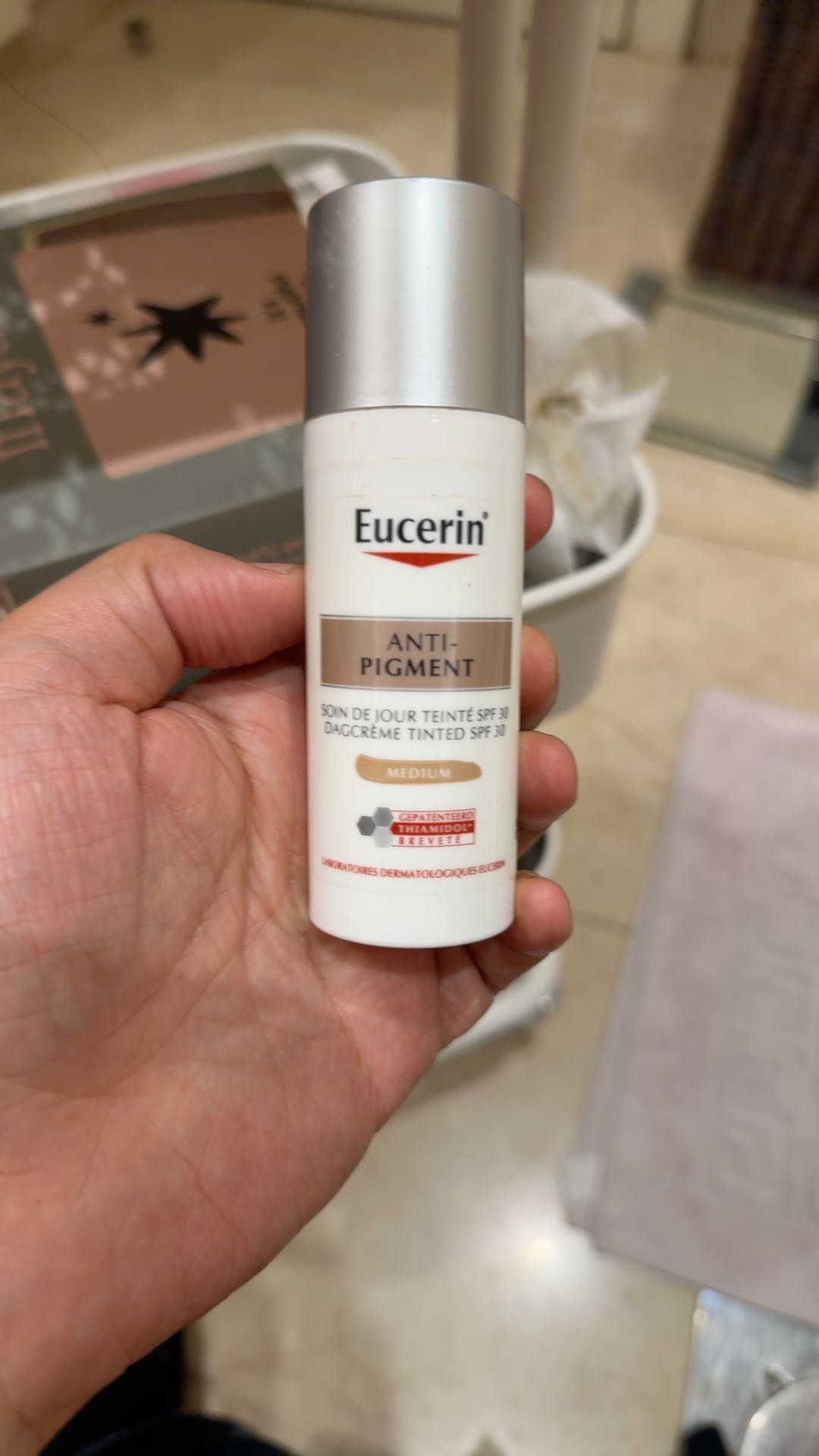


Eucerin Anti Pigment Dual Serum 30ml
Summary
This serum contains several beneficial ingredients like glycerin, sodium hyaluronate, and vitamins C and E, which are known for their moisturizing and antioxidant properties. However, the presence of octocrylene, a chemical sunscreen agent linked to potential endocrine disruption, lowers its safety profile. The product's processing level also impacts its score, as it includes synthetic components that are not entirely clean.
At a glance
Key ingredients 11
AquaNeutral
Aqua, or water, is a common solvent used in cosmetic formulations. It helps dissolve other ingredients and provides a base for the serum. It is generally considered safe and non-irritating.
Risks
There are no significant risks associated with water in cosmetic products.
Benefits
Water helps in hydrating the skin and acts as a carrier for other beneficial ingredients.
Alcohol Denat.Neutral
Alcohol Denat. is used as a solvent and to enhance the penetration of other ingredients. It can also act as a preservative. However, it may cause dryness or irritation in some skin types.
Risks
Potential risks include skin dryness and irritation, especially for sensitive skin.
Benefits
It helps in the quick absorption of the serum and acts as an antimicrobial agent.
Butylene GlycolNeutral
Butylene Glycol is a common humectant that helps retain moisture in the skin. It also improves the texture and spreadability of the product. It is generally considered safe for use in cosmetics.
Risks
In rare cases, it may cause irritation or allergic reactions.
Benefits
It helps in keeping the skin hydrated and enhances the product's texture.
GlycerinVery Good
Glycerin is a well-known humectant that attracts moisture to the skin. It helps maintain the skin's hydration levels and improves its barrier function. It is widely used in skincare for its moisturizing properties.
Risks
There are minimal risks associated with glycerin, though it may cause irritation in very sensitive skin.
Benefits
It provides excellent moisturizing benefits and helps improve skin texture.
Sodium HyaluronateVery Good
Sodium Hyaluronate is a form of hyaluronic acid that is highly effective in retaining moisture. It penetrates the skin easily and provides long-lasting hydration. It is a popular ingredient in anti-aging and moisturizing products.
Risks
There are no significant risks associated with sodium hyaluronate.
Benefits
It offers deep hydration and helps reduce the appearance of fine lines and wrinkles.
ThiamidolGood
Thiamidol is an active ingredient known for its ability to reduce hyperpigmentation. It works by inhibiting melanin production, leading to a more even skin tone. It is considered effective for treating dark spots and pigmentation issues.
Risks
Potential risks include skin irritation or allergic reactions in sensitive individuals.
Benefits
It effectively reduces dark spots and evens out skin tone.
Vitamin CVery Good
Vitamin C is a powerful antioxidant that helps protect the skin from free radical damage. It also brightens the skin and boosts collagen production. It is a highly regarded ingredient in skincare for its anti-aging benefits.
Risks
In some cases, it may cause irritation or redness, especially in sensitive skin.
Benefits
It brightens the skin, reduces signs of aging, and provides antioxidant protection.
Vitamin EVery Good
Vitamin E is an antioxidant that helps protect the skin from oxidative stress. It also has moisturizing and healing properties. It is commonly used in skincare for its ability to improve skin texture and hydration.
Risks
There are minimal risks, though it may cause irritation in very sensitive skin.
Benefits
It provides antioxidant protection and enhances skin moisture and texture.
Licochalcone AGood
Licochalcone A is a natural antioxidant derived from licorice root. It has anti-inflammatory properties and helps soothe irritated skin. It is beneficial for sensitive and acne-prone skin types.
Risks
There are no significant risks associated with Licochalcone A.
Benefits
It soothes the skin and provides antioxidant protection.
GlucosylrutinGood
Glucosylrutin is a flavonoid with antioxidant properties. It helps protect the skin from environmental stressors and reduces redness. It is beneficial for sensitive and reactive skin.
Risks
There are no significant risks associated with Glucosylrutin.
Benefits
It provides antioxidant protection and helps calm the skin.
OctocryleneVery Bad
Octocrylene is a chemical sunscreen agent that absorbs UVB and short UVA rays. It is often used to stabilize other sunscreen ingredients. However, it can cause skin irritation and has been linked to potential endocrine disruption.
Risks
Potential risks include skin irritation and hormonal disruption.
Benefits
It provides UV protection and helps stabilize other sunscreen ingredients.
Processing
Processed Foods
Get the full breakdown in the Scout app
Scan any product to see lab results, healthy alternatives, and your personalized analysis.
Download on theApp Store