

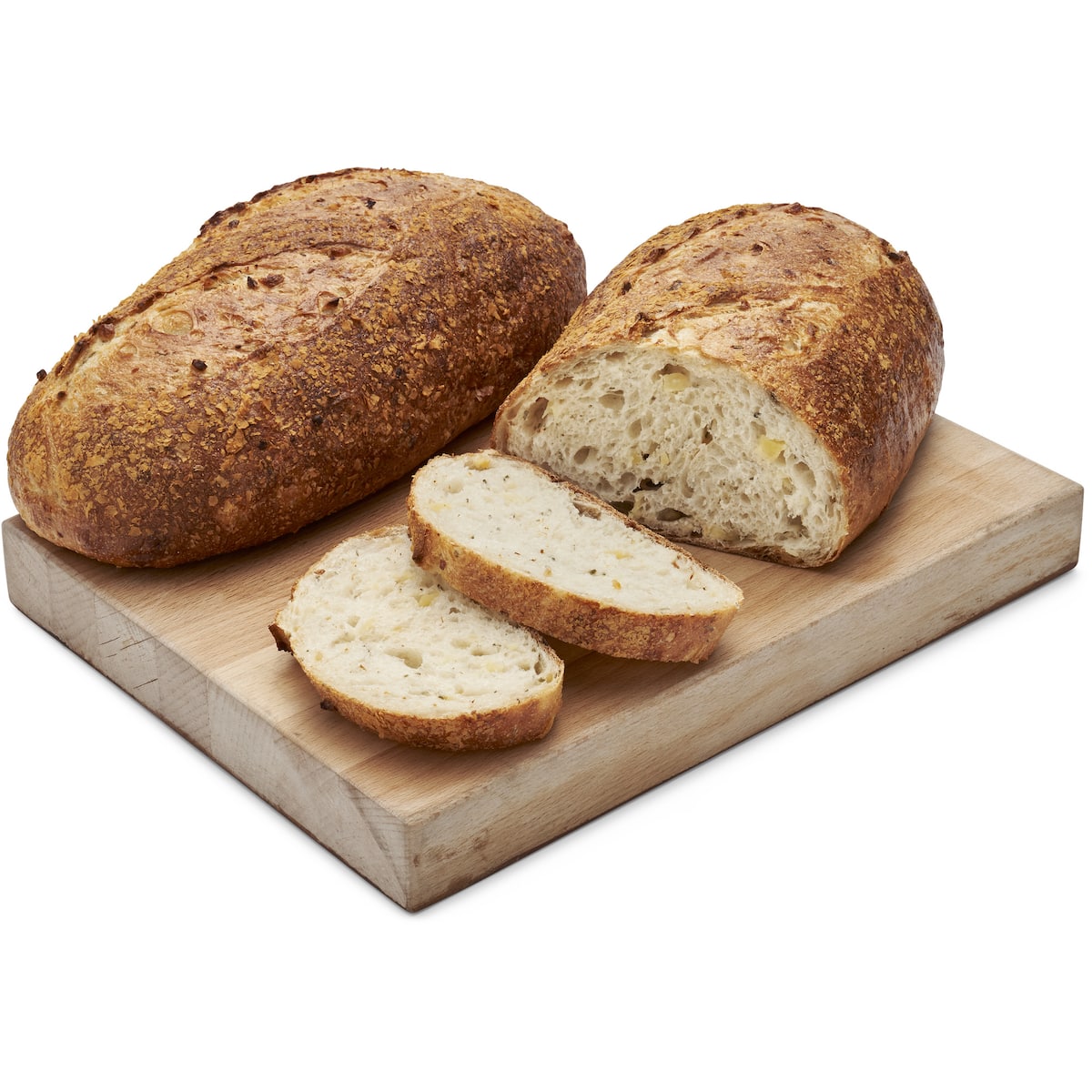


Sourdough Loaf
Summary
This sourdough loaf contains a simple ingredient list with wheat flour, water, yeast, and salt, which are typical for bread. However, the inclusion of unspecified vegetable oils raises concerns due to their potential for high processing and inflammatory omega-6 fatty acids. The presence of a flour treatment agent also suggests a moderate level of processing, which impacts the overall healthiness of the product.
At a glance
Key ingredients 8
Wheat flourNeutral
Wheat flour is a staple ingredient in bread, providing structure and texture. It is a refined carbohydrate, which can lead to rapid spikes in blood sugar levels. Whole grain alternatives offer more fiber and nutrients compared to refined wheat flour.
Risks
Refined wheat flour can contribute to blood sugar spikes and may lack essential nutrients found in whole grains.
Benefits
Provides essential carbohydrates for energy, though whole grain options are more nutritious.
WaterNeutral
Water is a fundamental ingredient in bread making, hydrating the flour and activating yeast. It is essential for the dough formation and fermentation process. Water itself has no nutritional value but is crucial for the texture and rise of the bread.
Benefits
Essential for dough formation and fermentation, contributing to the bread's texture.
YeastGood
Yeast is a natural leavening agent that ferments sugars to produce carbon dioxide, causing the dough to rise. It contributes to the bread's flavor and texture. Yeast also provides some B vitamins and minerals.
Benefits
Contributes to the bread's rise and flavor, and provides some B vitamins and minerals.
SaltNeutral
Salt is used in bread to enhance flavor and control yeast activity. It is essential for the development of gluten structure. Excessive salt intake can lead to health issues such as high blood pressure.
Risks
High sodium intake can contribute to hypertension and cardiovascular issues.
Benefits
Enhances flavor and strengthens gluten structure in bread.
Malted barley flourNeutral
Malted barley flour is used to improve the flavor and color of bread. It contains enzymes that help break down starches into sugars, aiding fermentation. It is typically used in small amounts and does not significantly impact nutrition.
Benefits
Enhances flavor and aids in fermentation by breaking down starches.
Dried durum wheat sourdoughNeutral
Dried durum wheat sourdough adds a tangy flavor and improves the texture of the bread. It is a traditional ingredient that can enhance the nutritional profile by aiding digestion. However, it is used in small quantities and does not significantly alter the nutritional content.
Benefits
Enhances flavor and may aid digestion due to fermentation properties.
Vegetable oilsVery Bad
Vegetable oils are often highly processed and can contain high levels of omega-6 fatty acids, which may promote inflammation. The specific type of oil is not listed, which raises concerns about the quality and health impact. These oils are typically extracted using chemical solvents, which can leave residues.
Risks
High omega-6 content may promote inflammation when consumed in excess.
Flour treatment agentNeutral
Flour treatment agents are used to improve the baking quality of flour and enhance dough handling. They are typically used in small amounts and are considered safe by food safety authorities. However, they do not contribute any nutritional value to the bread.
Benefits
Improves dough handling and baking quality, though it offers no nutritional benefits.
Processing
Processed Foods
Get the full breakdown in the Scout app
Scan any product to see lab results, healthy alternatives, and your personalized analysis.
Download on theApp Store