
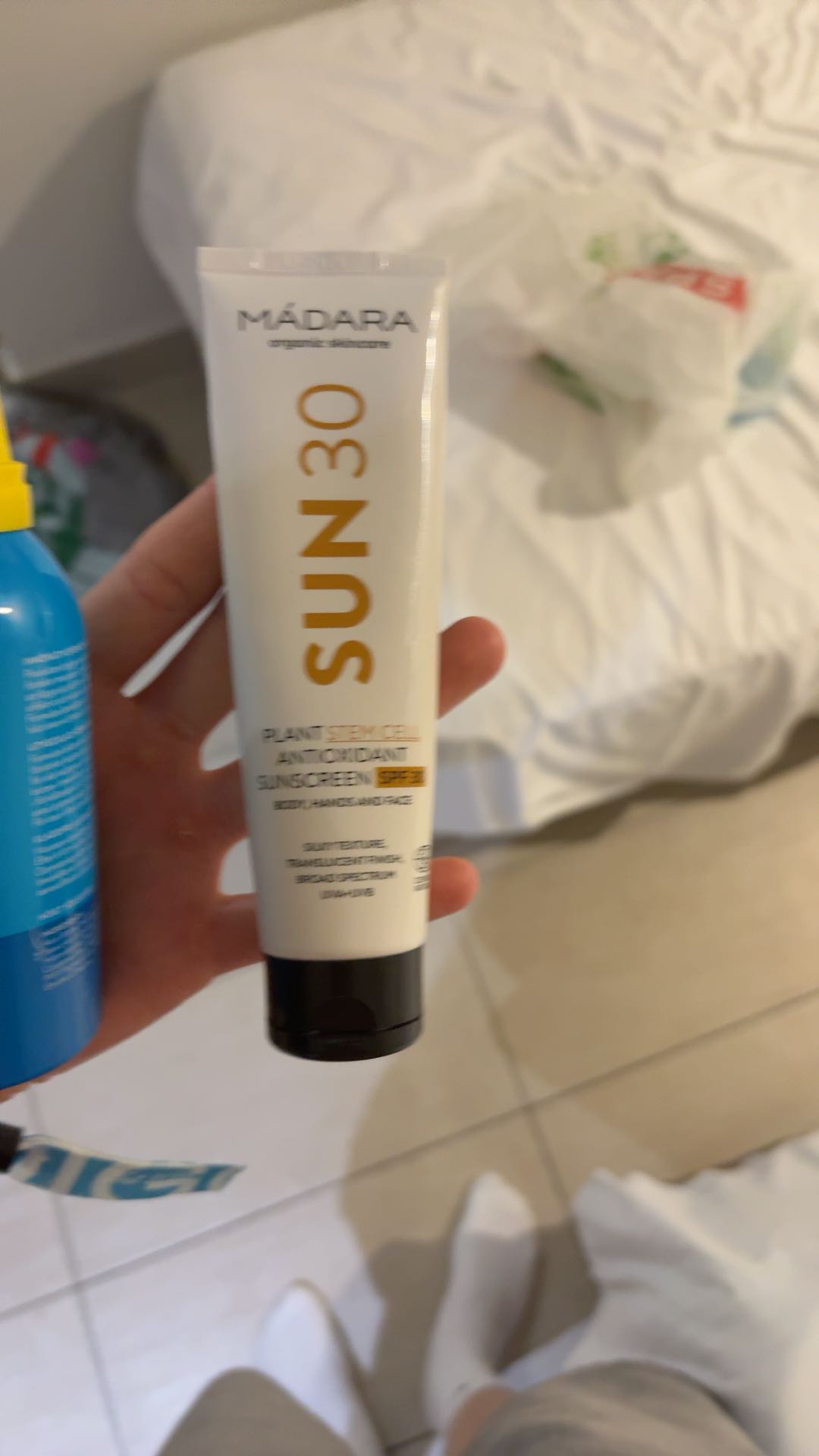
Plant Stem Cell Antioxidant Sunscreen Spf30 100 Ml
Summary
This sunscreen contains beneficial natural ingredients like aloe vera, zinc oxide, and various plant extracts, which are known for their skin-protective properties. The product avoids harmful chemicals such as parabens and synthetic fragrances, which enhances its safety profile. However, the presence of 'aroma' suggests some level of synthetic fragrance, and the product is moderately processed, which slightly impacts its overall rating.
At a glance
Key ingredients 20
Aloe Barbadensis (Aloe) Leaf Juice
Aloe vera is known for its soothing and moisturizing properties, making it beneficial for skin care products. It helps to calm irritated skin and provides hydration. Aloe is often used in sunscreens for its ability to soothe sunburns.
Risks
There are minimal risks associated with aloe vera, though some individuals may experience allergic reactions.
Benefits
Aloe vera provides hydration and has anti-inflammatory properties that can soothe the skin.
Zinc Oxide
Zinc oxide is a mineral sunscreen agent that provides broad-spectrum UV protection. It is considered safe and effective for sensitive skin. Zinc oxide is often used in sunscreens due to its ability to reflect and scatter UV radiation.
Risks
There are minimal risks, but it can leave a white cast on the skin.
Benefits
Zinc oxide offers excellent protection against UVA and UVB rays and is suitable for sensitive skin.
Isoamyl Laurate
Isoamyl laurate is an emollient that helps to soften and smooth the skin. It is derived from natural sources and is used to improve the texture of cosmetic products. This ingredient is often included in formulations to enhance spreadability.
Risks
There are minimal risks associated with isoamyl laurate.
Benefits
It provides a silky feel and improves the application of the product.
Dicaprylyl Carbonate
Dicaprylyl carbonate is an emollient that enhances the spreadability of products. It is lightweight and non-greasy, making it suitable for use in sunscreens. This ingredient helps to improve the texture and feel of the product on the skin.
Risks
There are minimal risks associated with dicaprylyl carbonate.
Benefits
It provides a smooth application and enhances the sensory experience of the product.
Glycerin
Glycerin is a humectant that attracts moisture to the skin, helping to keep it hydrated. It is commonly used in skincare products for its moisturizing properties. Glycerin is beneficial in maintaining skin hydration levels.
Risks
There are minimal risks, though it can be sticky in high concentrations.
Benefits
It helps to maintain skin hydration and improve skin barrier function.
Sorbitan Olivate
Sorbitan olivate is an emulsifier derived from olive oil, used to stabilize formulations. It helps to blend oil and water components in cosmetic products. This ingredient is valued for its natural origin and skin-friendly properties.
Risks
There are minimal risks associated with sorbitan olivate.
Benefits
It helps to stabilize formulations and is gentle on the skin.
Cera Alba (Bees Wax)
Beeswax is a natural wax that provides a protective barrier on the skin. It is used in cosmetics for its emollient and thickening properties. Beeswax helps to lock in moisture and protect the skin from environmental factors.
Risks
There are minimal risks, though it may cause allergic reactions in some individuals.
Benefits
It provides a protective barrier and helps to retain skin moisture.
Lecithin
Lecithin is a natural emulsifier that helps to stabilize cosmetic formulations. It is derived from soybeans or sunflower seeds and is used to improve the texture of products. Lecithin is beneficial for its skin-conditioning properties.
Risks
There are minimal risks, though it may cause allergic reactions in sensitive individuals.
Benefits
It helps to stabilize formulations and provides skin-conditioning benefits.
Polyglyceryl-2 Dipolyhydroxystearate
Polyglyceryl-2 dipolyhydroxystearate is an emulsifier used to blend oil and water components in formulations. It is derived from natural sources and is considered safe for use in cosmetics. This ingredient helps to improve the stability and texture of products.
Risks
There are minimal risks associated with this ingredient.
Benefits
It helps to stabilize formulations and improve product texture.
Silica
Silica is used in cosmetics to improve texture and absorb excess oil. It provides a matte finish and enhances the feel of products. Silica is often included in formulations for its oil-absorbing properties.
Risks
There are minimal risks, though inhalation of silica dust can be harmful.
Benefits
It provides a matte finish and helps to control oiliness.
Cellulose
Cellulose is a natural polymer used as a thickening agent in cosmetics. It helps to improve the texture and stability of formulations. Cellulose is valued for its natural origin and biodegradability.
Risks
There are minimal risks associated with cellulose.
Benefits
It helps to thicken formulations and improve product stability.
Dracocephalum Ruyschiana (Dragonhead) Cell Culture Extract
Dragonhead cell culture extract is used for its antioxidant properties. It helps to protect the skin from oxidative stress and environmental damage. This ingredient is valued for its potential anti-aging benefits.
Risks
There are minimal risks associated with this botanical extract.
Benefits
It provides antioxidant protection and may have anti-aging benefits.
Camellia Sinensis Leaf Extract
Green tea extract is rich in antioxidants and is used for its skin-soothing properties. It helps to protect the skin from environmental damage and reduce inflammation. This ingredient is popular in skincare for its anti-aging benefits.
Risks
There are minimal risks, though it may cause irritation in sensitive individuals.
Benefits
It provides antioxidant protection and soothes the skin.
Quercus Robur (Oak) Bark Extract
Oak bark extract is used for its astringent and antioxidant properties. It helps to tighten the skin and protect it from oxidative stress. This ingredient is valued for its natural origin and skin-conditioning benefits.
Risks
There are minimal risks associated with oak bark extract.
Benefits
It provides astringent and antioxidant benefits to the skin.
Vitis Vinifera (Grape) Seed Extract
Grape seed extract is rich in antioxidants and is used for its skin-protective properties. It helps to protect the skin from environmental damage and improve skin elasticity. This ingredient is popular in skincare for its anti-aging benefits.
Risks
There are minimal risks, though it may cause irritation in sensitive individuals.
Benefits
It provides antioxidant protection and improves skin elasticity.
Hydrolyzed Hyaluronic Acid
Hydrolyzed hyaluronic acid is a smaller molecule form of hyaluronic acid that penetrates the skin more easily. It provides deep hydration and helps to plump the skin. This ingredient is valued for its moisturizing and anti-aging benefits.
Risks
There are minimal risks associated with hydrolyzed hyaluronic acid.
Benefits
It provides deep hydration and helps to plump the skin.
Sodium Hyaluronate
Sodium hyaluronate is a salt form of hyaluronic acid that is used for its hydrating properties. It helps to attract and retain moisture in the skin. This ingredient is popular in skincare for its ability to improve skin hydration and texture.
Risks
There are minimal risks associated with sodium hyaluronate.
Benefits
It provides excellent hydration and improves skin texture.
Sodium Chloride
Sodium chloride is used as a thickening agent and to improve the texture of formulations. It is commonly used in cosmetics for its ability to enhance product stability. This ingredient is generally considered safe for use in skincare products.
Risks
There are minimal risks, though it can be drying in high concentrations.
Benefits
It helps to thicken formulations and improve product stability.
Aroma
Aroma is used to provide fragrance to cosmetic products. It can enhance the sensory experience of using the product. However, the term 'aroma' can encompass a wide range of fragrance compounds.
Risks
Fragrances can cause skin irritation and allergic reactions in sensitive individuals.
Benefits
It enhances the sensory experience of the product.
Rubus Idaeus (Raspberry)
Raspberry extract is used for its antioxidant properties and skin-conditioning benefits. It helps to protect the skin from environmental damage and improve skin texture. This ingredient is valued for its natural origin and potential anti-aging benefits.
Risks
There are minimal risks associated with raspberry extract.
Benefits
It provides antioxidant protection and improves skin texture.
Processing
Processed Foods
Get the full breakdown in the Scout app
Scan any product to see lab results, healthy alternatives, and your personalized analysis.
Download on theApp Store