
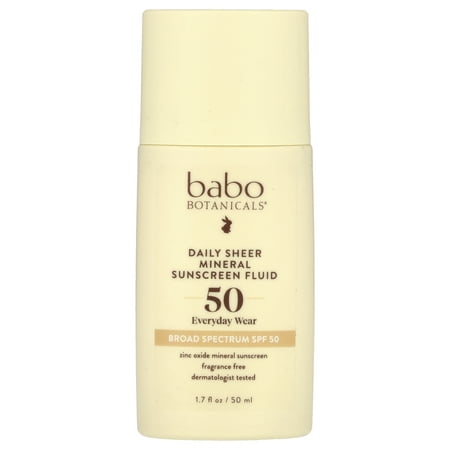


Babo Botanicals Daily Sheer Mineral Sunscreen Fluid SPF 50 1.7 oz Sunscreen
Babo BotanicalsAnalysis updated August 2026 · How Scout scores
At a glance
Summary
This sunscreen features a blend of beneficial natural oils and botanical extracts, such as maracuja seed oil, aloe vera, and raspberry seed oil, which provide nourishment and hydration to the skin. The product avoids harsh chemical UV filters and instead relies on mineral-based protection, contributing to its safety profile. However, the presence of some processed ingredients and the overall processing level slightly limit its maximum potential score.
Key ingredients 39
Passiflora Edulis (Maracuja) Seed OilVery Good
Maracuja Seed Oil is a natural oil rich in essential fatty acids and vitamins. It provides nourishment and hydration to the skin, making it a beneficial ingredient in skincare products. It is highly regarded for its moisturizing properties.
Risks
There are no significant risks associated with Maracuja Seed Oil when used in cosmetics.
Benefits
It deeply nourishes and hydrates the skin, improving its overall health and appearance.
Aloe Barbadensis Leaf JuiceVery Good
Aloe Vera is a well-known botanical with soothing and hydrating properties. It helps to calm irritated skin and provides moisture, making it a valuable ingredient in skincare products. It is highly regarded for its skin-soothing benefits.
Risks
There are no significant risks associated with Aloe Vera when used in cosmetics.
Benefits
It soothes and hydrates the skin, reducing irritation and dryness.
Rubus Idaeus (Raspberry) Seed OilVery Good
Raspberry Seed Oil is a natural oil rich in essential fatty acids and antioxidants. It provides nourishment and protection to the skin, making it a highly beneficial ingredient in skincare products. It is known for its moisturizing and protective properties.
Risks
There are no significant risks associated with Raspberry Seed Oil when used in cosmetics.
Benefits
It deeply nourishes and protects the skin, enhancing its health and appearance.
Calendula Officinalis Flower ExtractVery Good
Calendula Extract is a botanical known for its soothing and healing properties. It helps to calm irritated skin and promote healing, making it a valuable ingredient in skincare formulations. It is highly regarded for its skin-soothing benefits.
Risks
There are no significant risks associated with Calendula Extract when used in cosmetics.
Benefits
It soothes and heals the skin, reducing irritation and promoting recovery.
Chamomilla Recutita (Matricaria) Flower ExtractVery Good
Chamomile Extract is a botanical known for its anti-inflammatory and soothing properties. It helps to calm irritated skin and reduce redness, making it beneficial in skincare products. It is highly regarded for its calming and soothing effects on the skin.
Risks
There are no significant risks associated with Chamomile Extract when used in cosmetics.
Benefits
It soothes and calms the skin, reducing inflammation and redness.
Carthamus Tinctorius (Safflower) OleosomesGood
Safflower Oleosomes are natural oil bodies that provide sustained moisture release. They help to hydrate and soften the skin, making them beneficial in skincare formulations. They are considered safe and effective for use in cosmetics.
Risks
There are no significant risks associated with Safflower Oleosomes in cosmetic use.
Benefits
They provide long-lasting hydration and improve skin softness.
Lupinus Albus (White Lupin) Seed OilGood
White Lupin Seed Oil is rich in proteins and antioxidants, providing nourishment and protection to the skin. It helps to improve skin elasticity and firmness. It is considered a beneficial ingredient in skincare products.
Risks
There are no significant risks associated with White Lupin Seed Oil in cosmetic use.
Benefits
It nourishes the skin and improves its elasticity and firmness.
BisabololGood
Bisabolol is a natural compound known for its anti-inflammatory and soothing properties. It helps to calm irritated skin and reduce redness, making it beneficial in skincare formulations. It is considered safe and effective for use in cosmetics.
Risks
There are no significant risks associated with Bisabolol in cosmetic use.
Benefits
It soothes and calms the skin, reducing inflammation and redness.
TocopherolGood
Tocopherol, also known as Vitamin E, is a powerful antioxidant that helps to protect the skin from free radical damage. It provides nourishment and improves skin health. It is widely used in skincare products for its protective benefits.
Risks
There are no significant risks associated with Tocopherol when used in cosmetics.
Benefits
It protects the skin from oxidative stress and improves its overall health.
GlycerinGood
Glycerin is a well-known humectant that attracts moisture to the skin. It helps to keep the skin hydrated and soft, making it a valuable ingredient in skincare products. It is considered safe and effective for use in cosmetics.
Risks
There are no significant risks associated with Glycerin in cosmetic use.
Benefits
It hydrates and softens the skin, improving its texture and appearance.
Helianthus Annuus (Sunflower) Seed OilGood
Sunflower Seed Oil is a natural oil rich in essential fatty acids and vitamins. It provides nourishment and hydration to the skin, making it a beneficial ingredient in skincare products. It is known for its moisturizing and protective properties.
Risks
There are no significant risks associated with Sunflower Seed Oil when used in cosmetics.
Benefits
It nourishes and hydrates the skin, enhancing its health and appearance.
Nasturtium Officinale (Watercress) Flower/Leaf ExtractGood
Watercress Extract is rich in vitamins and antioxidants, providing nourishment and protection to the skin. It helps to improve skin health and appearance. It is considered a beneficial ingredient in skincare formulations.
Risks
There are no significant risks associated with Watercress Extract in cosmetic use.
Benefits
It nourishes and protects the skin, enhancing its health and appearance.
Spiraea Ulmaria (Meadowsweet) Flower ExtractGood
Meadowsweet Extract is known for its anti-inflammatory and astringent properties. It helps to soothe irritated skin and tighten pores, making it beneficial in skincare products. It is considered safe and effective for use in cosmetics.
Risks
There are no significant risks associated with Meadowsweet Extract in cosmetic use.
Benefits
It soothes and tightens the skin, improving its texture and appearance.
Triticum Vulgare (Wheat) Germ Oil UnsaponifiablesGood
Wheat Germ Oil Unsaponifiables are rich in vitamins and antioxidants, providing nourishment and protection to the skin. They help to improve skin health and appearance. They are considered a beneficial ingredient in skincare formulations.
Risks
There are no significant risks associated with Wheat Germ Oil Unsaponifiables in cosmetic use.
Benefits
They nourish and protect the skin, enhancing its health and appearance.
Iron OxidesGood
Beneficial ingredient — whole-food or functional value in this product class.
Risks
There are no known significant risks associated with Iron Oxides in cosmetic use.
Benefits
They provide pigmentation and color to the product.
Water (Aqua)Neutral
Water is a common solvent used in many cosmetic formulations. It helps to dissolve other ingredients and provides a base for the product. It does not have any direct benefits or risks associated with its use.
Risks
There are no known risks associated with water in cosmetic formulations.
Benefits
Water helps to hydrate the skin by providing moisture.
Diheptyl SuccinateNeutral
Diheptyl Succinate is an emollient that provides a silky feel to the skin. It is often used in combination with other ingredients to improve the texture of cosmetic products. It is considered safe for use in cosmetics.
Risks
There are no known significant risks associated with Diheptyl Succinate.
Benefits
It improves the texture and feel of the product on the skin.
Calcium Sodium BorosilicateNeutral
Calcium Sodium Borosilicate is used as a bulking agent and to add shimmer to cosmetic products. It is an inert ingredient that does not react with other components. It is considered safe for use in cosmetics.
Risks
There are no known significant risks associated with Calcium Sodium Borosilicate.
Benefits
It adds a shimmering effect to the product, enhancing its aesthetic appeal.
Octyldodecyl NeopentanoateNeutral
Octyldodecyl Neopentanoate is an emollient that provides a smooth application and enhances the spreadability of the product. It is commonly used in sunscreens and other skincare products. It is considered safe for use in cosmetics.
Risks
There are no known significant risks associated with Octyldodecyl Neopentanoate.
Benefits
It improves the application and feel of the product on the skin.
ErythritolNeutral
Erythritol is a sugar alcohol used as a humectant in cosmetics. It helps to retain moisture in the skin, providing hydration. It is considered safe for use in cosmetics.
Risks
There are no known significant risks associated with Erythritol in cosmetic use.
Benefits
It helps to hydrate the skin by retaining moisture.
Lauryl LaurateNeutral
Lauryl Laurate is an ester used as an emollient and thickening agent in cosmetics. It helps to improve the texture and consistency of the product. It is considered safe for use in cosmetics.
Risks
There are no known significant risks associated with Lauryl Laurate.
Benefits
It enhances the texture and consistency of the product.
PropanediolNeutral
Propanediol is a glycol used as a solvent and humectant in cosmetics. It helps to improve the texture and moisture retention of the product. It is considered safe for use in cosmetics.
Risks
There are no known significant risks associated with Propanediol.
Benefits
It enhances the moisture retention and texture of the product.
BentoniteNeutral
Bentonite is a natural clay used for its absorbent properties in cosmetics. It helps to remove excess oil and impurities from the skin. It is considered safe for use in cosmetics.
Risks
There are no known significant risks associated with Bentonite in cosmetic use.
Benefits
It helps to cleanse the skin by absorbing excess oil and impurities.
Hydrolyzed Wheat Protein/PVP CrosspolymerNeutral
Hydrolyzed Wheat Protein/PVP Crosspolymer is used as a film-forming agent in cosmetics. It helps to improve the texture and hold of the product. It is considered safe for use in cosmetics.
Risks
There are no known significant risks associated with Hydrolyzed Wheat Protein/PVP Crosspolymer.
Benefits
It enhances the texture and hold of the product on the skin.
Cetearyl AlcoholNeutral
Cetearyl Alcohol is a fatty alcohol used as an emollient and thickening agent in cosmetics. It helps to improve the texture and consistency of the product. It is considered safe for use in cosmetics.
Risks
There are no known significant risks associated with Cetearyl Alcohol.
Benefits
It enhances the texture and consistency of the product.
Caprylyl GlycolNeutral
Caprylyl Glycol is used as a humectant and preservative in cosmetics. It helps to retain moisture and improve the shelf life of the product. It is considered safe for use in cosmetics.
Risks
There are no known significant risks associated with Caprylyl Glycol.
Benefits
It retains moisture and improves the shelf life of the product.
Ethyl FerulateNeutral
Ethyl Ferulate is an antioxidant used in cosmetics to protect the skin from free radical damage. It helps to improve the stability of the product. It is considered safe for use in cosmetics.
Risks
There are no known significant risks associated with Ethyl Ferulate.
Benefits
It protects the skin from oxidative stress and improves product stability.
Sucrose PolystearateNeutral
Sucrose Polystearate is an emulsifier used to stabilize cosmetic formulations. It helps to improve the texture and consistency of the product. It is considered safe for use in cosmetics.
Risks
There are no known significant risks associated with Sucrose Polystearate.
Benefits
It stabilizes the formulation and improves texture.
Capryloyl Glycerin/Sebacic Acid CopolymerNeutral
Capryloyl Glycerin/Sebacic Acid Copolymer is used as a film-forming agent in cosmetics. It helps to improve the texture and hold of the product. It is considered safe for use in cosmetics.
Risks
There are no known significant risks associated with Capryloyl Glycerin/Sebacic Acid Copolymer.
Benefits
It enhances the texture and hold of the product on the skin.
Sucrose StearateNeutral
Sucrose Stearate is an emulsifier used to stabilize cosmetic formulations. It helps to improve the texture and consistency of the product. It is considered safe for use in cosmetics.
Risks
There are no known significant risks associated with Sucrose Stearate.
Benefits
It stabilizes the formulation and improves texture.
Coco-GlucosideNeutral
Coco-Glucoside is a mild surfactant used in cosmetics for its cleansing properties. It helps to remove dirt and impurities from the skin. It is considered safe for use in cosmetics.
Risks
There are no known significant risks associated with Coco-Glucoside.
Benefits
It gently cleanses the skin, removing dirt and impurities.
Octyldodecyl OleateNeutral
Octyldodecyl Oleate is an emollient used to improve the texture and spreadability of cosmetic products. It helps to provide a smooth application. It is considered safe for use in cosmetics.
Risks
There are no known significant risks associated with Octyldodecyl Oleate.
Benefits
It improves the application and feel of the product on the skin.
Polyhydroxystearic AcidNeutral
Polyhydroxystearic Acid is used as a thickening agent in cosmetics. It helps to improve the texture and consistency of the product. It is considered safe for use in cosmetics.
Risks
There are no known significant risks associated with Polyhydroxystearic Acid.
Benefits
It enhances the texture and consistency of the product.
Sodium GluconateNeutral
Sodium Gluconate is used as a chelating agent in cosmetics. It helps to stabilize the formulation by binding metal ions. It is considered safe for use in cosmetics.
Risks
There are no known significant risks associated with Sodium Gluconate.
Benefits
It stabilizes the formulation by binding metal ions.
Caprylhydroxamic AcidNeutral
Caprylhydroxamic Acid is used as a preservative in cosmetics. It helps to prevent microbial growth and extend the shelf life of the product. It is considered safe for use in cosmetics.
Risks
There are no known significant risks associated with Caprylhydroxamic Acid.
Benefits
It prevents microbial growth and extends the shelf life of the product.
Microcrystalline CelluloseNeutral
Microcrystalline Cellulose is used as a bulking agent in cosmetics. It helps to improve the texture and consistency of the product. It is considered safe for use in cosmetics.
Risks
There are no known significant risks associated with Microcrystalline Cellulose.
Benefits
It enhances the texture and consistency of the product.
Xanthan GumNeutral
Xanthan Gum is used as a thickening agent in cosmetics. It helps to improve the texture and consistency of the product. It is considered safe for use in cosmetics.
Risks
There are no known significant risks associated with Xanthan Gum.
Benefits
It enhances the texture and consistency of the product.
Citric AcidNeutral
Citric Acid is used as a pH adjuster in cosmetics. It helps to maintain the stability and effectiveness of the product. It is considered safe for use in cosmetics.
Risks
There are no known significant risks associated with Citric Acid.
Benefits
It maintains the stability and effectiveness of the product.
Butyloctyl SalicylateBad
Processed additive flagged under Scout's ingredient doctrine.
Risks
There are no significant risks associated with Butyloctyl Salicylate in cosmetic use.
Benefits
It enhances the effectiveness of sunscreen by improving its stability and application.
Get the full breakdown in the Scout appTake Scout shopping
Scan any product to see lab results, healthy alternatives, and your personalized analysis.
Download on theApp Store GET IT ONGoogle PlayAmazon pricing & content
Amazon price as of . Product prices and availability are accurate as of the date/time indicated and are subject to change. Any price and availability information displayed on Amazon.com at the time of purchase will apply to the purchase of this product.
CERTAIN CONTENT THAT APPEARS ON THIS SITE COMES FROM AMAZON. THIS CONTENT IS PROVIDED “AS IS” AND IS SUBJECT TO CHANGE OR REMOVAL AT ANY TIME.