
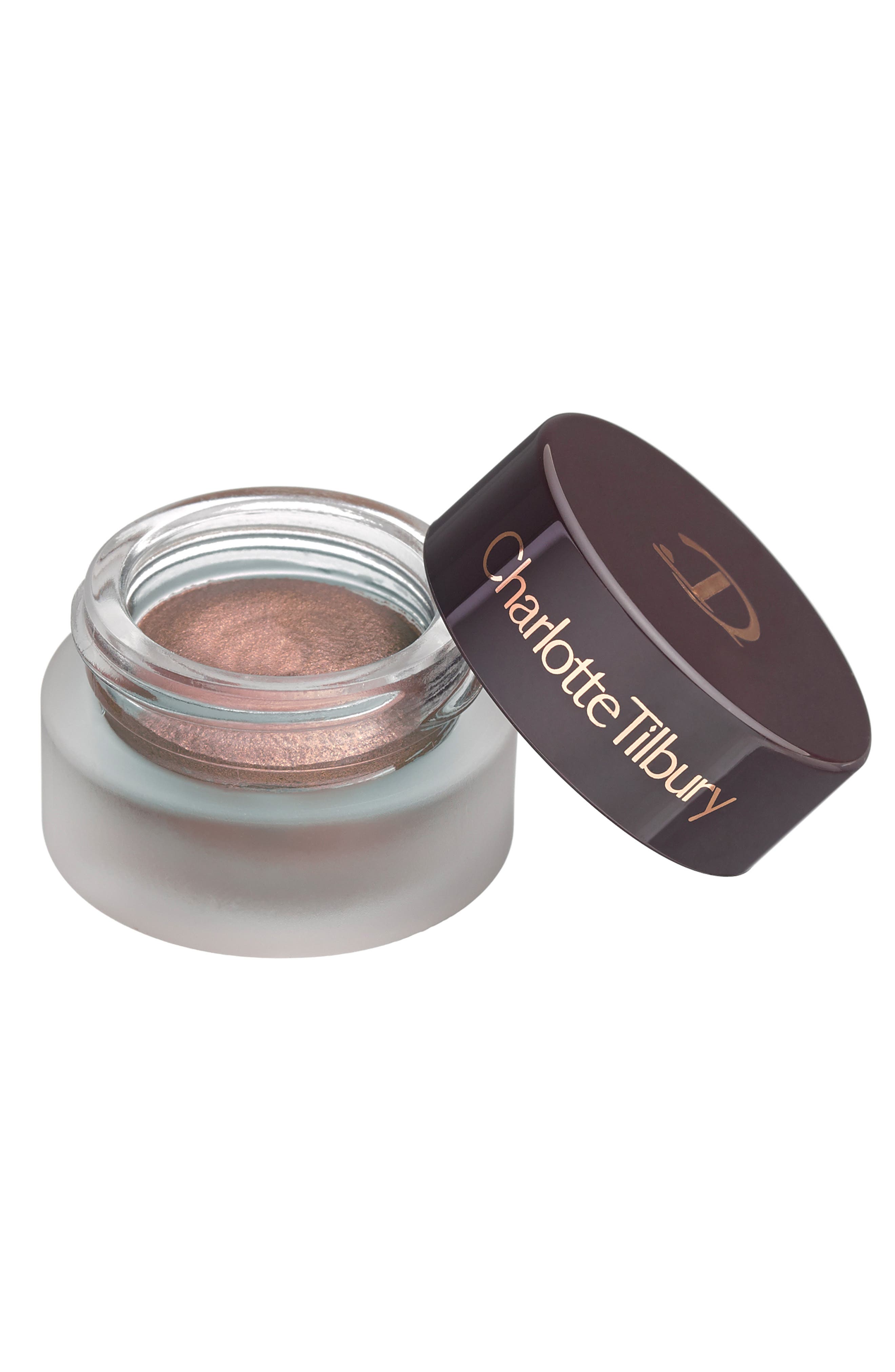
Charlotte Tilbury Eyes To Mesmerise Cream Eyeshadow - Marie Antoinette
Analysis updated September 2026 · How Scout scores
At a glance
Summary
This cream eyeshadow contains beneficial ingredients like glycerin, tocopherol, and ascorbyl palmitate, which provide moisturizing and antioxidant benefits. However, the presence of polyacrylamide, a potential carcinogen due to acrylamide contamination, raises health concerns. The product also includes several synthetic polymers and stabilizers, which contribute to a moderate level of processing.
Key ingredients 31
TOCOPHEROLVery Good
Tocopherol, or Vitamin E, is an antioxidant used to protect the skin and product from oxidative damage. It is considered very good for its skin-protective properties. It helps in nourishing and protecting the skin.
Benefits
Protects and nourishes the skin.
MICAGood
Beneficial ingredient — whole-food or functional value in this product class.
Risks
Ethical concerns related to mining practices.
Benefits
Adds shimmer and glow to cosmetic products.
GLYCERINGood
Glycerin is a humectant used to attract moisture to the skin. It is considered good for its moisturizing properties. It helps in keeping the skin hydrated and soft.
Benefits
Moisturizes and hydrates the skin.
ASCORBYL PALMITATEGood
Ascorbyl Palmitate is a form of Vitamin C used for its antioxidant properties. It is considered good for its ability to protect the skin from oxidative damage. It helps in brightening and protecting the skin.
Benefits
Brightens and protects the skin.
CYCLOPENTASILOXANENeutral
Cyclopentasiloxane is a silicone-based compound used for its smooth application and spreadability. It is generally considered safe for use in cosmetics. However, it can be an environmental concern due to its persistence.
Risks
Potential environmental persistence and bioaccumulation.
Benefits
Provides a smooth, silky texture to the product.
AQUA/WATER/EAUNeutral
Water is a common solvent in cosmetics, used to dissolve other ingredients. It is safe and non-toxic. It helps in the formulation of the product by providing a base for other ingredients.
Benefits
Acts as a solvent and base for other ingredients.
DIPHENYLSILOXY PHENYL TRIMETHICONENeutral
This silicone compound is used for its conditioning properties and to improve the texture of the product. It is generally considered safe for use in cosmetics. It enhances the spreadability and feel of the product.
Risks
Potential for mild skin irritation in sensitive individuals.
Benefits
Improves texture and spreadability of the product.
CETYL PEG/PPG-10/1 DIMETHICONENeutral
This is a silicone-based emulsifier used to stabilize formulations. It is generally considered safe for use in cosmetics. It helps in blending oil and water-based ingredients.
Risks
Potential for mild skin irritation.
Benefits
Stabilizes formulations by emulsifying ingredients.
HDI/TRIMETHYLOL HEXYLLACTONE CROSSPOLYMERNeutral
This ingredient is used as a film-forming agent to provide a smooth finish. It is considered safe for use in cosmetics. It helps in creating a long-lasting effect on the skin.
Benefits
Provides a smooth, long-lasting finish.
HYDROGENATED PALM KERNEL GLYCERIDESNeutral
These are used as emollients to provide moisture and improve texture. They are generally considered safe but may raise environmental concerns due to palm oil sourcing. They help in moisturizing and softening the skin.
Risks
Environmental concerns related to palm oil sourcing.
Benefits
Moisturizes and softens the skin.
SODIUM CHLORIDENeutral
Commonly known as salt, it is used to thicken the aqueous portion of cosmetics. It is safe and non-toxic. It helps in adjusting the viscosity of the product.
Benefits
Adjusts viscosity and stabilizes formulations.
SORBITAN STEARATENeutral
This is an emulsifier used to stabilize formulations. It is generally considered safe for use in cosmetics. It helps in blending oil and water-based ingredients.
Risks
Potential for mild skin irritation.
Benefits
Stabilizes formulations by emulsifying ingredients.
DISTEARDIMONIUM HECTORITENeutral
This is a thickening agent used to improve the texture of the product. It is generally considered safe for use in cosmetics. It helps in stabilizing and thickening formulations.
Benefits
Thickens and stabilizes formulations.
HYDROGENATED PALM GLYCERIDESNeutral
These are used as emollients to provide moisture and improve texture. They are generally considered safe but may raise environmental concerns due to palm oil sourcing. They help in moisturizing and softening the skin.
Risks
Environmental concerns related to palm oil sourcing.
Benefits
Moisturizes and softens the skin.
SILICA DIMETHYL SILYLATENeutral
This is a thickening agent used to improve the texture of the product. It is generally considered safe for use in cosmetics. It helps in stabilizing and thickening formulations.
Benefits
Thickens and stabilizes formulations.
ETHYLHEXYLGLYCERINNeutral
This is a conditioning agent and preservative enhancer. It is generally considered safe for use in cosmetics. It helps in improving the skin feel and extending the shelf life of the product.
Risks
Potential for mild skin irritation.
Benefits
Enhances preservation and improves skin feel.
LAURYL METHACRYLATE/GLYCOL DIMETHACRYLATE CROSSPOLYMERNeutral
This is a film-forming agent used to provide a smooth finish. It is generally considered safe for use in cosmetics. It helps in creating a long-lasting effect on the skin.
Benefits
Provides a smooth, long-lasting finish.
PROPYLENE CARBONATENeutral
This is a solvent used to dissolve other ingredients. It is generally considered safe for use in cosmetics. It helps in improving the texture and application of the product.
Risks
Potential for mild skin irritation.
Benefits
Improves texture and application.
SODIUM DEHYDROACETATENeutral
This is a preservative used to prevent microbial growth. It is generally considered safe for use in cosmetics. It helps in extending the shelf life of the product.
Risks
Potential for mild skin irritation.
Benefits
Prevents microbial growth and extends shelf life.
C13-14 ISOPARAFFINNeutral
This is a solvent used to dissolve other ingredients. It is generally considered safe for use in cosmetics. It helps in improving the texture and application of the product.
Risks
Potential for mild skin irritation.
Benefits
Improves texture and application.
SILICANeutral
Silica is used as a thickening agent and to improve the texture of the product. It is generally considered safe for use in cosmetics. It helps in stabilizing and thickening formulations.
Benefits
Thickens and stabilizes formulations.
LAURETH-7Neutral
This is a surfactant used to improve the texture and spreadability of the product. It is generally considered safe for use in cosmetics. It helps in blending ingredients and improving application.
Risks
Potential for mild skin irritation.
Benefits
Improves texture and spreadability.
PENTAERYTHRITYL TETRA-DI-T-BUTYL HYDROXYHYDROCINNAMATENeutral
This is an antioxidant used to protect the product from oxidative damage. It is generally considered safe for use in cosmetics. It helps in extending the shelf life of the product.
Benefits
Protects the product from oxidative damage.
TIN OXIDENeutral
Tin Oxide is used as an opacifying agent to improve the appearance of the product. It is generally considered safe for use in cosmetics. It helps in enhancing the visual appeal of the product.
Benefits
Enhances the visual appeal of the product.
TITANIUM DIOXIDE (CI 77891)Neutral
Titanium Dioxide is used as a pigment and UV filter in cosmetics. It is generally considered safe for use in cosmetics. It helps in providing coverage and protection from UV rays.
Risks
Potential for inhalation risk in powder form.
Benefits
Provides coverage and UV protection.
IRON OXIDES (CI 77491, CI 77492, CI 77499)Neutral
Iron Oxides are used as pigments to provide color in cosmetics. They are generally considered safe for use in cosmetics. They help in providing natural color to the product.
Benefits
Provides natural color to the product.
DIMETHICONE/PHENYL VINYL DIMETHICONE CROSSPOLYMERBad
Processed additive flagged under Scout's ingredient doctrine.
Risks
Potential for mild skin irritation.
Benefits
Improves texture and provides a smooth finish.
CERESINBad
Processed additive flagged under Scout's ingredient doctrine.
Benefits
Thickens and stabilizes formulations.
POTASSIUM SORBATEBad
Synthetic preservative — flagged in daily-use products.
Risks
Potential for mild skin irritation.
Benefits
Prevents microbial growth and extends shelf life.
DIMETHICONE/VINYL DIMETHICONE CROSSPOLYMERBad
Processed additive flagged under Scout's ingredient doctrine.
Risks
Potential for mild skin irritation.
Benefits
Improves texture and provides a smooth finish.
POLYACRYLAMIDEVery Bad
Polyacrylamide is used as a thickener and stabilizer in cosmetics. It is considered very bad due to potential contamination with acrylamide, a known carcinogen. Its use raises significant health concerns.
Risks
Potential contamination with acrylamide, a carcinogen.
Benefits
Thickens and stabilizes formulations.
Get the full breakdown in the Scout appTake Scout shopping
Scan any product to see lab results, healthy alternatives, and your personalized analysis.
Download on theApp Store GET IT ONGoogle PlayAmazon pricing & content
Amazon price as of . Product prices and availability are accurate as of the date/time indicated and are subject to change. Any price and availability information displayed on Amazon.com at the time of purchase will apply to the purchase of this product.
CERTAIN CONTENT THAT APPEARS ON THIS SITE COMES FROM AMAZON. THIS CONTENT IS PROVIDED “AS IS” AND IS SUBJECT TO CHANGE OR REMOVAL AT ANY TIME.